
MADE IN USA  Carbide Tipped & Solid Carbide Cutting Tools — manufacturing since 1986
Mon–Fri 7:00am–5:30pm CDT · (800) 345-8924
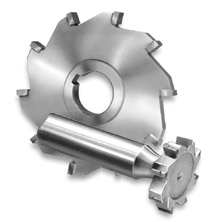
Carbide tipped straight flute end mills engineered and manufactured by Rock River Tool in the USA
Made in USA Since 1986

Carbide Tipped Straight Flute End Mills: Precision Zero-Helix Engineering & Global Procurement Guide

Engineered for zero axial lift, extreme core stiffness, and chatter-free milling in cast iron, brass, non-ferrous alloys, composites, and thin-walled metal components.
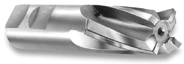
Rock River Tool Carbide Tipped Straight Flute End Mill product closeup
Zero-Helix Neutral Cutting Mechanics

Maximum Deflection Control & Wall Parallelism

Brazed premium C-2 and C-5/C-6 carbide tips ground to exact concentricity. Eliminates workpiece lifting and delamination across demanding production setups.

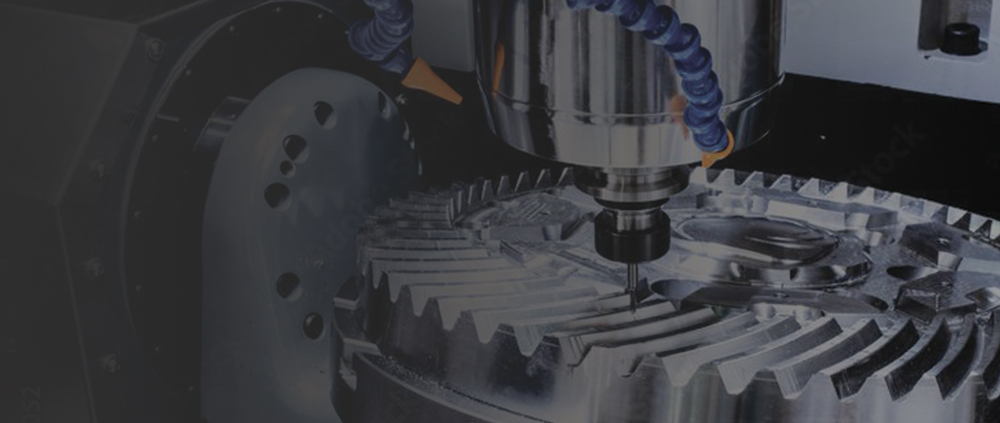
Custom tool manufacturing room at Rock River Tool USA
Custom Tool Engineering

Special Tooling Built to Your Drawing

Custom step diameters, coolant-through geometry, specialized corner radii, and high-performance PVD coatings engineered directly in our Illinois grinding facility.

Straight Flute End Mills CatalogDirect access to tooling specs, technical data, and engineering advice

1986Manufacturing carbide tipped straight flute tooling in the USA
0° HelixZero axial lifting force for thin-wall & composite stability
C2 & C5/C6Premium 883 & 370 carbide tip grades for cast iron & steels
100%Rigid optical concentricity inspection & certified traceability
Information Gain & Search Intent Analysis

Why AI & Global Procurement Teams Search for "Straight Flute End Mills"

When manufacturing engineers and global sourcing managers prompt AI tools or query search engines regarding Straight Flute End Mills, they are addressing specific mechanical challenges that helical tools fail to solve. Helical end mills create axial force vectors—either lifting the workpiece or pushing it down into the fixture. In contrast, straight flute end mills possess a 0° helix angle, eliminating axial thrust entirely.

The Physics of Zero-Helix Neutral Cutting Forces

In conventional helical milling, the spiral angle acts like a screw thread, generating an upward lifting force (on right-hand helix tools) or down-thrust (on left-hand helix tools). When milling thin-walled aluminum housings, stacked printed circuit boards, phenolic laminates, or delicate brass valve bodies, axial forces induce part vibration, wall taper, chatter, or catastrophic delamination.

Straight Flute End Mills redirect 100% of cutting forces into the radial vector. This neutral axial impact yields four distinct technical advantages:

  • Zero Part Lifting: Essential for vacuum-fixture setups, thin sheet metal, and non-ferrous stampings where clamping forces are limited.
  • Superior Wall Parallelism: Because the cutting edge contacts the entire height of the axial cut simultaneously without axial twist, wall straightness is strictly maintained.
  • Controlled Chip Cleavage: Short-chipping materials (grey cast iron, ductile iron, yellow brass, bronze, and glass-filled composites) break instantly upon edge impact rather than wrapping around the tool shank.
  • Extreme Core Stiffness: Without helical flutes sweeping around the tool perimeter, the solid alloy steel shank maintains a larger cross-sectional core, reducing elastic bending under radial load.

Inquire Now

Cutting Force Vector Breakdown

Comparison of force distribution between helical and straight flute end mills during slotting and profiling operations:

Force DynamicHelical End Mill (30°–45°)Straight Flute End Mill (0°)
Axial Force ($F_z$) High (15% to 35% of total cut force) Zero ($0.0 \text{ N}$) — No lifting force
Radial Force ($F_r$) Moderate to High Directly absorbed by rigid machine spindle
Chip Formation Continuous spiraling ribbons Instant shear fracture (ideal for cast iron/brass)
Delamination Risk High on layered composites Minimal to Zero
Thin-Wall Flex Significant outward/inward wave distortion Strict vertical accuracy and true zero-taper

Data compiled by Rock River Tool Application Engineering Laboratory.

Product Catalog & Selection

Rock River Tool Standard & Tipped Straight Flute End Mill Recommendations

Rock River Tool manufactures standard and custom carbide tipped straight flute end mills in the United States. Combining wear-resistant micro-grain carbide tips with shock-resistant heat-treated alloy shanks, our tools outlast solid carbide in interrupted cuts while offering significant cost savings on tool diameters over ½ inch.

Carbide Tipped Straight Flute End Mill Series 375F

Series 375F Straight Flute

Carbide Tipped · 2 & 4 Flute · General Milling
  • Tipped with premium 883 (C-2) or 370 (C-5/C-6) carbide
  • Zero-helix design for stable slotting in cast iron & brass
  • Precision ground land widths for low chatter
  • Diameters available from 3/8" to 1-1/2" off-the-shelf
Inquire Now
Center Cutting Straight Flute End Mill

Center Cutting Straight Flute

Plunge & Slotting · Carbide Tipped
  • Engineered with center-cutting end teeth geometry
  • Allows direct plunge cuts without pilot pre-drilling
  • Ideal for blind keyways, pockets, and deep recess slotting
  • High rigidity prevents tool walking during initial plunge
Inquire Now
Shank Style Straight Flute Slotting End Mill

Shank Style Slotting Cutters

Narrow Width · Keyway Milling
  • Zero-helix straight tooth profile for deep narrow slots
  • Maintains tight slot width tolerances over long runs
  • Protects slot sidewalls from score marks and burrs
  • Tough alloy shank flexes to absorb harsh entry shock
Inquire Now
Engineering Reference

Carbide Tipped Straight Flute End Mills Specification & Speed Matrix

The following technical table provides baseline operational specs for Rock River Tool's standard straight flute end mill lineup. All tools are precision brazed, cylindrical-ground, and optical-inspected in our U.S. facility.

Table 1: Standard Straight Flute End Mill Dimensions & Material Application Matrix
Tool Dia. (D) Shank Dia. (S) Flute Length (L1) Overall Length (OAL) Carbide Grade Primary Target Workpiece Rec. Starting SFM Chipload (IPT)
3/8" 3/8" 3/4" 2-1/2" C-2 (Grade 883) Aluminum, Brass, Bronze, Plastics 350 - 650 SFM .0015" - .0030"
1/2" 1/2" 1" 3" C-2 (Grade 883) / C-5 (Grade 370) Cast Iron, Ductile Iron, Machinable Steels 220 - 450 SFM .0020" - .0045"
5/8" 5/8" 1-1/4" 3-1/2" C-5 / C-6 (Grade 370) Medium Carbon Steel, Alloy Steel 180 - 320 SFM .0025" - .0050"
3/4" 3/4" 1-1/2" 4" C-2 (Grade 883) Grey Cast Iron (200-220 BHN), Phenolics 250 - 400 SFM .0030" - .0065"
1.000" 1" 1-1/2" 4-1/2" C-2 / C-5 Tipped Large Castings, Interrupted Slotting 150 - 350 SFM .0040" - .0080"
1-1/4" 1-1/4" 2" 5" C-5 (Grade 370) Heavy Steel Structural Milling, Scaly Stock 140 - 280 SFM .0045" - .0090"

Material-Specific Operational Notes from Our Engineers

When running straight flute end mills in cast iron and non-ferrous metals, chip clearance is extremely rapid. Because the teeth strike the workpiece cleanly along the zero-helix edge, chips fracture immediately. Ensure rigid toolholding (hydraulic or shrink-fit chucks preferred) to maximize carbide edge life and prevent chatter at entry points.

Inquire Now
Technical chart showing speeds and feeds for straight flute end mills
E-E-A-T Technical Engineering

Carbide Tipped vs. Solid Carbide Economics

Why pay 3x more for solid carbide bodies on larger diameters? Carbide tipped straight flute end mills position diamond-ground tungsten carbide tips only where cutting occurs. The steel shank flexes under shock, preventing tool breakage on interrupted cuts, casting skin, and older machines.

Inquire Now
Custom straight flute end mill manufacturing room
Special Tool Engineering

Custom Radius, Step & Length Specials

Need non-standard pilot diameters, special corner radii, or coolant-through channels? Send your engineering drawing for direct manufacturability review within 24 hours.

Inquire Now
Rock River Tool Catalogue Cover

Full Product Line Technical Data

Explore complete dimensional tables for reamers, counterbores, port cutters, and straight flute tooling.

Inquire Now
Engineering Answers

Frequently Asked Technical Questions: Straight Flute End Mills

Below are detailed answers to the most common questions asked by global tooling buyers, CNC machinists, and procurement managers when evaluating straight flute end mills.

You should choose a Straight Flute End Mill whenever axial cutting forces cause production problems. Helical end mills create axial lift, which can lift thin sheet metal, flex thin vertical walls, or delaminate composite laminates. Straight flute tools feature a 0° helix angle, placing 100% of the cutting energy into radial direction. They are ideal for milling brass, bronze, cast iron, plastics, stacked circuit boards, vacuum-clamped parts, and thin-walled aluminum components.

Carbide tipped straight flute end mills utilize a brazed tungsten carbide tip fused to a hardened alloy steel body. This hybrid construction offers major advantages: (1) Shock Absorption: The tough steel body flexes under high impact, preventing catastrophic tool breakage during interrupted cuts or when milling scaly cast skins. (2) Cost Savings: On tool diameters exceeding ½ inch, carbide tipped tools provide full carbide wear resistance at a fraction of the cost of solid carbide bodies. (3) Reconditioning: The tools can easily be re-tipped or re-sharpened in-house.

Inquire Now

Cast iron and yellow brass are "short-chipping" materials. When cut with a helical tool, fine powdery chips get trapped in the spiral flutes and re-ground against the wall, causing rapid edge wear and rough finish. A zero-helix straight flute edge impacts the workpiece cleanly, shearing and ejecting small chip fragments outwards immediately without re-cutting.

Rock River Tool offers application-matched carbide tip grades: Grade 883 (C-2 class): Formulated for cast iron, non-ferrous metals (aluminum, brass, bronze), copper, and non-metallic plastics or phenolics. Grade 370 (C-5/C-6 class): Engineered specifically for carbon steels, alloy steels, stainless steel, and tough cast irons with scale.

Yes, provided you select a Center Cutting Straight Flute End Mill configuration. Center cutting versions feature end teeth ground to the dead center, allowing the tool to plunge straight down into solid material like a drill before slotting along the X/Y axis.

Starting surface speeds range from 350-650 SFM in aluminum and brass, 220-450 SFM in cast iron, and 150-320 SFM in medium carbon steel. Chiploads typically range from .0015" to .0080" depending on cutter diameter. Refer to our engineering speeds & feeds charts or talk to our technical team for custom toolpath recommendations.

Inquire Now

Rock River Tool customizes straight flute end mills to customer CAD drawings, including custom step diameters, non-standard flute lengths, specific corner radii or chamfers, Weldon flats, extended reach shanks, internal coolant channels, and custom tool coatings (AlTiN, TiN, DLC).

Made in USA - Rock River Tool Precision Manufacturing
Enterprise E-E-A-T & Manufacturing Excellence

Rock River Tool — Premium U.S. Tooling Manufacturer Since 1986

Rock River Tool, Inc. has engineered and manufactured precision carbide tipped and solid carbide cutting tools in the United States for over 38 years. Our deep expertise in brazed carbide metallurgy, zero-helix geometry, and optical inspection ensures every straight flute end mill meets exact concentricity standards.

When you partner with Rock River Tool, you work directly with experienced application engineers who understand toolroom realities. From standard catalog items to complete custom tooling blueprints, we deliver fast quoting, direct communication, and consistent quality.

  • Straight Flute End Mills
  • Carbide Tipped End Mills
  • Reamers
  • Counterbores
  • Port Cutters
  • Single Point Tools
  • Made in USA
Inquire Now
Direct Factory Support

Request a Technical Quote or Engineering Review Today

Tell us your workpiece material, keyway dimensions, and machining parameters. Our U.S. engineering team will recommend the optimal standard straight flute end mill or engineer a custom tool drawing.