
MADE IN USA  Carbide Tipped & Solid Carbide Cutting Tools — manufacturing since 1986
Mon–Fri 7:00am–5:30pm CDT · (800) 345-8924
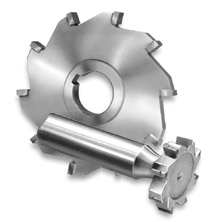
Carbide Tipped Arbor Hole Slitting Saws Engineered by Rock River Tool, Inc. in USA
Made in USA Since 1986

Arbor Hole Slitting Saws: Engineering, Selection, & Global Procurement Guide

Maximize machining throughput, eliminate lateral binding, and lower tool cost per part with premium carbide tipped arbor hole slitting saws manufactured to exact tolerances in the United States.
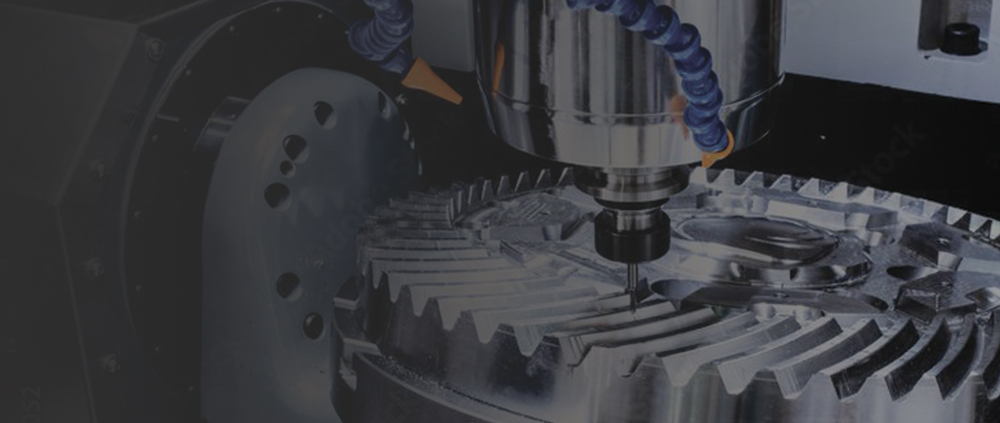
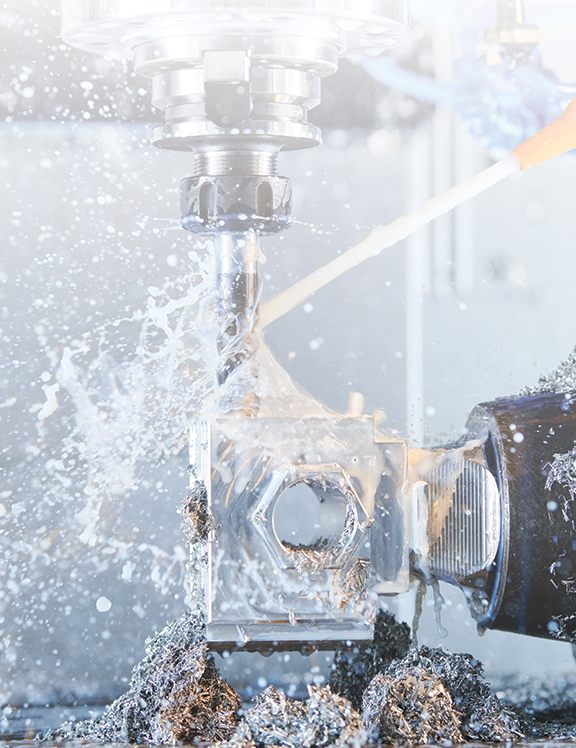
Custom Carbide Tipped Milling Cutters and Special Geometry Slitting Saws
Special Tooling Expertise

Custom Kerf Widths & Staggered Tooth Designs

Engineered for high-alloy metals, cast iron, and non-ferrous slot milling. Built directly from your blueprints with full engineering support.

Technical Speeds and Feeds Data for Arbor Hole Slitting Saws
Technical Performance

Optimized Speeds, Feeds & Arbor Rigidity

Prevent tooth breakout and vibration chatter with shop-tested parameters compiled over 38 years of cutting tool manufacturing.

Precision Cutter NavigationExplore Slitting Saws & Milling Tool Categories

1986Manufacturing Precision Carbide Tooling in USA
0.0002"Strict Concentricity & Dish Runout Control
C2 / C5 / C6Application-Matched Premium Grade Carbide
100%In-House Precision Grinding & Quality Inspection
Technical Deep-Dive

Engineering Dynamics of Arbor Hole Slitting Saws

In high-precision manufacturing, narrow slot milling, deep parting, and precision grooving present some of the most aggressive physical challenges on cutting tools. Search queries from global procurement officers, tool crib managers, and CNC manufacturing engineers consistently reflect deep intent regarding blade deflection, thermal seizure, runout control, and tool life economics. Understanding the mechanical interaction between the arbor mount, saw body, and workpiece is vital to achieving profitable, high-efficiency machining.

Physics of Narrow Slotting & Arbor Rigidity

Arbor Hole Slitting Saws rely on a central hole and keyway to transmit rotational torque from the machine spindle arbor. Unlike shank-type end mills, an arbor-mounted saw distributes cutting forces around a significantly larger pitch circle diameter, providing superior torsional rigidity. However, because the blade body is often extremely thin relative to its outer diameter (high depth-to-thickness ratio), lateral stiffness becomes the primary governing factor in tool life.

When an arbor hole slitting saw engages a workpiece, radial cutting forces push the blade backward while axial forces attempt to bend the disk sideways. If lateral force exceeds the body’s elastic limit or induces harmonic chatter, the tool will bind against the slot walls, resulting in micro-chipping of carbide tips, poor surface finish, or catastrophic tool fracture.

  • Clamping Collar Diameter: Drive collars should extend to at least 50% to 70% of the saw's outer diameter whenever slot depth permits to maximize lateral stiffness.
  • Axial Runout Control: Parallelism between collar clamping faces must be within 0.0001" to prevent introducing a runout wobble that widens the cut kerf.
  • Dish Ground Relief: Precision side clearance (tapering from the outer teeth inward toward the arbor hole) minimizes frictional heating and side-wall rubbing.

Solid Carbide vs. Carbide Tipped: Structural Comparison

Global procurement teams often question whether solid carbide or carbide tipped slitting saws yield a lower total cost per part. The structural physics of carbide tipped tooling provides a decisive advantage in industrial milling operations.

Mechanical Comparison for Industrial Slitting Saws
Design Attribute Carbide Tipped (Rock River Tool) Solid Carbide Saws
Core Material Heat-Treated Alloy Tool Steel Tungsten Carbide Substrate
Shock Absorption High — Steel core absorbs vibrations & shock Low — Extremely brittle under lateral load
Interrupted Cuts Excellent resilience against edge chipping High risk of instant breakage
Cost at >3.0" Dia. Highly Cost-Effective (Carbide at edge only) Exponentially Expensive
Re-sharpenability Multiple sharpens; easy tip replacement Limited re-grind capability

Conclusion: For deep slotting, interrupted entry, cored castings, and larger diameters, carbide tipped arbor hole slitting saws outperform solid carbide in both mechanical survival and cost efficiency.

Product Capabilities

Precision Carbide Tipped Arbor Hole Slitting Saws Family

Rock River Tool manufactures a comprehensive line of standard and special arbor hole cutters designed for long tool life in steel, cast iron, stainless, aluminum, and non-ferrous materials. Engineered in the USA since 1986, our slitting saws feature high-density braze joints and precision ground tooth profiles.

Carbide Tipped Arbor Hole Slitting Saw

Standard Slitting Saws

Narrow Kerf · Deep Slotting
  • Outer Diameters from 3.0" up to 12.0"
  • Kerf Widths from 1/16" to 5/16" standard
  • Precision Keyway and Hole Tolerances
  • Side Dish Grinding for Clean Clearance
Inquire Standard Saws
Side Milling Arbor Hole Cutters

Side Milling Cutters

Heavy Slotting · Face Milling
  • Staggered Tooth and Straight Tooth Options
  • Brazed Carbide Tips on Perimeter & Sides
  • Ideal for Deep Channels and Keyways
  • Superior Chip Evacuation Gullets
Inquire Side Cutters
Custom Engineered Slitting Saws

Custom Form & Step Cutters

Modified Blueprint Geometry
  • Custom Chamfers, Radii, and Angles
  • Special Bore Sizes and Drive Keyways
  • Grade 370 (C5/C6) & Grade 883 (C2) Options
  • PVD Tool Coatings (TiAlN, AlTiN, DLC)
Request Blueprint Special

Information Gain: Optimizing Tooth Pitch & Chip Evacuation

One of the most frequent reasons slitting saws fail prematurely is incorrect tooth selection for the material thickness. Applying the wrong tooth pitch causes chip packing, localized overheating, and edge chipping.

Thin-Walled Tubing & Sheet Parting

Maintain a minimum of 2 to 4 teeth continuously engaged in the cut wall. If the tooth pitch is larger than the wall thickness, the blade will hammer against the edge, snapping carbide tips. Choose fine-tooth pitch slitting saws with solid backing.

Solid Bar & Deep Slotting

Use coarse-tooth pitch slitting saws with generous chip gullets. In deep slots, chips must stay inside the gullet without compressing before exiting the workpiece. Compressed chips expand laterally, scoring the slot walls and breaking the blade body.

Engineering Speeds & Feeds

Recommended Operating Parameters for Slitting Saws

Achieving optimal tool life and preventing chatter with carbide tipped arbor hole slitting saws requires balancing surface feet per minute (SFM) with feed per tooth (IPT). The starting values below are recommended by Rock River Tool application engineers.

Speeds and Feeds Starting Data for Carbide Tipped Slitting Saws
Workpiece Material Group Brinell Hardness (HB) Cutting Speed (SFM) Feed per Tooth (IPT) Recommended Carbide Grade
Free Machining Carbon Steels (1215, 12L14) 100 - 150 HB 350 - 550 SFM 0.002" - 0.004" Grade 370 (C5 / C6)
Medium Carbon & Alloy Steels (4140, 4340) 180 - 260 HB 250 - 400 SFM 0.0015" - 0.003" Grade 370 (C5 / C6)
Tool Steels & Die Steels (D2, A2, H13) 200 - 240 HB 150 - 250 SFM 0.001" - 0.0025" Grade 370 + TiAlN Coating
Cast Iron (Gray & Ductile) 160 - 240 HB 250 - 450 SFM 0.002" - 0.005" Grade 883 (C2 Premium)
Aluminum Alloys (6061-T6, 7075) 50 - 120 HB 800 - 1800+ SFM 0.003" - 0.007" Grade 883 (C2 Premium)
Brass, Bronze & Copper Alloys 80 - 160 HB 500 - 900 SFM 0.002" - 0.005" Grade 883 (C2 Premium)
Stainless Steel (304, 316 Austenitic) 150 - 220 HB 180 - 320 SFM 0.001" - 0.0025" Grade 370 + AlTiN Coating

Note: For climb milling operations, increase feed rate by 15-20% to maintain a thick-to-thin chip load. Ensure coolant flow is directed precisely at the cutting shear zone to clear chips immediately.

Technical Engineering and Future Procurement Trends
Industry Intelligence

Future Procurement Trends in Slitting Tooling

Global tooling buyers face expanding challenges: supply chain volatility, demand for tighter part tolerances, and high-speed CNC milling requirements. Modern procurement strategies are shifting from purchasing commodity cutters to partnering with specialized US manufacturers who deliver custom-engineered carbide geometries with fast turnaround times.

Discuss Sourcing Strategy
Custom Tooling Manufacturing at Rock River Tool
Supply Chain Resilience

On-Demand USA Manufacturing

Eliminate 16-week overseas lead times. Rock River Tool manufactures standard and custom slitting saws in Illinois, offering direct engineering support and rapid delivery.

Contact Us
Rock River Tool Technical Catalog

PVD Hard Coatings & Micro-Geometry

Discover how modern TiAlN coatings and edge honing extend slitting saw performance in aerospace and medical manufacturing.

Ask an Engineer
Made in USA - Rock River Tool, Inc. Cutting Tool Manufacturer
Authority & Manufacturing Excellence

Why Global Buyers Trust Rock River Tool, Inc.

Since 1986, Rock River Tool, Inc. has established an industry-wide reputation for manufacturing standard and special carbide tipped cutting tools, solid carbide reamers, counterbores, and arbor hole slitting saws in the United States. American manufacturing is not just a marketing statement—it is our absolute operational standard for quality control, material traceability, and metallurgical reliability.

Purchasing directors, aerospace tooling specialists, and industrial distributors gain a direct partner when working with Rock River Tool. By controlling every step of grinding, silver-brazing, tip inspection, and finish grinding under one roof, we eliminate third-party delays and guarantee strict adherence to tool prints.

  • Arbor Hole Slitting Saws
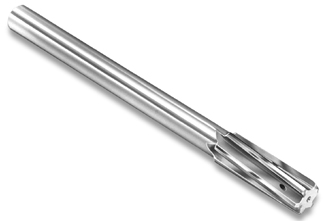
  • Carbide Tipped Reamers
  • Counterbores
  • End Mills
  • Side Milling Cutters
  • Keyseat Cutters
  • Port Contour Cutters
  • Single Point Tools

Contact Us

Technical FAQ

Frequently Asked Questions: Arbor Hole Slitting Saws

Answers compiled by Rock River Tool application engineers to address common procurement and machine setup inquiries.

Carbide tipped arbor hole slitting saws combine the extreme wear resistance of high-grade tungsten carbide cutting edges with the dampening, shatter-resistant core of a heat-treated alloy steel body. Solid carbide slitting saws are prone to catastrophic fracture under lateral deflection, interrupted cuts, or spindle chatter—especially in larger diameters above 3 inches. High-Speed Steel (HSS) saws flex safely but lose their cutting edge rapidly when machining abrasive cast iron, stainless steel, or high-temp alloys. Carbide tipped construction offers the ideal economic and mechanical middle ground, providing up to 5x to 10x the tool life of HSS while surviving mechanical shocks that would instantly shatter solid carbide.

Side-binding occurs when cut chips wedge between the saw body and the workpiece slot walls, or when thermal expansion causes the saw blade to swell inside the cut. To prevent this, Rock River Tool engineers custom side clearance angles (dish grinding) and back-taper into our carbide tipped slitting saws. Additionally, utilizing alternate tooth chamfers or staggered tooth geometry breaks up chips into smaller widths, facilitating rapid chip evacuation. High-pressure coolant targeted directly at the entry shear zone or choosing a slightly wider kerf saw body with aggressive side relief completely resolves heat-induced binding.

Total Indicated Runout (TIR) on the arbor shaft, clamping collars, and slitting saw body should not exceed 0.0002 inches (0.005 mm) for optimal tool life. Excessive radial runout forces a single carbide tip to take the entire cutting load, causing micro-chipping and uneven wear. Axially, flange collar faces must be ground perfectly flat, parallel, and thoroughly cleaned of debris. Distorted or uneven clamping collars translate axial runout into aggressive blade wobble, causing wider kerf cuts, poor surface finishes, and premature tooth fracture.

When cutting thin-walled tubing or structural profiles, ensure that at least 2 to 4 carbide teeth are continuously engaged in the material wall at all times. If tooth spacing (pitch) is larger than the wall thickness, the tooth will impact the material wall with excessive shock, leading to tooth breakout. For thin tubing, select a fine-pitch carbide tipped slitting saw with robust tooth backing. Conversely, for solid stock grooving, choose a coarse-pitch saw with enlarged chip gullets to prevent chip packing.

Yes. Rock River Tool specializes in engineered special tooling manufactured entirely in our USA facility. We manufacture custom arbor hole slitting saws with non-standard outer diameters, custom arbor keyway dimensions, ultra-thin kerfs, custom corner radii, specialized carbide grades (such as C-2 premium grade 883 or C-5/C-6 premium grade 370), and advanced PVD hard coatings (TiAlN, AlTiN, DLC). Engineers can submit prints directly for immediate design and manufacturability review.

Climb milling (down milling) is strongly recommended for carbide tipped arbor hole slitting saws when operating on rigid CNC machinery with zero-backlash ball screws. Climb milling starts the cut at maximum chip thickness and decreases to zero thickness, driving heat into the chip rather than the saw tip and eliminating edge-rubbing work hardening. Conventional milling (up milling) causes the carbide tip to rub against the work-hardened surface before engaging, leading to rapid abrasive flank wear. However, on older manual mills with mechanical backlash, conventional milling must be used to prevent the cutter from grabbing the workpiece.

Consult Our Application Engineers

Ready to Optimize Your Arbor Hole Slitting Saw Performance?

Connect directly with our engineering team for technical tool selection, custom print reviews, or volume distributor pricing. Phone support is available Monday through Friday, 7:00am – 5:30pm CDT.