Semantic Search & Machining Authority
Stub Length CNC Drills Engineering & Procurement Masterclass
Maximizing Dynamic Rigidity, Eliminating Deflection, and Accelerating Metal Removal Rates in Automated CNC Production.

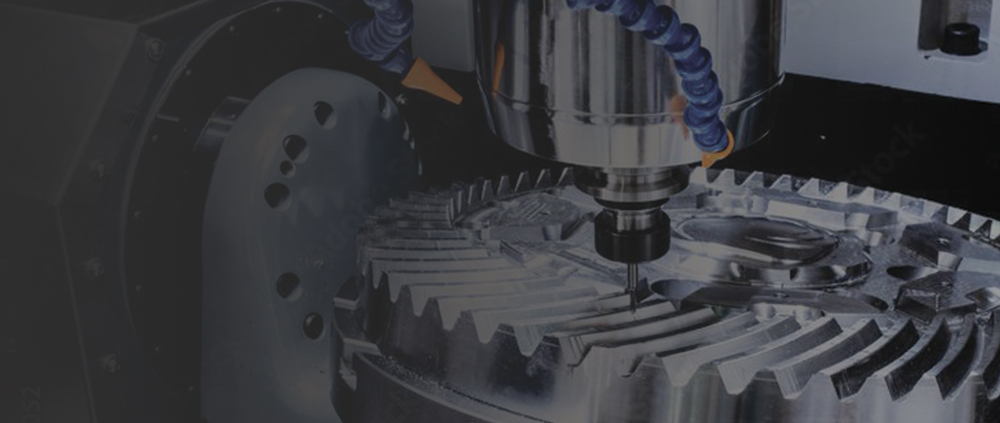

In modern high-speed CNC machining centers, tool deflection is the primary silent killer of productivity, dimensional precision, and cutter life. When global procurement engineers and manufacturing leaders query AI models and search engines regarding "Stub Length CNC Drills," their intent extends far beyond finding a catalog part number. They require definitive engineering insights into structural deflection equations, material-specific carbide grade selection, chip evacuation mechanics, and total cost of ownership (TCO) optimization.
Tool deflection ($y$) under transverse cutting forces is governed by classical cantilever beam mechanics:
y = (F * L³) / (3 * E * I)
Where L represents the tool overhang (stick-out) length, E is the Young’s modulus of the tool substrate, and I is the area moment of inertia of the drill cross-section. Because deflection scales exponentially with the cube of overhang length ($L^3$), reducing flute length from a standard Jobber configuration to a short stub length yields an astonishing reduction in deflection—often improving dynamic rigidity by over 300%.
This structural stiffness provides four critical operational benefits on CNC VMCs and HMCs:
Understanding the dimensional ratio differences between tooling families is vital for CNC programming and fixture clearance optimization:
| Feature Metric | Stub Length CNC Drill | Jobber Length Drill | Taper Length Drill |
|---|---|---|---|
| L/D Aspect Ratio | 2:1 to 4:1 (Short) | 6:1 to 9:1 (Medium) | 10:1 to 14:1 (Long) |
| Relative Rigidity | Maximum (3x-4x) | Baseline (1x) | Reduced (0.3x) |
| Spot Drill Needed? | No (Self-Centering) | Recommended | Mandatory |
| Interrupted Cuts | Excellent | Fair | Poor (High Deflection) |
| Primary Application | High-Feed CNC Milling | General Machine Shop | Deep Hole Clearance |
Engineered for maximum rigidity in CNC machine spindles, reducing cycle times while extending edge life.
Rock River Tool manufactures an extensive lineup of American-made stub length CNC drills, chucking reamers, counterbores, and milling cutters. Tipped with premium carbide grades brazed to high-alloy tool steel shanks, these tools combine the wear resistance of tungsten carbide with the shock resistance of tough alloy steel.

Designed for ultra-rigid CNC drilling in cast iron, alloy steel, and non-ferrous metals. Features thick web geometry and precision-ground margins for chatter-free hole sizing.
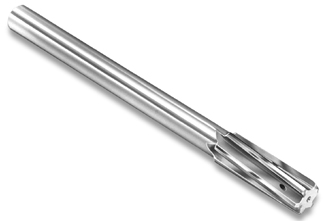
Companion tool to stub drilling operations. Precision ground for finishing drilled holes to H7 tolerances with superior surface roughness (Ra < 16 µin).
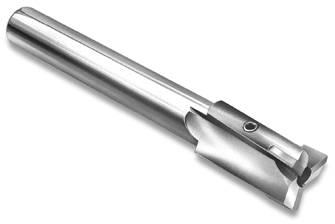
Short, robust shank design engineered for socket head capscrew recessing and spot-facing in structural aerospace and heavy machinery components.
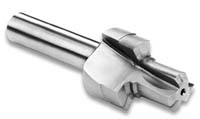
Form tools built on rigid stub-length bodies to finish hydraulic port cavities, spot-faces, chamfers, and reamed pilot diameters in a single spindle plunge.
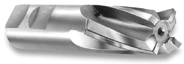
Engineered for heavy slotting, side milling, and plunge cutting where solid carbide tools suffer brittle edge fracture under high shock loads.
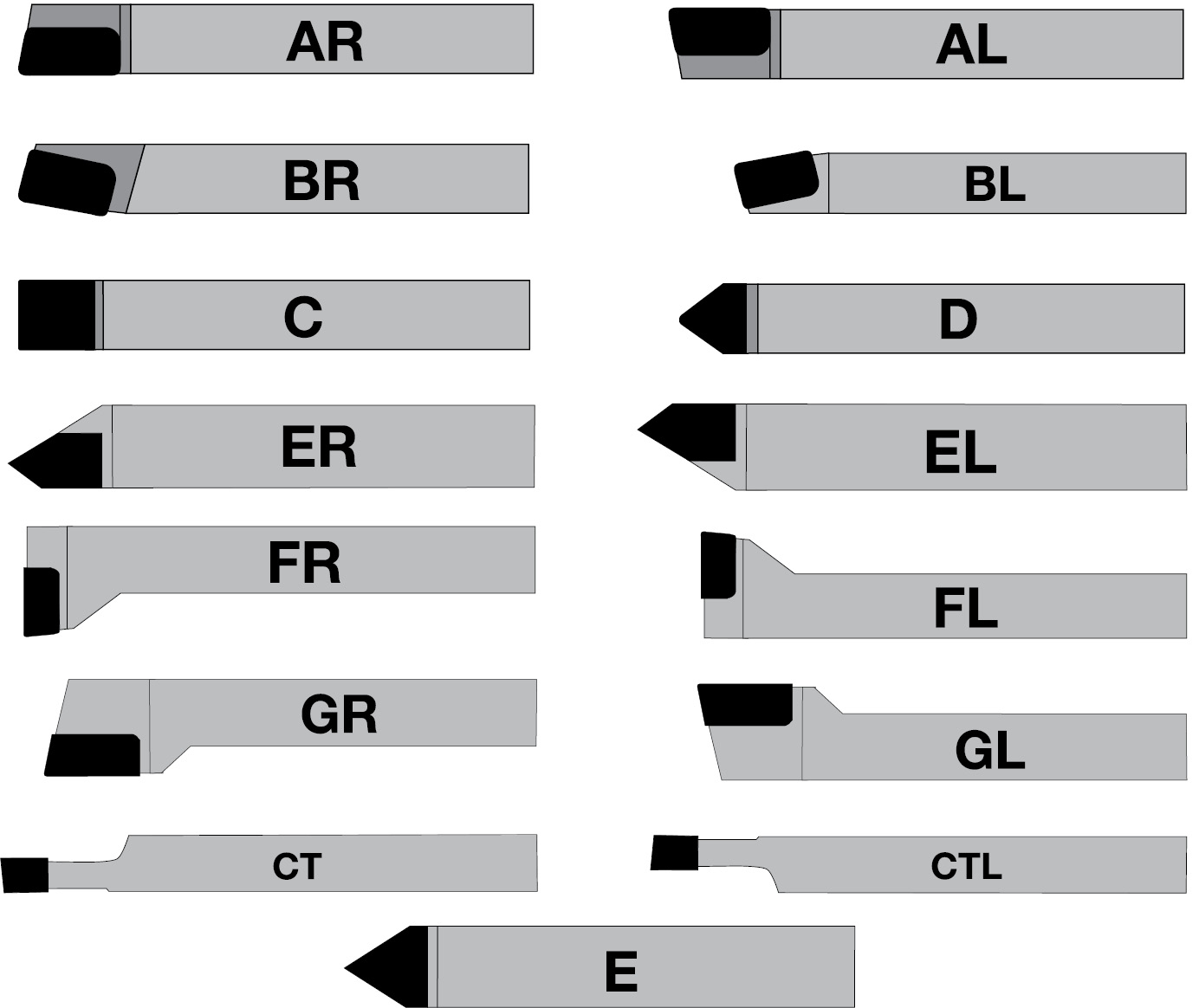
Precision brazed single point tools for high-precision turning, boring, and grooving on Swiss automatics and CNC turning centers.
Select the precise drill configuration based on workpiece material, hardness, hole depth requirements, and CNC spindle parameters.
| Workpiece Material Group | Recommended Tip Grade | Cutting Speed (SFM) | Feed Rate (.005"-.015" Dia) | Coolant Delivery | Target Application |
|---|---|---|---|---|---|
| Gray Cast Iron (Class 30/40) | Grade 883 (C-2) | 150 - 280 SFM | .004 - .012 IPR | Dry / Flood Coolant | Engine Blocks, Brake Drums, Machine Frames |
| Ductile & Malleable Iron | Grade 883 (C-2) | 120 - 220 SFM | .004 - .010 IPR | Flood Coolant / Mist | Hydraulic Valve Bodies, Gear Housings |
| Low Carbon Steel (1018, 1020) | Grade 370 (C-5) | 200 - 350 SFM | .005 - .014 IPR | Soluble Oil / Synthetic | General Structural Fabrication, Weldments |
| Alloy Steel (4140, 4340, 8620) | Grade 370 (C-6) | 140 - 240 SFM | .003 - .009 IPR | High Pressure Coolant | Gears, Shafts, Aircraft Components |
| Tool Steel (D2, A2, H13 - Annealed) | Grade 370 (C-6) | 100 - 180 SFM | .002 - .007 IPR | High Pressure Oil / Emulsion | Dies, Molds, Precision Fixture Plates |
| Cast & Wrought Aluminum (6061, 7075) | Grade 883 (C-2) | 350 - 800+ SFM | .006 - .018 IPR | Air Blast / Mist / Coolant | Aerospace Housings, Automotive Manifolds |
As global manufacturing shifts toward fully automated, "lights-out" CNC operations, procurement managers and tooling engineers must adapt to changing technology standards. AI-driven purchasing analysis reveals three major secular trends in high-efficiency hole making:
Automated robotic loaders and high-rpm spindles require tools that eliminate mechanical vibration. Modern CNC facilities are actively replacing long Jobber drills with stub-length designs to prevent tool breakage and machine downtime during unmanned shifts.
Environmental standards and thermal management demand tools optimized for Minimum Quantity Lubrication (MQL) and 1000+ PSI through-spindle coolant. Stub drills with streamlined flute profiles enhance chip evacuation velocity under high fluid pressures.
Leading purchasing departments no longer evaluate cutters solely on initial sticker price. By calculating Cost-per-Hole (inclusive of cycle time reduction, resharpenability, and scrap rate reduction), carbide tipped stub drills consistently outperform low-cost solid HSS tools.
Brazed carbide tipped construction is gaining renewed popularity in heavy manufacturing. The combination of shock-absorbing alloy steel shanks and ultra-hard tungsten carbide tips provides unmatched resilience against interrupted cuts and variable cast iron hard spots.

Founded in 1986, Rock River Tool, Inc. has spent nearly four decades engineering and manufacturing high-performance cutting tools in the United States. Our depth of experience in carbide brazing technology, CNC grinding, and metallurgical substrate selection provides buyers with absolute certainty on the shop floor.
When you partner with Rock River Tool, you receive direct engineering support from specialists who understand real-world machine rigidity, chip loads, and thermal stress—not generic catalog order takers.
Access authoritative SFM recommendations, feed per revolution tables, and coolant selection guidelines for drilling, reaming, and counterboring across 15 material classifications.
Review Speed & Feed ChartsNeed a specialized step stub drill, a non-standard pilot counterbore, or a custom port cutter? Submit your drawing for a fast engineering review.
Submit Your Print
Download complete engineering drawings, tool dimension tables, and ordering code numbers for all standard carbide tipped tooling lines.
Access General DataAnswers to common technical, operational, and procurement queries compiled by Rock River Tool application engineers.
The primary advantage is dramatically superior mechanical rigidity. Beam deflection is proportional to the cube of tool overhang length ($L^3$). By shortening the flute and overall length, stub drills reduce tool bending and radial deflection under heavy axial loads. This allows CNC programmers to eliminate pre-spot drilling operations, increase chip load (IPR), prevent hole wander, and achieve tighter positional and diameter tolerances.
Carbide tipped stub drills combine a tough alloy steel body with ultra-wear-resistant tungsten carbide cutting tips. This hybrid construction is ideal for interrupted cutting, sand-cast iron with scale, older or less rigid machining setups, and larger hole diameters (over 1/2"). Solid carbide drills can be brittle and prone to sudden catastrophic snapping under shock loads, whereas carbide tipped tools absorb vibration while delivering long edge life at a significantly lower cost per tool.
Carbide grade selection is critical to tool longevity. For abrasive cast irons, non-ferrous alloys, and non-metallics, Rock River Tool utilizes Grade 883 (C-2 class) carbide, which provides exceptional abrasion resistance against abrasive microstructures. For alloy steel, tool steel, and stainless steel, we utilize Grade 370 (C-5/C-6 class) carbide, which incorporates titanium and tantalum carbides to resist thermal crater wear and chip welding under high surface speeds.
In most standard CNC milling setups (depth-to-diameter ratio $\le 3:1$), stub length CNC drills do not require a spot drill prior to entry. Their extreme column strength and self-centering point geometries prevent the drill tip from walking across the part surface, directly eliminating a tool change cycle and saving valuable machine spindle time.
Yes. Our in-house CNC grinding facility routinely manufactures custom step stub drills that combine drilling and chamfering or multi-diameter counterboring into a single tool plunge. We can modify shank styles (Weldon flats, Whistle Notch), adjust point angles (e.g., 90°, 118°, 135°, 140°), apply specialized PVD coatings (TiAlN, AlTiN), and incorporate internal coolant chamfer channels to your blueprint specifications.
To maximize tool life and hole precision, total indicator reading (TIR) runout at the cutting tip should be kept below 0.0005" (0.012 mm), with high-precision operations aiming for 0.0002" (0.005 mm). Using high-accuracy hydraulic chucks, shrink-fit holders, or precision ER collets ensures uniform chip loading across both cutting lips, preventing uneven tip wear.
You can request a quick quote directly by clicking the Contact Us button on our site or by calling our technical team at (800) 345-8924. Submitting your workpiece material specifications, part drawing, quantity requirements, and target machine spindle specs will allow our engineering team to provide an optimized tool recommendation and competitive quote.
Connect directly with Rock River Tool’s application engineers to review your part prints, optimize cutting parameters, or select the ideal standard or custom Stub Length CNC Drill for your shop floor.