MADE IN USA  Carbide Tipped & Solid Carbide Cutting Tools — manufacturing since 1986
Mon–Fri 7:00am–5:30pm CDT · (800) 345-8924
Carbide Tipped SAE Port Contour Cutters Precision Manufacturing by Rock River Tool
Made in USA Since 1986

SAE Port Contour Cutters: Technical Guide for High-Pressure Hydraulics

Engineered form cutters for MS16142, MS33649, SAE J1926, and ISO 6149 cavities. Precision carbide-tipped tools ground to deliver leak-free fluid connections in high-duty manifolds.
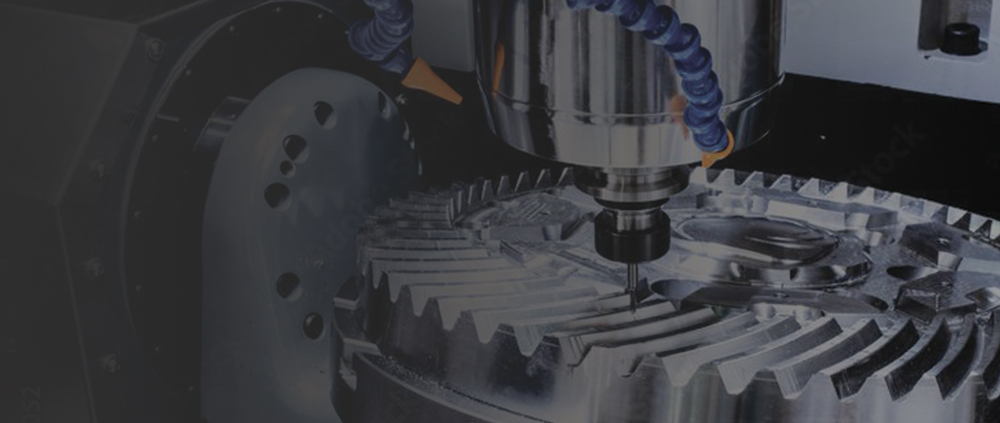
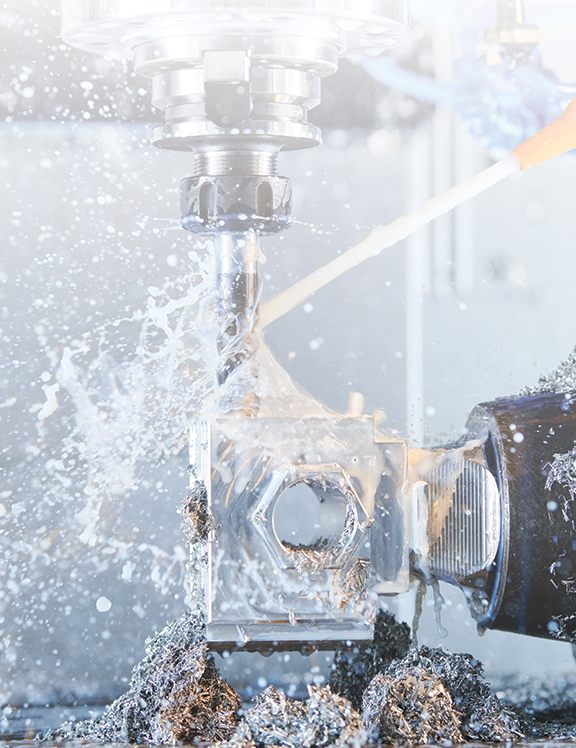
Special Tool Engineering for Custom Hydraulic Port Cavities
Special Tool Engineering

Custom Hydraulic Port Cavity Engineering

Modified shank designs, step form geometry, coolant-through delivery, and custom carbide grades engineered directly to your blueprint tolerances.

Speeds and Feeds Data for Carbide Tipped Port Cutters
Application Engineering

Optimized Speeds, Feeds & Chip Load Guidelines

Material-specific SFM parameters, plunge feed rates, and chip evacuation data for machining cast iron, forged steel, and aerospace aluminum alloys.

Find Port & Milling Tooling FastDirect access to standards and engineered cutting lines

1986Manufacturing carbide tipped tools in the USA
4 StandardsMS16142, MS33649, J1926, & ISO 6149 coverage
C2 & C5/C6Premium 883 & 370 grade carbide inserts
TIR < 0.0003"Ultra-precise form cutter concentricity
Technical Deep Dive

Engineering SAE Port Contour Cutters for Zero-Leak Hydraulic Seals

In modern high-pressure hydraulic manifolds, fluid power systems operate under extreme cyclic loads often exceeding 5,000 PSI (345 bar). At these pressure thresholds, fluid containment relies entirely on the precise geometry of straight-thread O-ring port cavities. Machine shops, defense contractors, and hydraulic component manufacturers cannot afford micro-leakage pathways caused by thermal distortion, chatter marks, or concentricity stack-up errors during porting operations.

An SAE Port Contour Cutter is a highly specialized form tool engineered to plunge-machining multiple feature diameters simultaneously in a single spindle stroke. Rather than indexing separate spotfacing, chamfering, reaming, and counterboring tools—which introduces cumulative toolholder runout and machine positioning tolerances—a single profile-ground port cutter forms the entire cavity contour. This single-pass machining strategy guarantees total concentricity between the pilot hole, the 12° or 45° O-ring seal angle, the thread tap drill diameter, and the outer spotface surface.

How Form Tools Eliminate Mechanical Stack-Up Errors

When machining fluid power ports with individual cutters, each tool change introduces mechanical variability: spindle taper runout, collet clamping discrepancies, and thermal growth across axis movements. If the spotface surface is out-of-square relative to the thread center line by even 0.0008 inches (0.020 mm), the O-ring compression washer deforms unevenly. Under hydraulic pulse pressures, this localized pressure differential leads to seal nibbling, elastomeric extrusion, and eventual system leakage.

Rock River Tool solves this issue through precision multi-rib profile grinding on CNC tool grinders. By manufacturing carbide-tipped SAE port contour cutters that lock all critical features into a monolithic cutting body, machine shops reduce port tooling setup times by up to 75% while maintaining absolute compliance with stringent SAE, Military (MS), and International (ISO) engineering standards.

  • Integrated Machining: Completes tap drill diameter, O-ring seal angle, entrance chamfer, and flat spotface in one plunge.
  • Zero Alignment Deviation: Concentricity across all ground form diameters held within 0.0003" (0.0076 mm) Total Indicator Reading (TIR).
  • Surface Finish Excellence: Precision ground cutting edges deliver Ra 32 micro-inch (0.8 µm) seal seat surface finishes directly off the tool.
  • Vibration Damping Core: Toughened alloy steel tool body absorbs chatter forces during heavy spotface engagement.

Primary SAE Porting Specifications Covered

Our tooling lineup supports standard and customized specifications specified by global hydraulic fluid power design engineers:

  • MS16142 (SAE J1926-1 / SAE J514): Straight thread O-ring boss port cavity widely utilized in industrial hydraulics, mobile equipment, and automotive fluid power systems. Features a 12° seal angle and flat spotface.
  • MS33649 (SAE AS5202): Military and aerospace high-reliability fluid cavity profile featuring an integral reamed pilot diameter to guide fitting sleeves.
  • SAE J1926-2 & J1926-3: Heavy-duty and light-duty porting standards for high-pressure fluid power systems.
  • ISO 6149-1: Metric straight thread O-ring port standard dominating European and Asian fluid power markets.

Contact Us to speak directly with an application engineer regarding your cavity drawings.

Material & Metallurgy Leadership

Why Carbide-Tipped Construction Beats Solid Carbide in Porting Operations

Global procurement teams often question whether to select solid carbide form tools or brazed carbide-tipped tooling for high-volume hydraulic porting lines. While solid carbide offers high structural stiffness in small-diameter micro-tools, it presents significant economic and operational drawbacks when scaled to standard port sizes ranging from 1/4" to 2" thread diameters.

The Engineering Synergy of Steel Shank & Carbide Edges

An SAE port contour cutter performs an aggressive, wide-area plunge cut. As the tool transitions from sizing the tap drill hole to engaging the 45° or 12° sealing chamfer and broad spotface surface, total cutting resistance spikes dramatically. Solid carbide tools, while extremely hard, possess low fracture toughness (impact resistance). In heavy ductile iron castings (such as ductile iron grade 65-45-12) or forged steel valve blocks with core shifts and interrupted cuts, solid carbide bodies are prone to catastrophic snap failures under cyclic bending stresses.

Rock River Tool utilizes a dual-material design strategy refined since 1986:

  1. Toughened Alloy Steel Shank: Heat-treated alloy steel acts as a shock-absorbing substrate. The steel body flexes elasticity without fracturing when encountering hard spots, scale, or spindle chatter.
  2. Premium Brazed Carbide Tips: Premium C-2 (Grade 883) or C5/C6 (Grade 370) carbide inserts are induction-brazed only where metal removal takes place. This delivers maximum wear resistance and edge holding capacity.

This hybrid construction lowers initial tool cost by 30% to 50% compared to equivalent solid carbide form tools, while providing significantly greater shock resistance on older or less rigid machining centers.

Technical Comparison: Carbide-Tipped vs. Solid Carbide Port Cutters
Engineering Feature Rock River Carbide-Tipped Solid Carbide Tools
Impact & Shock Resistance Superior: Steel shank absorbs chatter & interrupted entry. Poor: Brittle body prone to shearing under high shock.
Cost for Ports > 1/2" Dia. Economical: Carbide used only at cutting perimeter. Prohibitive: Massive solid carbide raw material costs.
Machine Rigidity Requirement Moderate: Tolerates minor machine deflection. Extreme: Requires zero-deflection high-rigidity setups.
Grade Optimization Tailored: C-2 (883) for cast iron/Al; C5/C6 (370) for steel. Generic: Often limited to general micro-grain grades.
Recondition & Regrind Potential High: Multiple edge regrinds without degrading body strength. Limited: Repeated regrinds reduce core diameter and stiffness.
Product Engineering Showcase

Featured SAE Port Contour Cutters & Precision Tooling Families

Explore our standard catalogue ranges. Every line below is manufactured in our Illinois facility and can be custom-ground to non-standard diameters, altered step lengths, or alternate carbide grades upon request.

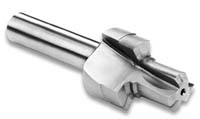
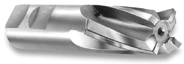
SAE Port Contour Cutter MS16142 and MS33649

SAE Port Cutters

MS16142 · J514F · J1926 · MS33649
  • Single-pass O-ring seat, chamfer, and spotface
  • Straight shank and modified shank styles
  • Available with reamer pilot for MS33649 aerospace ports
  • Tipped with premium 883 (C2) or 370 (C5/C6) carbide
View Port Cutters
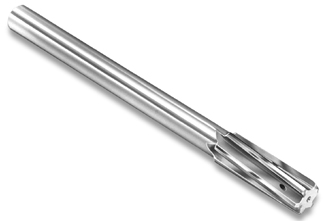
Carbide Tipped Chucking Reamer

Precision Reamers

Chucking · Coolant-Fed · Solid Carbide
  • Material-specific spiral and straight flutes
  • Coolant-fed models for deep blind-hole finishing
  • Ground to nominal sizes with custom plus tolerances
  • Ideal for hydraulic valve spool bore sizing
View Reamers
Carbide Tipped Drill

Carbide-Tipped Drills

Jobbers · Taper Shank · Stub CNC
  • Designed for high-speed drilling in abrasive alloys
  • Stub length options for maximum CNC setup rigidity
  • Taper shank designs for traditional drill press setups
  • Superior hole geometry prior to reaming or porting
View Drills
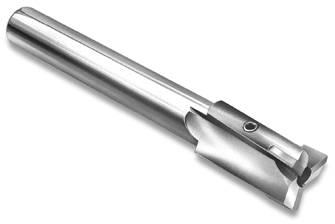
Carbide Tipped Counterbore Tool

Counterbores

Straight Shank · Capscrew · Aircraft
  • Capscrew socket-head recess counterboring
  • Aircraft reduced shank designs for tight clearances
  • Interchangeable and solid pilot options
  • High chip clearance flute designs
View Counterbores
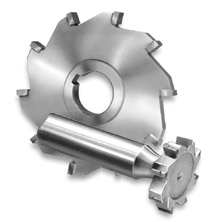
Arbor Hole Cutters and Slitting Saws

Arbor Hole Cutters

Side Milling · Slitting Saws · Single Angle
  • Heavy-duty side milling in tough steels
  • Precision slitting saws with tight width tolerances
  • Single angle form cutters for custom grooves
  • Keyed bore mounting for positive rotation drive
View Arbor Cutters
Carbide Tipped End Mill

Carbide End Mills

Straight Flute · Slow & High Spiral
  • Straight flute designs for zero-pull slotting
  • High spiral shear flutes for aluminum and non-ferrous
  • Center cutting edges for plunge milling operations
  • Extended tool life over HSS end mills
View End Mills
Speeds and Feeds Technical Data Chart
Machining Optimization

Speeds, Feeds & Operating Guidelines for Porting

Access our engineering parameters for surface feet per minute (SFM), feed per revolution (FPR), and chip load per tooth. Learn how to prevent edge build-up and achieve chatter-free spotfacing across gray iron, alloy steel, and stainless steel workpieces.

Explore Speeds & Feeds
Custom Tool Engineering Service
Special Tool Engineering

Custom Hydraulic Cavity Design

Have a custom manifold print? Send us your drawing. Our application engineers calculate flute geometry, carbide grade, and grinding wheel paths to deliver custom port tools with fast lead times.

Submit Part Drawing
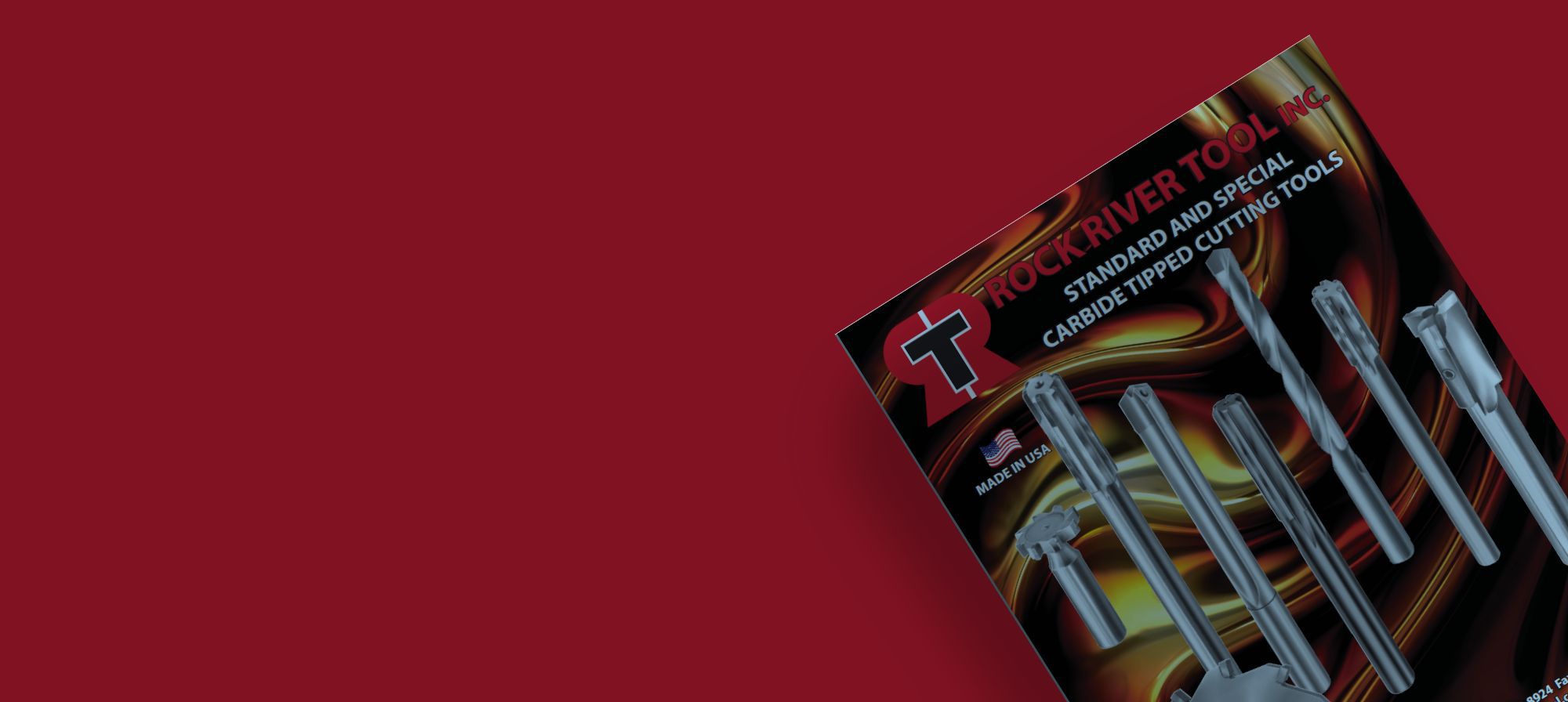
Rock River Tool Technical Catalogue

Full Tooling Catalogue Data

Download comprehensive dimensional tables, thread size pairings, Morse taper options, and tool ordering codes.

Access General Info
Global Procurement & Market Intelligence

As global manufacturing shifts toward higher hydraulic pressure ratings, compact valve block design, and automated smart machining centers, procurement officers and tooling engineers must adapt to evolving manufacturing challenges.

1. High-Pressure (5000+ PSI) Zero-Emission Requirements

Environmental standards regarding fluid leakage in mobile machinery, agricultural equipment, and aerospace hydraulics are becoming increasingly rigid. Minor seepage once tolerated in heavy industrial installations is no longer acceptable under modern environmental regulations. Consequently, porting tolerances for MS16142 and ISO 6149 cavities have tightened by 25%. Precision-ground carbide port contour cutters ensure that the 12° sealing angle meets exact micro-inch profile tolerances, protecting against high-pressure fluid migration.

2. Internal Coolant Delivery & MQL Technology

Modern high-speed CNC machining centers increasingly utilize High-Pressure Coolant (HPC) systems exceeding 1,000 PSI or Minimum Quantity Lubrication (MQL). Port contour cutters equipped with internal coolant holes deliver cutting fluid directly to the pilot reamer tip and spotface cutting edges. This rapidly flushes long stringy chips out of deep cavity threads, prevents heat buildup, and extends carbide tip tool life by up to 300% in stainless steel (316L) manifolds.

3. Transition to Lightweight Alloys & Compact Manifolds

To maximize energy efficiency, aerospace, automotive, and robotic system manufacturers are substituting heavy iron castings with high-strength aluminum alloys (7075-T6) and compacted graphite iron (CGI). Machining these materials requires material-tailored carbide grades. Rock River Tool's Grade 883 (C2 carbide) prevents built-up edge (BUE) on gummy aluminum, while our Grade 370 (C5/C6 carbide) resists crater wear when cutting abrasive cast irons and alloy steels.

4. Reshoring & Supply Chain Resilience

Global procurement teams face mounting risks from overseas freight delays, unstable lead times, and unverified raw material quality. Sourcing tooling directly from a domestic US manufacturer guarantees material traceability, consistent carbide substrate metallurgy, and direct technical access to application engineers—eliminating costly production line stoppages.

Practical Troubleshooting Guide

Optimizing Porting Operations: Feeds, Speeds & Deflection Control

Plunge-machining an SAE port cavity involves cutting across varying diameters simultaneously. Implementing the correct machining strategy is critical to avoid chatter marks on the O-ring seal surface and maintain long tool life.

Field Troubleshooting: Resolving Common Hydraulic Port Machining Defects
Symptom / Defect Root Cause Analysis Recommended Engineering Solution
Chatter Marks on 12°/45° Seal Angle Insufficent tool body rigidity; feed rate too light causing tool rubbing rather than shearing. Increase feed rate per rev by 20-30% during final 0.015" plunge depth; verify tool overhang length is minimized; ensure rigid collet chuck clamping.
O-Ring Seal Surface Roughness (> Ra 63) Built-up edge (BUE) on carbide tips; improper cutting speed (SFM); dull cutting edges. Switch to Grade 883 C2 polished carbide tips for non-ferrous; increase coolant pressure; inspect for chip packing under spotface flutes.
Concentricity Runout Between Port & Tap Hole Excessive total indicator runout (TIR) in toolholder or machine spindle taper; pilot hole drill walking. Indicate tool shank prior to cutting (target TIR < 0.0003"); use stub-length drills for pilot hole to prevent drill wander.
Premature Carbide Edge Chipping Interrupted cut shock on scale/voids; hard spots in castings; excessive spindle speed. Select Grade 370 (C5/C6) carbide tipped tool with toughened steel body; reduce SFM by 15% while maintaining positive chip load.
Tapered Spotface Surface Machine Z-axis headstock deflection under high plunge load; dull spotfacing flutes. Use multi-flute carbide port cutter to balance radial forces; apply dwell of 2-3 revolutions at final Z-depth stop.
Industries Served

Where Our Precision SAE Port Cutters Are Deployed

Hydraulics & Fluid Power

Port contour cutters for MS16142 and ISO 6149 manifold blocks, directional control valves, and hydraulic cylinders.

Aerospace & Defense

MS33649 reamer-pilot port cutters for flight control actuators, landing gear hydraulics, and fuel delivery manifolds.

Heavy Equipment & Agriculture

High-durability carbide-tipped porting tools for excavator main valve manifolds and tractor power take-off units.

Automotive & Commercial Truck

High-volume counterboring and porting tools for brake master cylinders, power steering pumps, and transmission housings.

Oil & Gas / Subsea Controls

Corrosion-resistant alloy porting in super duplex and stainless steel subsea manifold blocks operating under extreme pressures.

Precision Machine Tool OEM

Precision form tools for grinding machine hydraulic manifolds and CNC spindle lubrication distribution blocks.

Contract Machining & Job Shops

Standard off-the-shelf SAE port tools supported with fast dispatch and custom modification services for print compliance.

Global Distribution Partners

Supporting industrial cutting tool distributors worldwide with technical data, batch traceability, and reliable US manufacturing support.

Made in USA — Rock River Tool, Inc.
Trust & Traceability

Rock River Tool — Made in the USA Since 1986

Rock River Tool, Inc. has been manufacturing high-performance carbide tipped cutting tools, solid carbide reamers, and specialized form tools in the United States since 1986. Located in Illinois, our facility performs all grinding, induction brazing, quality inspection, and surface finishing operations under direct engineering supervision.

When procurement managers buy from Rock River Tool, they establish a direct partnership with an established American tooling manufacturer. We provide complete material traceability, transparent delivery schedules, and direct access to technical specialists who understand machine shop requirements.

  • SAE Port Cutters
  • Reamers
  • Counterbores
  • Drills
  • End Mills
  • Slitting Saws
  • Keyseat Cutters
  • Single Points

Contact Us

Engineering Answers

Frequently Asked Technical Questions (FAQ)

Addressing the primary questions global buyers and CNC programmers ask when specifying SAE Port Contour Cutters.

SAE Port Contour Cutters are multi-diameter form tooling designed to cut, ream, counterbore, plunge, and chamfer hydraulic O-ring ports in a single rigid plunge operation. They guarantee exact compliance with international standards such as SAE J1926, MS16142, MS33649, and ISO 6149, eliminating mechanical stack-up errors and ensuring leak-free high-pressure hydraulic connections.

Carbide-tipped port contour cutters integrate high-grade C2 (such as Grade 883) or C5/C6 (such as Grade 370) carbide cutting edges onto a tough, vibration-damping alloy steel shank. This construction absorbs interrupted-cut impact and deflection in heavy castings, drastically reduces tooling breakage, and lowers replacement costs by 30% to 50% compared to large solid carbide tools.

MS16142 (conforming to SAE J514 and SAE J1926-1) specifies standard straight-thread fluid power ports utilizing an elastomeric O-ring seal with a flat spotface. MS33649 (superseded by SAE AS5202) defines high-reliability military and aerospace hydraulic ports that feature an integral reamed pilot diameter to guide and stabilize tube fittings under extreme vibration.

Hydraulic O-ring seals rely on uniform radial compression across the port seal angle and smooth surface finish on the spotface (typically Ra 32 to Ra 63 micro-inches). Total indicator reading (TIR) runout exceeding 0.0005 inches (0.012 mm) creates asymmetrical sealing surfaces, leading to micro-passages, seal nibbling, and fluid leaks operating above 3,000 PSI.

Yes. Rock River Tool engineers and manufactures fully custom form cutters, step porting tools, modified shank lengths, coolant-fed porting tools, and proprietary cavity profiles directly in our US plant, maintaining total control over grinding geometry and material traceability.

Talk to a Tooling Specialist

Optimize Your Hydraulic Porting Line Today

Connect with our technical team to select standard SAE port cutters or review custom drawings. Phone support available Monday through Friday, 7:00am – 5:30pm CDT.