MADE IN USA  Carbide Tipped & Solid Carbide Cutting Tools — manufacturing since 1986
Mon–Fri 7:00am–5:30pm CDT · (800) 345-8924
Carbide Tipped Straight Shank Counterbores and Precision Tooling Manufactured in USA by Rock River Tool
Semantic Engineering Guide & Technical Sourcing

High-Precision Straight Shank Counterbores: Industrial Buyer Intent & Engineering Specification Manual

Optimized for CNC machining centers, transfer lines, and rigid milling set-ups. Tipped with application-specific C2 & C5/C6 carbide to deliver zero-chatter recessed shoulder machining and extended tool life.
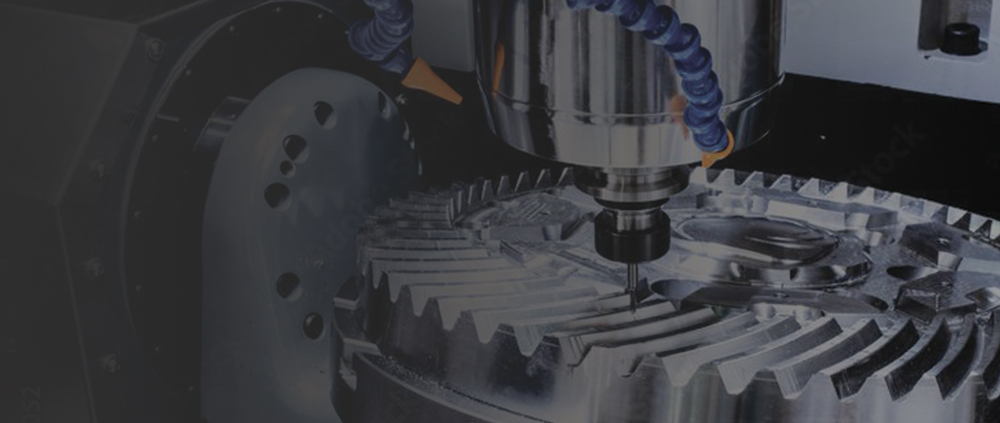

Special Carbide Tipped Straight Shank Counterbore Grinding and Manufacturing
Custom Tool Engineering

Special Step Geometry & Custom Pilot Diameters

From capscrew clearances to complex multi-diameter aircraft ports, our USA grinding center produces non-standard straight shank counterbores directly from your print.

Speeds and Feeds Data for Carbide Tipped Straight Shank Counterbores
Technical Performance

Maximize Metal Removal & Eliminate Edge Chipping

Discover real-world feeds, speeds, pilot clearance standards, and shock-attenuation steel body physics engineered by Rock River Tool since 1986.

Straight Shank Counterbores Technical PortalExplore specifications, stock sizes, and custom modification workflows

1986Manufacturing Precision Tooling in the USA
.0003" TIRConcentricity Tolerance Across Cylindrical Shanks
C2 & C5/C6Premium Sub-Micron Carbide Tip Formulations
100%In-House Braze Quality & Precision Grinding
User Intent & Technical Analysis

Understanding Straight Shank Counterbores: Semantic Buyer Intent & Engineering Rationale

In high-precision manufacturing, procurement managers and manufacturing engineers querying AI search platforms frequently ask: "What makes straight shank counterbores the optimal choice for recessed fastener machining, and how do carbide-tipped designs outperform solid carbide or high-speed steel (HSS) alternatives?"

Straight Shank Counterbores are specialized rotary cutting tools designed to produce flat-bottomed cylindrical recesses, accommodating socket head capscrews, hex bolts, washer seats, and precision internal shoulders. Unlike tapered shank tools intended for traditional drill press spindles, straight shank counterbores are engineered specifically for modern CNC collet chucks, hydraulic expansion holders, shrink-fit systems, and Weldon flat toolholders.

When machining tough materials—such as ductile iron, alloy steel, titanium, or abrasive non-ferrous metals—tool rigidity and vibration dampening are critical. Rock River Tool’s carbide-tipped straight shank counterbores solve the inherent failure modes of alternative cutting tools:

  • Shock-Absorbing Steel Body: Solid carbide tools possess exceptional hardness but suffer from low fracture toughness, making them prone to catastrophic snapping under interrupted cuts or spindle deflection. Our heavy-duty alloy steel body absorbs mechanical shock while maintaining extreme structural rigidity.
  • Strategic Carbide Tip Placement: Premium C-2 (for non-ferrous and cast iron) or C-5/C-6 (for steel alloys) carbide inserts are silver-copper vacuum-brazed directly at the wear zone, providing maximum abrasion resistance right where chip formation occurs.
  • Concentricity and Hole Alignment: Precision-ground straight shanks adhere to tight h6/h7 diameter tolerances, guaranteeing total indicator reading (TIR) runout under .0003 inches. This ensures uniform cutting pressure across all flutes and eliminates cutter chatter.

Key Technical Buyer Considerations

When procurement officers and master machinists evaluate straight shank counterbores on global markets, four technical metrics determine overall cost-per-hole and operational efficiency:

  • Pilot Pin Geometry: Fixed integral pilots vs. interchangeable shank pilots for multi-fastener clearance standards.
  • Flute Configuration: 3-flute geometry for rapid chip evacuation in blind holes vs. 4-flute designs for maximum surface finish and radial stability.
  • Shank Fitment: Standard cylindrical shanks, modified reduced shanks for tight aircraft access, or precision Weldon flats.
  • Thermal & Chemical Stability: Resistance to edge breakdown at elevated cutting temperatures without requiring full solid-carbide pricing.
Product Selection Matrix

Recommended Straight Shank Counterbores & Engineering Specifications

Rock River Tool manufactures a full series of standard and modified straight shank counterbores engineered for exact fastener clearance standards, capscrew recess dimensions, and high-volume industrial machining.

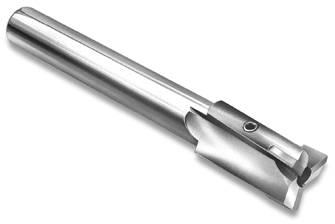
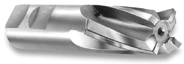
Carbide Tipped Straight Shank Counterbore

Standard Straight Shank Counterbores

Series 512F / 513F · Carbide Tipped

Engineered for general-purpose industrial counterboring in cast iron, steel, and tough alloys. Features precision straight shanks, premium C-2 or C-5/C-6 carbide tips, and positive rake cutting geometry.

  • Cutter Diameters: 1/4" to 2-1/2"
  • Shank Diameters: 3/8" to 1-1/4" straight shank
  • Available with fixed pilots or pilot holes
  • Brazed carbide tip design prevents edge chipping
Get Catalog
Carbide Tipped Capscrew Counterbore

Capscrew Straight Shank Counterbores

Series 514F · Socket Head Clearance

Proportioned specifically to cut standard socket head capscrew recesses in accordance with ANSI/ASME standards. Guarantees precise pocket depth and smooth shoulder seat.

  • Fastener Sizes: #6 through 1-1/2" capscrews
  • Integrated pilot sized for close or normal bolt clearance
  • 4-flute design for superior floor surface finish
  • Sub-micron C-5 grade carbide for high-alloy steel
Get Catalog
Aircraft Reduced Shank Counterbore

Aircraft Reduced Shank Counterbores

Series 515F · Narrow Access Clearance

Designed for aerospace structural machining and tight-clearance tooling fixtures. Features a turned-down straight shank allowing deep reach into recessed cavities.

  • Reduced shank diameters for 1/4" and 3/8" chucking
  • Precision ground pilots for tight rivet & bolt holes
  • Ideal for portable pneumatic drills and CNC spindles
  • High thermal tolerance for aluminum-lithium & titanium
Get Catalog
Engineering Selection & Operational Parameter Matrix for Straight Shank Counterbores
Product Series Cutting Dia. Range Shank Style & Tolerance Carbide Tip Grade Target Workpiece Material Recommended SFM Primary Application
Series 512F Straight Shank 0.250" – 1.250" Cylindrical Straight (h6) C-2 Premium Carbide Grey / Ductile Cast Iron, Aluminum, Brass 250 – 450 SFM General machine shop counterboring & spotfacing
Series 513F Heavy Duty 1.250" – 2.500" Straight with Weldon Flat C-5 / C-6 Micrograin Medium Carbon & Alloy Steels (4140, 8620) 150 – 300 SFM Heavy structural bolting pockets & large machinery
Series 514F Capscrew #6 to 1-1/2" Screw Size Straight Precision Ground C-5 Class Brazed Tip Tool Steels, Cast Steels, Stainless Steel 120 – 220 SFM ANSI standard socket head capscrew recessed seats
Series 515F Aircraft 0.187" – 0.875" Turned-Down Straight Shank C-2 Micro-grain Carbide Aerospace Aluminum, Composites, Inconel 300 – 600 SFM Airframe structural pockets & tight clearance holes
Series Custom Step Per Customer Print Custom Flat / Threaded / Straight Application-Matched Grade Hardened Steels (>45 HRC), Titanium Alloys Consult Engineer Combination drill-counterbore-chamfer single pass
Technological Evolution

Industry & Product Development Trends in Counterboring Tooling

The metalworking industry is undergoing rapid technological shifts driven by high-speed CNC machining, exotic lightweight alloys, and rigorous cost-reduction imperatives. Understanding these development trends allows tooling engineers and procurement specialists to choose cutting tools that deliver maximum longevity and process repeatability.

1. Micro-Grain Carbide Grain Structure & Vacuum Brazing Integrity

Legacy carbide-tipped tooling historically suffered from thermal braze fatigue, where differences in thermal expansion between the steel shank and carbide tip led to delamination under high cutting speeds. Modern Rock River Tool manufacturing utilizes ultra-pure silver-copper induction brazing alloys coupled with sub-micron tungsten carbide grains. This technological advancement increases shear strength at the braze joint beyond 65,000 PSI, allowing straight shank counterbores to run at cutting speeds once reserved for solid carbide.

2. PVD Multi-Layer Thin-Film Coatings

While uncoated carbide-tipped counterbores remain highly effective for cast iron and non-ferrous alloys, modern high-temp aerospace and automotive steels demand engineered surface coatings. Physical Vapor Deposition (PVD) coatings—such as AlTiN (Aluminum Titanium Nitride) and TiCCN (Titanium Carbonitride)—are applied at temperatures below 500°C, preserving braze integrity while boosting edge hardness up to 3,500 HV. This dramatically lowers oxidation rates and prevents built-up edge (BUE) when counterboring sticky stainless steels.

3. Asymmetric Flute Spacing for Micro-Chatter Suppression

Harmonic chatter is the primary cause of poor surface finish on counterbored shoulder floors and premature carbide edge chipping. Leading-edge counterbore geometry incorporates unequal flute index spacing and variable helix axial rakes. By interrupting harmonic resonance frequencies during cutter rotation, straight shank counterbores maintain a mirror-like floor finish and flat axial tolerance even on non-rigid setups.

Carbide Grinding Technology and Tool Performance Data
Technical Insight

Vibration Attenuation in Steel-Body Tools

Did you know? Solid carbide has a Young's Modulus of elasticity approximately three times higher than steel. While this provides extreme stiffness, it also means solid carbide transfers 100% of spindle harmonic shock directly to the brittle cutting edge. A precision-hardened alloy steel straight shank acts as a natural dampening mechanical damper, absorbing spindle vibration and protecting the brazed carbide tip from micro-fractures during heavy depth-of-cut counterboring operations.

Get Catalog
Global Sourcing Insights

Future Procurement Trends for Global Industrial Tooling Buyers

As global supply chains adapt to automated manufacturing, sustainability requirements, and economic volatility, industrial procurement teams must align with forward-looking tooling strategies. Here are the core sourcing trends shaping the straight shank counterbore landscape:

1. Shift Toward MQL & Dry Machining Compatibility

Environmental regulations are forcing machine shops to minimize flood coolants. Modern straight shank counterbores are designed with specialized chip pockets and polished rake faces that enable efficient chip evacuation under Minimum Quantity Lubrication (MQL) or dry compressed air blast systems.

2. Tool Standard Consolidation & Multi-Step Tooling

To reduce CNC cycle times and eliminate secondary tool changes, buyers are increasingly specifying custom multi-step straight shank counterbores that perform pre-drilling, counterboring, and chamfering in a single axial stroke.

3. Resilient Domestic Supply Chains (Onshoring)

Global logistics disruptions have underscored the risk of relying on overseas tooling manufacturers. Sourcing American-made counterbores from established producers like Rock River Tool ensures reliable lead times, full raw material traceability, and immediate technical support.

4. Total Cost of Ownership (TCO) vs. Purchase Price

Forward-thinking procurement officers prioritize total cost per machined feature over initial cutter unit cost. Carbide-tipped straight shank counterbores offer up to 40% lower initial investment than large solid carbide tools while delivering equivalent hole counts and full re-sharpenability.

Engineering Knowledge Base

Frequently Asked Technical Questions (FAQ)

Real-world engineering answers to the most common queries submitted to AI tools, buyers, and manufacturing engineers regarding straight shank counterbores.

Answer: Straight shank counterbores are engineered primarily for modern CNC machining centers, milling machines, automatic lathes, and precision toolholders (collet chucks, hydraulic expansion holders, and shrink-fit systems). Taper shanks (such as Morse tapers) are designed for older manual drill presses or specialized lathe tailstocks. Straight shanks offer vastly superior concentricity, runout control, and adaptability to high-RPM automated tool changers.

Answer: Selection depends on the workpiece material group:

  • C-2 Class Carbide: Formulated with exceptional abrasion resistance for non-ferrous materials, cast iron, aluminum alloys, brass, bronze, and non-metallic composites. C-2 resists edge wear caused by abrasive silicon particles in cast metals.
  • C-5 / C-6 Class Carbide: Alloyed with titanium and tantalum carbides to withstand cratering and thermal deformation caused by steel heat and continuous steel chip sliding. It is ideal for alloy steels, carbon steel, tool steel, and stainless steel machining.

Answer: Fixed (integral) pilots are solid extensions ground directly onto the tool body. They provide maximum stiffness and zero runout, making them ideal for high-volume, single-purpose production runs where clearance hole sizes never change. Interchangeable pilots feature a precision ground internal bore and set-screw mechanism, allowing machinists to swap pilot diameters for different bolt clearance standards (e.g., close fit vs. normal fit vs. loose fit) without buying multiple expensive cutters.

Get Catalog

Answer: Counterboring creates substantial surface contact area on the floor of the cut. To eliminate chatter:

  1. Ensure tool overhang is kept as short as possible in the holder.
  2. Maintain a positive feed rate per tooth (.002" to .006" IPT depending on cutter diameter). Dwelling or rubbing the cutter against the workpiece causes work hardening and rapid carbide edge dulling.
  3. Use a rigid machine setup and flood coolant or heavy air blast to flush chips out of the recessed counterbore pocket.

Answer: Yes. One of the distinct financial advantages of Rock River Tool’s brazed carbide tipped construction is re-sharpenability. The face and end teeth can be reground on diamond wheel tool grinders multiple times, restoring original factory cutting geometry at a fraction of the cost of a replacement cutter.

Answer: Absolutely. In addition to our standard cylindrical straight shanks, Rock River Tool offers custom precision-ground Weldon flats for positive set-screw locking, reduced shank diameters for small chuck clearance, extended overall lengths for deep cavity reach, and internal coolant-through channels. Contact our engineering department for custom print quotes.

Made in USA - Rock River Tool Precision Manufacturing
Uncompromised Quality & Trust

Why Industry Leaders Partner with Rock River Tool, Inc.

Rock River Tool, Inc. has been manufacturing premium carbide tipped and solid carbide cutting tools in the United States since 1986. Grounded in the core principles of E-E-A-T (Experience, Expertise, Authoritativeness, and Trustworthiness), our manufacturing facility combines decades of toolmaking craftsmanship with advanced CNC grinding systems.

When you purchase Rock River Tool straight shank counterbores, you deal directly with the engineers and master toolmakers who control every step of production—from raw shank turning and induction silver brazing to final optical comparator inspection.

  • Made in USA Quality: 100% manufactured at our Illinois facility with complete raw material traceability.
  • Application-Matched Carbide: Premium C-2 and C-5/C-6 sub-micron grades tailored to your specific material hardness.
  • Extensive Stock & Fast Specials: Massive inventory of standard straight shank counterbores, capscrew counterbores, and reamers paired with industry-leading lead times for special prints.
  • Direct Engineering Support: Talk directly to cutting tool specialists who understand speeds, feeds, toolholders, and machining dynamics.
Straight Shank Counterbores Capscrew Counterbores Aircraft Counterbores Carbide Reamers Port Cutters Slitting Saws

Get Catalog

Comprehensive Tooling Portfolio

In addition to straight shank counterbores, Rock River Tool manufactures a full spectrum of high-performance cutting tools designed to solve complex hole-making and milling challenges.

Carbide Tipped Reamer

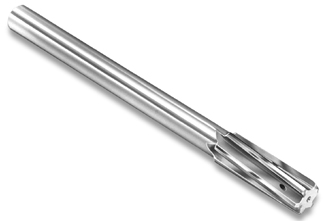
Carbide Tipped Reamers

Chucking & Coolant-Fed

High-concentricity chucking reamers for H7 and tighter hole tolerances in cast iron, steel, and aluminum alloys.

View Reamers
Carbide Tipped Drill

Carbide Tipped Drills

Jobbers & CNC Stub Length

Rugged drill construction combining carbide wear edges with high-flex alloy steel flutes for deep hole drilling.

View Drills
SAE Port Contour Cutter

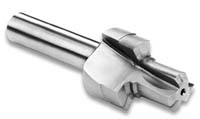
Port Contour Cutters

SAE & MS Specifications

Form cutters for fluid power manifolds executing port thread relief, seat chamfer, and spotface in one pass.

View Port Cutters
Carbide Tipped Milling Cutters

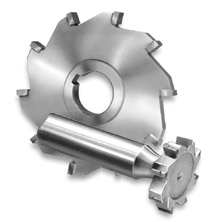
Arbor Hole Cutters & Saws

Slitting & Side Milling

Precision slotting saws and side milling cutters featuring tipped carbide blades for keyways and deep slitting.

View Cutters
Carbide Tipped End Mill

Carbide Tipped End Mills

Straight & Shear Spiral Flutes

Heavy-duty end milling solutions for abrasive cast iron and hard face slotting where solid carbide chips.

View End Mills
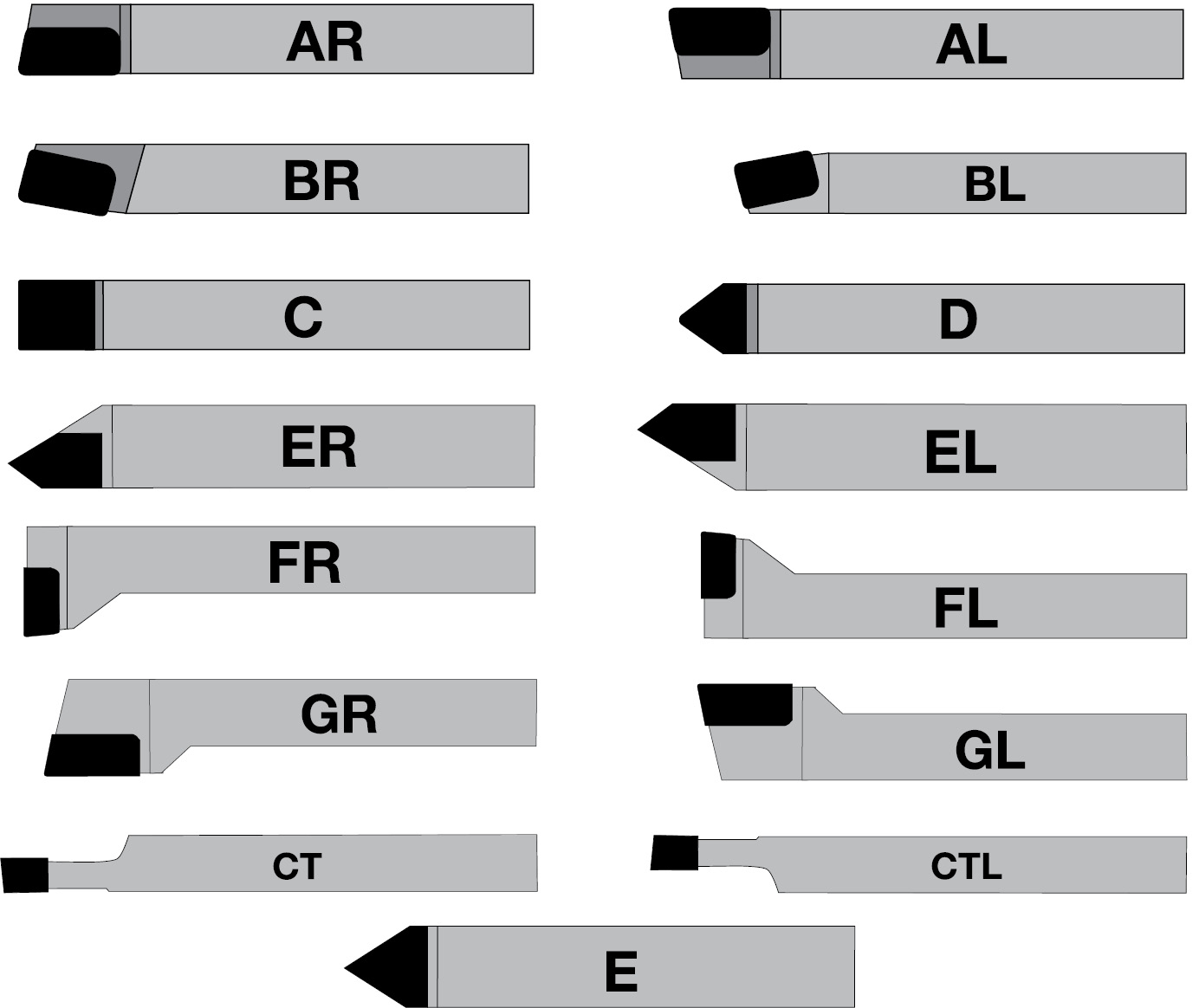
Single Point Carbide Tooling

Single Point Lathe Tools

Swiss & Standard Turning

Brazed single point lathe tools ground with precise relief angles for high-precision turning and boring.

View Single Points
Global Sourcing & Engineering Inquiry

Request Technical Specifications or Download the Full Counterbore Catalog

Whether you require standard ANSI straight shank counterbores from stock or a custom step tool engineered for specialized aerospace alloys, our application team is ready to assist. Request our master digital catalog or speak directly with an engineer today.