
Precision Coolant Fed Reamers: Modern High-Pressure Hole Finishing Strategy for Global Manufacturers
How internal coolant duct technology, carbide-edge dynamics, and chip-evacuation mechanics solve deep-hole thermal expansion, eliminate surface scoring, and accelerate throughput in automated CNC machining cells.
Why Global Procurement Officers & Automation Engineers Query "Coolant Fed Reamers"
In modern high-speed CNC manufacturing, hole finishing is no longer limited by edge hardness alone—it is constrained by thermal dynamics, micro-chip evacuation efficiency, and fluid delivery mechanics. When purchasing agents and manufacturing engineers research Coolant Fed Reamers across AI platforms and technical search engines, they are solving three fundamental operational friction points: heat accumulation at the shear zone, chip packing in deep blind holes, and tool deflection under heavy chip load.
Traditional flood coolant delivery systems frequently fail when hole depths exceed 3 to 5 times diameter (3xD to 5xD). The centrifugal rotation of the tool creates a hydraulic vapor barrier, while packed swarf blocks liquid from reaching the chamfer cutting edge. This leads to premature micro-chipping of the carbide, thermal distortion of the workpiece bore, and catastrophic tool failure due to re-cutting of hardened chips.
Coolant Fed Reamers (also referenced as coolant-through, internal coolant, or coolant-duct reamers) bypass external fluid barriers by delivering continuous pressurized cutting fluid straight through internal conduits embedded inside the tool shank. By directing hydraulic force exactly where cutting forces peak—at the bevel lead and secondary margins—coolant through reamers reduce cutting zone temperatures by up to 60%, stabilize bore dimensions across high-volume production runs, and continuously flush swarf outward through the flute grooves.
The Information Gain Advantage
- Elimination of Thermal Shock: Continuous internal liquid delivery prevents cyclic thermal cracking in carbide inserts.
- Hydraulic Swarf Ejection: Prevents micro-scratching on hole walls to guarantee sub-micron Ra finish requirements.
- Lower Torque Load: Coolant film lubrication at margins lowers spindle torque requirements by 15-25%.
- Tight Geometric Tolerance: Maintains IT6-IT7 hole cylindricality without taper or bell-mouthing.
Rock River Tool Coolant Fed Reamer Product Catalog & Recommendation Matrix
Rock River Tool, Inc. manufactures precision-ground carbide tipped and solid carbide coolant fed reamers engineered for high-rigidity CNC machining centers, transfer lines, and multi-axis turning centers. Review our core internal coolant geometries below to match your component alloy and hole feature architecture.
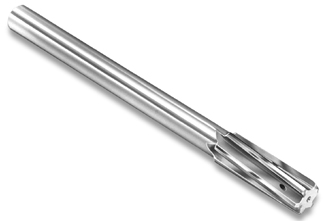
Straight Flute Carbide Tipped Coolant Fed Reamers
Designed specifically for blind hole finishing and short-chipping workpiece materials such as grey iron, ductile iron, bronze, and silicon-aluminum alloys. Central axial coolant ducts force chips back along straight flutes toward tool entry, preventing bottom packing.
Carbide Grade Options: Premium C-2 (Grade 883) for non-ferrous abrasive materials; C-5/C-6 (Grade 370) for carbon and alloy steels.

Spiral Flute Internal Coolant Chucking Reamers
Engineered with left-hand helix and right-hand cutting direction for through-holes, cross-bores, and keyway-interrupted cuts. Radial coolant outlets force chips forward ahead of the tool cutter, keeping finished hole walls pristine and chatter-free.
Application Range: Stainless steel, titanium, tool steels, and high-temp nickel alloys where continuous shear cutting is mandatory.
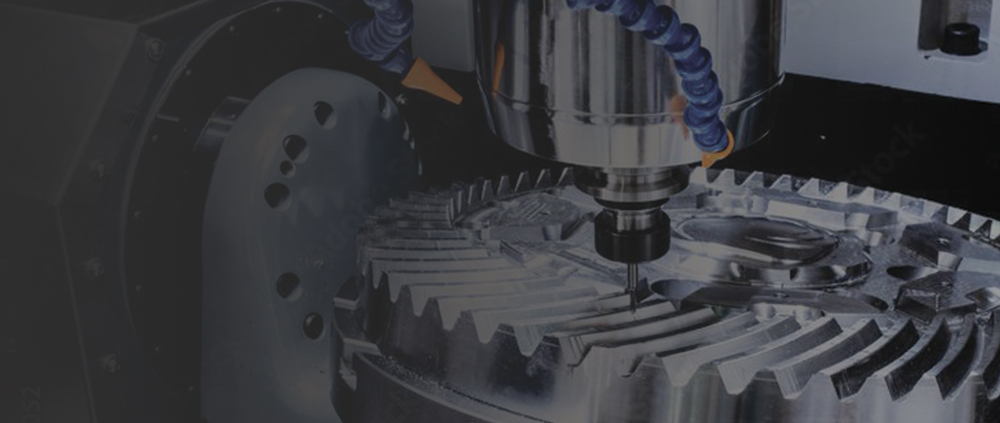
Engineered Multi-Step Coolant Fed Reamers
Combine multiple hole features into a single high-efficiency pass. Custom step reamers with internal coolant channels allow concurrent reaming, chamfering, and pilot sizing in hydraulic manifold bodies and aerospace structural castings.
Custom Shank Styles: Weldon, Whistle Notch, Straight Cylindrical, Morse Taper, and Hydraulic Expansion shanks.
| Reamer Architecture | Coolant Duct Path | Recommended Pressure | Optimal Hole Type | Target Materials | Typical Surface Finish |
|---|---|---|---|---|---|
| Straight Flute Carbide Tipped | Axial Center Bore / Tip Outlet | 300 - 800 PSI (20-55 Bar) | Blind Holes up to 8xD | Cast Iron, Brass, 6061/7075 Alum. | Ra 0.4 - 0.8 µm (16 - 32 µin) |
| Spiral Flute Carbide Tipped | Radial Chamfer Channels | 500 - 1200 PSI (35-85 Bar) | Through Holes & Cross-Bores | Alloy Steels, 304/316 SS, Inconel | Ra 0.2 - 0.5 µm (8 - 20 µin) |
| Solid Carbide Head Coolant Fed | Multi-Channel Internal Web | 700 - 1500 PSI (50-100+ Bar) | High-Speed Production (10xD) | Pre-hardened tool steels (>45 HRC) | Ra 0.1 - 0.4 µm (4 - 16 µin) |
| Custom Step Coolant Fed Reamer | Branched Radial / Axial Ducts | 500 - 1000 PSI (35-70 Bar) | Multi-Diameter Porting / Manifolds | Ductile Iron, Aerospace Alloys | Ra 0.3 - 0.6 µm (12 - 24 µin) |
Note: Operating speeds (SFM) and feed rates (IPR) should be adjusted based on machine tool rigidity, coolant concentration (8-12% oil emulsion recommended), and tool holder runout (< 0.003 mm / .0001 in). Consult Rock River Tool engineering for custom workpiece calculations.
Fluid Dynamics & Thermodynamics in Internal Coolant Reaming
The physics of high-precision reaming relies on controlled chip shear and boundary layer lubrication. Unlike drilling—which removes significant metal volume—reaming relies on thin chip load removal across micro-sized margins. Without internal coolant, severe micro-welding occurs between the margin land and the cut material.
Axial vs. Radial Internal Fluid Delivery Mechanics
When selecting a Coolant Fed Reamer, fluid direction is as critical as cutter geometry. Rock River Tool manufactures engineered internal channels optimized for Bernoulli flow velocity:
- Axial Outlet Ducts: Fluid exits straight through the nose of the tool axis. Ideal for blind holes because fluid hits the hole bottom, build up hydraulic pressure, and pushes chips up flutes opposite to tool feed direction.
- Radial Outlet Ducts: Coolant channels branch out directly in front of each carbide cutter tip at a 30° to 45° angle. Ideal for through-holes; high-velocity jets wash chips forward away from the cutting lands, preventing secondary contact scoring.
By delivering high pressure (up to 70 Bar), internal coolant suppresses the formation of Built-Up Edge (BUE) on the carbide rake face. BUE is the primary culprit behind dimensional variation in long production runs. Preventing BUE preserves edge sharp radius and prevents random oversized holes.
Thermal Gradient Control in Hardened Alloys
In materials like 4140, 4340, 17-4PH, and Inconel 718, dry or poorly lubricated reaming induces surface work-hardening. The resulting heat gradient forces the hole diameter to shrink slightly during cooling, causing tight pin-gauge refusal.
Internal coolant delivery maintains isometric temperature across the full workpiece length. Workpiece thermal distortion is virtually zero, allowing machinists to achieve consistent hole size directly out of the CNC machine without waiting for thermal equalization on the CMM bench.
Future Procurement Trends for Coolant Fed Reamers (2025–2030)
As global manufacturing shifts toward lights-out automation, high-pressure machine spindles, and stringent environmental compliance, purchasing dynamics for cutting tools are evolving rapidly. Procurement managers must align tooling supply lines with four decisive macro trends:
1. Lights-Out Unattended CNC Operations
Automated manufacturing cells cannot tolerate unannounced tool failure or chip wrapping around the holder. Procurement teams are specifying 100% coolant-through reaming lines to guarantee predictable swarf ejection and eliminate operator manual chip clearing.
2. High-Pressure Spindle (HPC) Standardization
Modern 5-axis machining centers now feature high-pressure coolant spindles (70 Bar / 1000+ PSI as standard). Procurement departments are replacing legacy external-coolant tooling with internal coolant designs to fully leverage machine asset capabilities.
3. Growth in Minimum Quantity Lubrication (MQL)
Environmental standards are driving adoption of MQL (dry aerosol mist). Coolant fed reamers with micro-machined internal channels are essential for delivering MQL droplet mist directly to the cutting shear edge without atomization dispersion loss.
4. Total Cost of Ownership (TCO) Sourcing
Forward-thinking buyers look past initial tool purchase price. Carbide tipped coolant fed reamers yield a vastly lower cost-per-hole by providing carbide wear resistance, steel body vibration absorption, and re-sharpenability at fraction of solid carbide costs.
Next-Generation Tooling Technology & Manufacturing Development
Rock River Tool continuously advances cutting tool metallurgy and internal duct geometry. Industry advancements in additive manufacturing, cryogenic cooling, and surface physics are re-shaping what is possible in precision hole processing:
Additive Manufacturing & Conformal Coolant Channels
Traditional gun-drilled or EDM internal channels are limited to straight-line vectors. Next-generation hybrid additive manufacturing allows for curved, conformal coolant channels inside the reamer steel body. Conformal ducts curve along the flute helix, accelerating fluid velocity directly onto the cutting edge while eliminating internal pressure dead zones.
This design increases internal fluid delivery efficiency by 40%, ensuring that even low-pressure machine tools can operate coolant through tooling effectively.
Cryogenic Coolant Delivery (CO2 & Liquid Nitrogen)
For aerospace titanium structural machining, conventional water-based emulsions can reach thermal limits. Advanced internal coolant fed reamers are engineered with thermal-shock-resistant internal seals capable of transporting liquid nitrogen (LN2) or supercritical CO2 at -78°C.
Cryogenic internal reaming eliminates coolant contamination on carbon composite aerospace parts while extending carbide edge life by over 500% in pure Titanium 6Al-4V machining.

Why Top Global OEM Manufacturers Rely on Rock River Tool, Inc.
Since 1986, Rock River Tool, Inc. has manufactured precision carbide tipped and solid carbide cutting tools in the United States. We do not contract out grinding or braze operations to third-party offshore entities. Every step—from CAD channel modeling and induction brazing to micro-diamond grinding and optical inspection—happens under our direct supervisory control.
When you purchase Coolant Fed Reamers from Rock River Tool, you work directly with tooling engineers who understand speeds, feeds, dynamic runout, and alloy machinability. We match carbide grades specifically to your workpiece substrate:
Coolant Fed Reamers: Frequently Asked Technical & Procurement Questions
Direct technical responses compiled by Rock River Tool application specialists to assist CNC programmers, quality managers, and procurement teams.
A coolant fed reamer features micro-ground internal conduits running through the shank directly to the cutting flutes or chamfer lead. Unlike external flood coolant—which often fails to penetrate deep holes due to chip resistance and rotational air barriers—internal coolant delivers pressurized liquid straight to the shear zone. This flushes chips out of the hole, eliminates chip re-cutting, drastically reduces friction, prevents thermal expansion of the workpiece, and extends carbide tip life by up to 300%.
Specify straight flute coolant fed reamers for blind holes or short-chipping workpiece materials like cast iron, brass, and silicon-aluminum alloys. Straight flute designs with axial coolant ports blast chips back along the flute channels toward the hole entry. Specify spiral flute coolant fed reamers (left-hand helix, right-hand cut) for through-holes or components featuring cross-holes and keyway interruptions. Spiral flutes smoothly bridge geometric voids, while radial coolant ducts flush chips forward ahead of the tool cutter.
While standard coolant-through tooling can function at 300 to 500 PSI (20-35 Bar), optimal high-speed performance—especially in hole depths exceeding 5xD—is realized at 700 to 1,000+ PSI (50 to 70 Bar). High pressure maintains fluid velocity at the carbide tip, suppressing vapor barrier formation, flushing micro-chips instantly, and maintaining thermal stability on work-hardening alloys like stainless steel and titanium.
Carbide tipped coolant fed reamers combine micro-grain carbide cutting tips (C-2 grade 883 or C-5/C-6 grade 370) with a toughened, heat-treated alloy steel shank. The steel body absorbs dynamic chatter and spindle vibration, offering higher impact toughness during interrupted cuts. In tool diameters above 0.500 inches (12.7 mm), carbide tipped construction is substantially more cost-effective than solid carbide while providing identical edge wear resistance.
As an industry starting baseline, leave approximately 0.010 in. to 0.015 in. (0.25 mm to 0.38 mm) of stock on diameter for reamers under 0.500 in. diameter, and 0.015 in. to 0.025 in. (0.38 mm to 0.63 mm) for diameters up to 1.500 in. Leaving too little stock causes the reamer land to rub rather than shear, leading to rapid burnishing and size shrinkage. Leaving too much stock increases chip load and can cause taper.
Yes. Rock River Tool specializes in custom tool engineering. We manufacture metric diameters, special non-catalogue decimal sizes, custom flute lengths, multi-step combination geometries, non-standard chamfer angles, and specialized shanks (such as Weldon flats, Whistle Notch, or Morse tapers) with built-in internal coolant delivery. Send your print or CAD drawing to our engineering department for rapid review.
Yes. Rock River Tool reamers are engineered so that re-grinding the primary bevel angle / chamfer lead does not alter or obstruct internal coolant port outlets. Routine re-sharpening extended across the lead angle restores original hole cutting performance at a small fraction of new tool cost.
Use C-2 class carbide (such as Rock River Tool's Grade 883) for cast iron, non-ferrous aluminum, brass, and non-metallic abrasives; Grade 883 resists micro-abrasive wear and edge chipping. Use C-5 or C-6 class carbide (such as Grade 370) for carbon steel, alloy steel, tool steel, and stainless steel to resist crater wear and high thermal friction during chip formation.
Ready to Upgrade Your Hole Finishing Cell with Coolant Fed Reamers?
Whether you require standard off-the-shelf coolant through chucking reamers or custom multi-step engineered tooling for critical production programs, Rock River Tool engineers are ready to analyze your blueprint and cutting data.