
Rock River Tool, Inc.Precision Cutting Tools
Technical Support(800) 345-8924
Talk to an Engineer Explore our industrial-grade PCD tipped inserts, high-precision solid carbide machine reamers, and specialized milling cutters configured for rigid Seoul manufacturing tolerances.
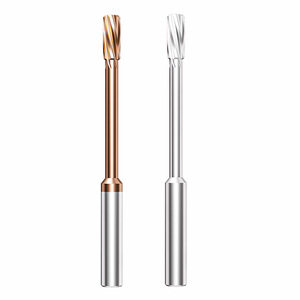
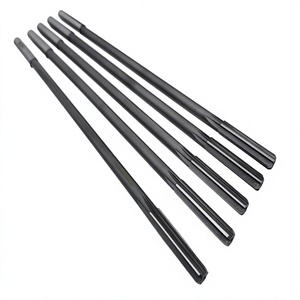
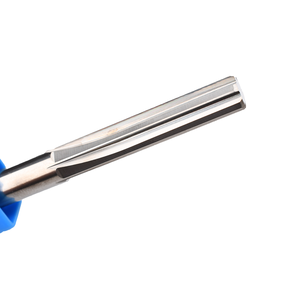
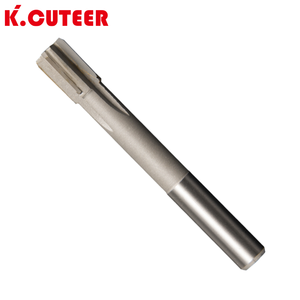
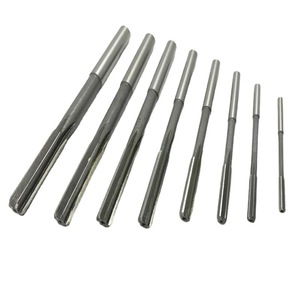
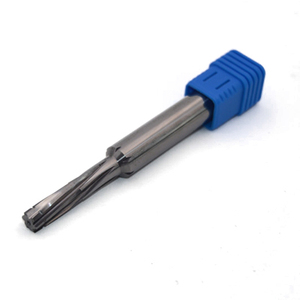
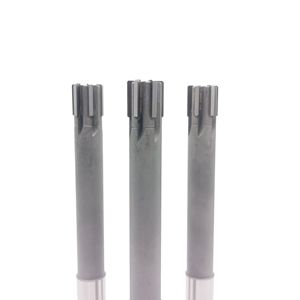
As global manufacturing demands transition toward lighter materials, extreme surface tolerances, and sub-micron dimensional repeatability, Polycrystalline Diamond (PCD) inserts and diamond-tipped reamers have emerged as non-negotiable assets for production engineers. Serving Seoul’s premier industrial complexes—spanning the high-density tech clusters of Gasan Digital Complex, the precision machining corridor of Seongsu-dong, and the surrounding semiconductor equipment hubs in Hwaseong, Suwon, and Pyeongtaek—our manufacturing group provides engineered PCD tooling tailored specifically to the unique material stress profiles of modern Asian manufacturing.
PCD tooling represents an advanced material synergy: a synthesized layer of intergrown diamond particles bonded under ultra-high pressure and temperature (HPHT) to a tungsten carbide substrate. This yields a cutting edge with hardness approaching natural diamond (~5,000–8,000 HV) paired with the shock absorption and structural flexural strength of heavy-duty carbide bodies. For manufacturing operations machining abrasive non-ferrous alloys (such as ADC12, A380 high-silicon aluminum), carbon-fiber reinforced plastics (CFRP), ceramics, and engineering polymers (PEEK), standard carbide tools suffer rapid flank wear and edge buildup within hours. PCD tooling supplied to Seoul facilities regularly achieves 20x to 50x tool life extensions while maintaining tight H7 bore tolerances without tool compensation overhead.
Achieving maximum information gain and productivity in automated CNC machining requires matching the diamond grain structure to workpiece abrasiveness and structural ductility. Below is our standard specification matrix utilized by production managers in South Korea:
| PCD Grade Series | Diamond Grain Size | Primary Target Workpiece | Cutting Speed (Vc m/min) | Key Performance Attribute |
|---|---|---|---|---|
| PCD-Coarse (PCD-25) | 25 µm Micron Matrix | High Silicon Aluminum (>12% Si), Metal Matrix Composites (MMC) | 600 - 2,500 m/min | Maximum abrasion resistance; withstands severe silicon particle wear. |
| PCD-Medium (PCD-10) | 10 µm Sub-micron Mix | General Al-Alloys, Copper Alloys, Brass, Fiber Composites (CFRP/GFRP) | 800 - 3,000 m/min | Balanced edge toughness and surface quality. Excellent versatility. |
| PCD-Fine (PCD-02) | 2 µm Micro-Grain | Ultra-precision finishing, PEEK, Magnesium Alloys, Acrylics, Gold/Silver | 400 - 1,800 m/min | Extreme edge sharpness; yields Ra < 0.05µm mirror finish without burr. |
| PCD-Bimodal (PCD-BM) | Mixed Micro/Macro Grain | Interrupted cuts in Al-Die Castings, Engine Blocks, Hybrid Assemblies | 500 - 2,000 m/min | Superior fracture toughness prevents micro-chipping on interrupted entries. |
Manufacturing plants in the Seoul National Capital Area operate under unique production parameters: high machine uptime, strict ISO quality validation, and relentless pressure to lower cost per part. Our PCD inserts and carbide tipped reaming systems are explicitly configured for these regional manufacturing environments:
Fabrication equipment manufacturers producing anodized aluminum vacuum chambers, quartz boat carriers, and PEEK wafer handling components rely on our single-point PCD inserts (CCMT, VCGT geometry) and PCD reamers. By eliminating material smearing and tool deflection, our tools achieve consistent tight-tolerance sealing faces without secondary polishing.
The transition toward EV drivetrains demands rapid machining of lightweight aluminum battery housings, stator frames, and gearbox casings. PCD milling cutters and multi-stepped PCD reamers finish complex stepped bores in a single pass, cutting cycle times by up to 40% in automated robotic machining cells.
Precision workshops producing titanium micro-fasteners, optical housing components, and mobile device frames benefit from our 0.5mm–12.0mm micro solid carbide and PCD tipped reamers. The H7 precision standard prevents oversized hole drift, maintaining CPK > 1.67 over thousands of operational cycles.
Machining carbon fiber reinforced polymer (CFRP) panels combined with aluminum stacks presents a major challenge due to delamination and rapid tool abrasion. Our shear-angle PCD end mills and drill-reamers slice through fibers cleanly, suppressing burr formation and preventing structural weakening.
To maintain competitive leadership, manufacturers serving Seoul are rapidly adopting three transformative machining methodologies:
A. Transition to Dry & MQL (Minimum Quantity Lubrication) Machining: Environmental regulations and fluid disposal costs across Gyeonggi-do are driving shops toward MQL. PCD’s low coefficient of friction (~0.1) reduces thermal buildup at the cutting zone, enabling high-speed dry milling of aluminum alloys where conventional tungsten carbide tools would melt or gall instantly.
B. Unattended 24/7 Smart Factory CNC Lines: With automation expanding in South Korea's smart factories, predictable tool life is more valuable than initial tool cost. Sudden carbide breakdown causes costly spindle crashes and scrap. PCD tooling provides extremely stable, gradual wear land progression, ensuring automated cell operations run overnight without human intervention.
C. Sub-Micron Mirror Finishing Ra < 0.05µm: Optical lens molds, automotive headlamp reflectors, and medical fluid manifolds require flawless surface topologies. Custom-ground wiper-geometry PCD inserts replace tedious hand-lapping processes, achieving mirror-like surface qualities directly on CNC turning centers.
Leveraging decades of specialty tooling manufacturing heritage (incorporating American-engineered grinding precision and rigorous quality control standards since 1986), our group serves as a direct technical partner to Seoul manufacturing facilities.
Utilizes ultra-high strength vacuum induction brazing to ensure PCD tips never shear or delaminate, even under severe interrupted cutting loads.
Tipped onto premium C-2 / C-5 sub-micron tungsten carbide bodies, offering superior vibration damping compared to brittle solid diamond blanks.
Precision 5-axis laser edge-shaping creates custom chip breakers directly into the diamond surface for flawless chip control in ductile aluminum.
Custom geometries tailored to non-standard blueprints delivered directly to South Korean plant locations with full CAD/CAM verification support.
You should switch to PCD tooling when machining non-ferrous materials (aluminum, copper, brass), composites (CFRP), or polymers (PEEK) if carbide tool life is under 200 parts or if built-up edge (BUE) causes frequent hole dimension variance. PCD will increase edge longevity by up to 5000%.
Yes. Depending on the remaining diamond volume and substrate condition, PCD inserts and reamers can be reground 2 to 4 times, restoring original factory edge sharpness at a fraction of new tool cost. We provide technical specifications to support local re-tipping workflows.
While PCD can operate under dry/MQL conditions due to low thermal conductivity, high-pressure water-soluble emulsion (6-8% concentration at 20-70 bar) is recommended for high-volume aluminum machining to flush stringy chips away from high-finish bores.
No. At elevated machining temperatures above 700°C, the carbon atoms in PCD react chemically with the iron in ferrous metals (catalytic transformation into graphite), leading to rapid tool degradation. For hardened steels or cast iron, we supply our C-2/C-5 carbide tipped series or PCBN (Polycrystalline Cubic Boron Nitride) tooling.
Our standard chucking reamers are manufactured to standard H7 tolerances (e.g., +0.012mm/-0.000mm on Ø10mm). With rigid workholding and low runout toolholders (hydro-fit or shrink-fit), our PCD reamers consistently hold H6 hole tolerances in production environments.
Standard catalog inserts ship immediately. Custom blueprint tooling—including multi-step form tools and special shank reamers—typically undergo engineering drawing approval within 24 hours, with expedited manufacturing dispatch directly to South Korea.
Consult with our senior application engineers to review your part blueprints, target workpiece material, and machine setup. We engineer PCD and carbide tooling that guarantees lower cost per component.