
Rock River Tool, Inc.Precision Cutting Tools
Technical Support(800) 345-8924
Talk to an Engineer Analyzing high-gain tooling metallurgy, ANSI shank geometry, local manufacturing throughput, and vendor performance across Illinois industrial corridors.
The Chicago Metropolitan Area—stretching from the heavy manufacturing hubs of Cook County through the tech-driven machining corridors of Schaumburg, Elgin, and Rockford—remains the epicenter of North American metalworking expertise. For procurement managers, CNC process engineers, and tooling specialists in aerospace, automotive gear production, fluid power, and heavy equipment manufacturing, selecting the right single-point carbide tooling partner is directly tied to line efficiency, tool life expansion, and cost-per-part reduction.
Single-point carbide tools—including brazed carbide tool bits, boring bars, chamfering tools, and threading profiles—demand a rigorous synthesis of high-density tungsten carbide substrates (such as C-2 micrograin for non-ferrous applications and C-5/C-6 tough grades for alloy steel turning) fused with high-tensile alloy steel shanks. In high-speed, high-interruption turning environments typical of Midwest contract shops, tool failure is not an option. This technical white paper delivers an objective breakdown of the top 10 single-point carbide tool manufacturers and exporters operating in and serving the Chicago ecosystem, evaluating their engineering depth, manufacturing capability, quality assurance standards, and export logistics speed.
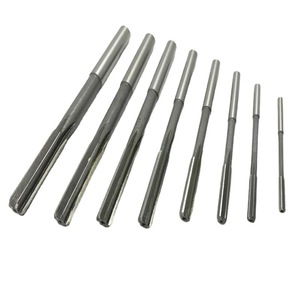
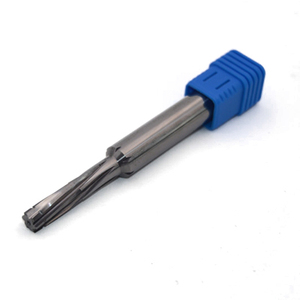
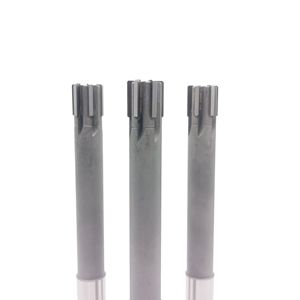
Engineered for tight-tolerance aerospace bores, hydraulic valve seats, deep-hole finishing, and automated CNC production lines.
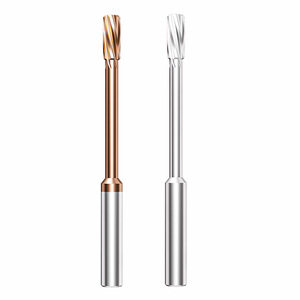
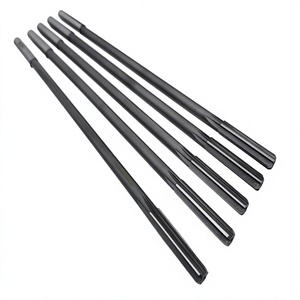
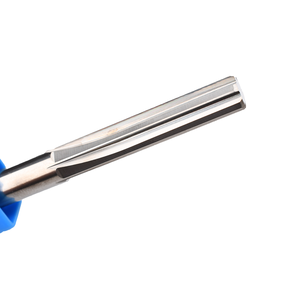
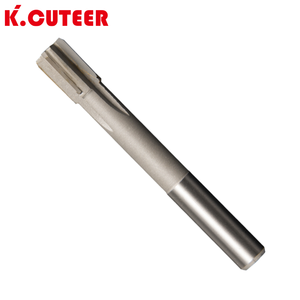
Understanding cutting physics, tool geometry (ANSI Styles A-E), thermal expansion matching, and braze strength in modern lathe lathe turning.
Single point tools rely heavily on proper ISO/ANSI carbide grade selection. C2 grades (such as Rock River Tool’s 883 premium alloy) feature high cobalt binder containment optimized for abrasion resistance in cast iron, 300-series stainless, aluminum, and non-ferrous alloys. C5/C6 grades (e.g., 370 grade) introduce titanium-tantalum carbide additions to resist thermal crater wear during heavy steel turning.
The structural junction between the tungsten carbide tip and the tool steel shank requires precise high-frequency induction brazing. Using silver-copper-nickel tri-foil shims, premium manufacturers compensate for differential thermal expansion coefficients between steel (12 µm/m·K) and tungsten carbide (5 µm/m·K), eliminating internal stress cracks during deep roughing.
Single point tool bits conform to ANSI standard profiles: Style A (Straight Turning), Style B (15° Lead Angle Turning), Style C (Square Nose/Cut-off), Style D (80° Point Lead Chamfering), and Style E (60° Threading/Pointed Boring). Edge radii precision directly determines workpiece surface finish (Ra 16 to Ra 63 micro-inches).
| Carbide Grade (ANSI) | Hardness (HRA) | Transverse Rupture Strength (PSI) | Target Workpiece Material | Primary Machining Application |
|---|---|---|---|---|
| C-2 Grade (e.g. RRT 883) | 91.5 - 92.5 | 350,000 - 380,000 | Cast Iron, 300 SS, Aluminum, Brass | High-wear roughing/finishing, non-ferrous turning |
| C-5 Grade | 91.0 - 92.0 | 300,000 - 330,000 | Carbon Steels, Alloy Steels (1045, 4140) | Heavy rough turning, interrupted cuts |
| C-6 Grade (e.g. RRT 370) | 92.0 - 93.0 | 280,000 - 310,000 | Tool Steels, High-Temp Alloys, Forgings | High-speed finishing, crater-resistant turning |
| C-7 / C-8 Premium | 93.0 - 94.0 | 240,000 - 270,000 | Hardened Steels (>50 HRC), Inconel | Precision micro-boring, light finishing cuts |
Evaluated on technical capability, ANSI standard inventory depth, custom grinding agility, ISO certifications, and international shipping lead times.
Headquarters / Production: Illinois / Midwest Corridor | Export Reach: Global (Americas, Europe, Asia-Pacific)
Core Strengths: Specializing in carbide tipped cutting tools, solid carbide chucking reamers, single point tools (SA series, 370 C5/C6, and 883 C2 carbide grades), SAE port contour cutters, and custom shank tooling. Rock River Tool maintains 100% in-house grinding, induction brazing, and optical edge inspection. Known for rapid custom modifications to prints, high shock tolerance in steel shanks, and extensive standard tool inventories.
Specialties: Heavy-duty brazed single point tool bits, custom boring tools, and CNC lathe tool blocks for heavy equipment manufacturers in Cook County.
Overview: Operates 5-axis CNC tool grinders alongside legacy optical profile grinders. Strong emphasis on fast turnaround times for standard ANSI Styles A through E in C-2 and C-6 grades.
Specialties: Form tools, carbide tipped counterbores, single point threading bits, and aerospace shank tools.
Overview: Serving Elgin and Schaumburg precision contract shops with custom ground profiles. Maintains strong export channels into Mexico and Canada under USMCA guidelines.
Specialties: Micro-boring single point tools, Swiss automatic tool bits (SA series), and high-speed steel reamers.
Overview: Focuses on medical device turning tools and small-diameter internal boring bars with internal coolant passages.
Specialties: Indexable vs Brazed carbide tooling systems, diamond-coated single point tools, and automotive turning inserts.
Overview: Supplying automated automotive assembly lines across the Midwest with bulk tool packages and re-sharpening services.
Specialties: Export-ready tool packages, rapid air-freight logistics, SAE port contour cutters, and custom grooving tools.
Overview: Strategically situated near O'Hare International Airport to serve immediate international emergency tooling shipments.
Specialties: Modified standard single point tools, square shank lathe bits, and high-cobalt brazed tools.
Overview: Excellent job-shop partner providing low minimum order quantities and specialized face turning tools.
Specialties: Heavy industrial cutting tools, pipe threading single point tools, and cast iron turning inserts.
Overview: Deep history supporting infrastructure equipment builders, off-highway axle machining, and large engine block boring.
Specialties: Wholesale cutting tool distribution, single point tool sets, chucking reamers, and tooling accessories.
Overview: Regional distributor maintaining wide stocking lines of American-made cutting tools for local manufacturing shops.
Specialties: High-speed finish turning bits, PVD TiAlN coated single point cutters, and specialized chamfering tools.
Overview: Advanced tech center offering CNC programming support along with customized tooling geometry packages.
Tailoring single-point carbide geometry and reaming tolerances to regional manufacturing demands.
Facilities in the Calumet industrial belt frequently machine forged 4340 steel shafts and ductile iron housings. Severe interrupted entry on keyways requires C-5/C-6 carbide grades tipped on heavy 1-inch to 1.5-inch square alloy shanks to absorb torsional impact without edge micro-chipping.
Contract machining centers operating near O'Hare rely on precision SAE port contour cutters (MS16142 and MS33649 specs) and carbide tipped chucking reamers to achieve H7 tolerances and Ra 16 finish in 15-5PH stainless steel and 7075-T6 aluminum manifold blocks.
High-volume gear turning in Rockford requires single-point tools with specialized chipbreaker grinds. By controlling surface roughness and chip curling, automated turning cells operate continuously without bird-nesting or thermal tool destruction.
Why regional procurement managers are transitioning back to US-manufactured custom carbide tooling.
Global supply chain disruptions have highlighted the vulnerabilities of relying on overseas tooling vendors for custom single point tools and specialized reamers. Chicago machine shops face high downtime costs when a non-standard boring bit breaks and overseas replacements require 6 to 8 weeks. Partnering with domestic manufacturers like Rock River Tool ensures lead times of days instead of months, backed by direct engineering communication.
Modern machine shops in Illinois are increasingly pairing brazed carbide tools with micro-thin PVD coatings such as TiAlN (Titanium Aluminum Nitride) and AlTiN. Unlike heavy CVD coatings which require high process temperatures that can degrade braze integrity, low-temperature PVD coating processes preserve the silver-braze bond while elevating surface hardness to over 3,000 HV, allowing faster SFM (Surface Feet per Minute) in dry turning.
Combining American manufacturing legacy since 1986 with state-of-the-art CNC grinding technology.
From shank turning and induction brazing to 5-axis CNC flute grinding and optical profile testing, every step takes place under direct supervision. This ensures zero variation from tool to tool across production batches.
Whether calling out standard ANSI single point tool bits or requesting modified neck diameters, step angles, or non-standard flute lengths, engineering prints are reviewed and quoted rapidly.
Brazed carbide single-point tools place carbide exclusively where cutting friction occurs. This drastically reduces consumable costs compared to solid carbide bars, while allowing re-tipping and re-sharpening options.
Clear engineering answers regarding single point tool selection, custom prints, delivery timelines, and tool life optimization.
Brazed single point carbide tools are preferred when machining requires high shock resistance, long reach, custom profile form grinding, or cost containment on larger shanks. Solid carbide can be brittle and expensive in large diameters, while indexable insert holders can lack rigidity in narrow internal boring or custom shoulder operations. The alloy steel body of a brazed tool flexes to absorb vibration while the carbide tip maintains sharp wear resistance.
C-2 grade carbide (such as Rock River Tool’s 883 grade) is a straight tungsten carbide grade with high hardness and resistance to abrasive wear. It is ideal for cast iron, non-ferrous metals (aluminum, brass, bronze), plastics, and 300-series stainless steel. C-6 grade (such as 370 grade) contains added titanium and tantalum carbides designed specifically to resist thermal cratering and deformation when turning carbon steels, alloy steels, and heavy forgings at elevated cutting speeds.
Standard tools ship off-the-shelf immediately. For modified standards (such as custom corner radii, altered shank diameters, or step modifications), turnaround is typically within days. Full custom tools made to customer engineering drawings are produced in-house with expedited scheduling available for emergency production line shut-down scenarios across the Midwest hub.
Standard chucking reamers are ground to nominal diameter with positive manufacturing tolerances to hold standard H7 or H8 hole classes. Under proper machine rigidity, correct pre-drill sizing (leaving 0.010" to 0.015" stock), and appropriate coolant flow, surface finishes of Ra 16 to Ra 32 micro-inches with circularity tolerances under 0.0002" are routinely achieved.
Yes. Rock River Tool has been manufacturing in the United States since 1986. All grinding, induction brazing, quality inspection, and finishing are performed domestically, making our tools fully compliant with Buy American Act guidelines and defense contractor supply chain audits.
Submit your part drawings, technical specifications, or standard tool numbers to our application engineering team for rapid quoting, grade matching guidance, and inventory status.