
Rock River Tool, Inc.Precision Cutting Tools
Technical Support(800) 345-8924
Talk to an Engineer The Japanese manufacturing sector—renowned for its Monozukuri philosophy—demands unmatched dimensional accuracy, tool longevity, and sub-micron runout control. As high-speed CNC machining centers (such as Makino, Fanuc, Yamazaki Mazak, and Yasda) operate at increasingly elevated RPMs, tooling specifications for slotting, keyway cutting, and internal profile milling must evolve.
This technical guide examines engineering parameters, material selection criteria, coating innovations, and localized supply chain strategies for sourcing ultra-precise slot cutters, chucking reamers, and custom profile tools optimized for Japan's rigorous aerospace, automotive, semiconductor, and medical device manufacturing hubs.
Engineered for high-rigidity slotting, micro-grooving, deep-hole finishing, and tight-tolerance internal geometry.
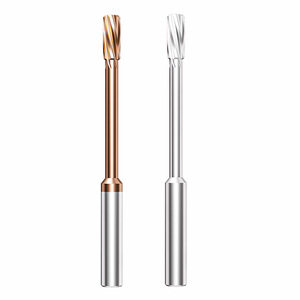
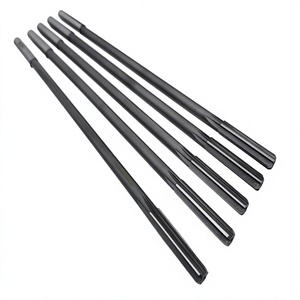
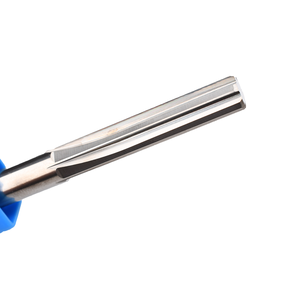
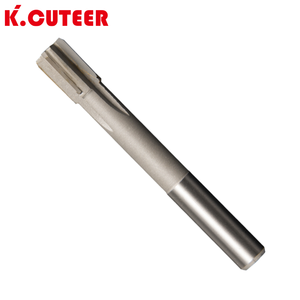
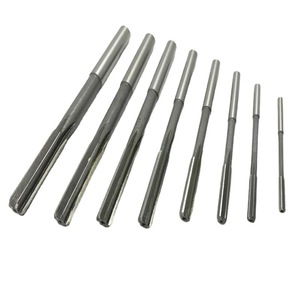
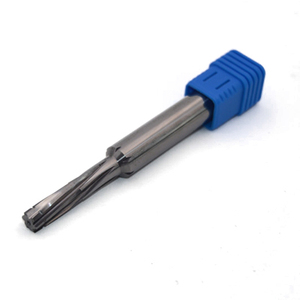
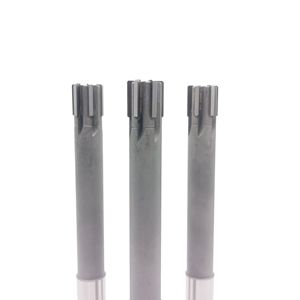
Selecting the optimal cutting tool architecture requires balancing tool rigidity, thermal dissipation, vibration damping, and overall cost-per-slot. In Japanese high-precision machining environments, selecting between solid micrograin carbide and brazed carbide-tipped slot cutters directly impacts cycle times and tool wear rates.
Constructed entirely from sintered sub-micron tungsten carbide grains, solid carbide tools deliver maximum Young’s Modulus (flexural stiffness). They are indispensable for micro-slotting (<2.0mm width) and high-RPM finishing where deflection must remain below 0.001mm.
Featuring premium grade carbide inserts induction-brazed onto a heat-treated tool steel shank (such as SCM440 or specialized alloy steel). The steel body acts as a shock absorber while the carbide tips handle edge abrasion.
| Performance Parameter | Solid Micrograin Carbide | Carbide Tipped (Alloy Steel Shank) | High-Speed Steel (HSS-Co5/8) |
|---|---|---|---|
| Vibration Damping Capacity | Moderate (High stiffness, low flex) | High (Steel body absorbs chatter) | Very High (Tough, flexible body) |
| Cutting Speed (SFM / m/min) | 150 - 400 m/min | 100 - 250 m/min | 30 - 70 m/min |
| Chipping Resistance under Scaled Cut | Sensitive to shock | Excellent resistance | Maximum shock tolerance |
| Slot Width Tolerance Achievable | JIS h5 / e8 (Sub-micron) | JIS h7 / H8 | JIS H8 / H9 |
| Economic Threshold Diameter | Optimal for Ø0.5mm - Ø20mm | Optimal for Ø16mm - Ø150mm+ | Special form prototypes |
Japan’s industrial geography exhibits specialized manufacturing clusters. Machining parameters must be tuned to the precise metallurgical alloys and quality control standards dominant in each region.
Primary Workpieces: SCM420H carburized steel, ADC12 aluminum die-cast housings, forged stainless steel spline shafts.
Tooling Requirement: Staggered-tooth carbide side milling cutters and keyseat slot cutters capable of milling narrow retention clip grooves without leaving burrs on sealing surfaces. High-efficiency chip evacuation geometry prevents chip re-cutting during deep slot passes.
Primary Workpieces: SUS316L electropolished stainless steel, Hastelloy, synthetic quartz, and high-purity aluminum alloys.
Tooling Requirement: Micro-slot cutters with single-crystal or ultra-fine DLC (Diamond-Like Carbon) coatings to machine clean vacuum seal grooves (O-ring tracks). Absolute scratch-free surface finishes (Ra < 0.2 µm) are required to prevent gas leakage in wafer processing chambers.
Primary Workpieces: High-tensile alloy steels, ductile iron (FCD450), hardened tool steels (SKD11 / SKD61).
Tooling Requirement: Heavy-duty T-slot cutters and internal snap ring slotters for strain wave gearing (Harmonic Drives) and hydraulic control valves. Superior edge strength guarantees dimensional hold across long production batches.
As Japanese precision machine shops transition toward automated 24/7 unmanned manufacturing (FMS) and eco-friendly machining practices, cutting tool suppliers must align with four strategic technical trends:
Japanese factories are dramatically reducing flood coolant usage to meet stringent ISO 14001 environmental targets. Slot cutters designed for the Japanese market feature optimized flute spacing and slick PVD coatings (such as AlTiSiN or nACo) that prevent heat build-up and chip clogging under dry or MQL aerosol mist conditions.
Modern CAM programming in Japan favors trochoidal toolpaths over full-width slot plunging. This strategy requires slot cutters with differential flute spacing and variable helix angles (e.g., 35°/38°) to break harmonic vibrations and allow radial depth-of-cut (ae) adjustments at elevated feed rates.
With component miniaturization in medical devices and robotics, slotting tool tolerances have tightened from conventional JIS H7 to JIS h4/h5 limits. Automated optical tool presetters require cutter shanks manufactured with shank cylindrical runout under 0.0015mm.
To eliminate secondary deburring steps, Japanese buyers increasingly order combined slot-and-chamfer profile cutters. These custom tools mill the slot, chamfer both top edges, and radius the bottom corners in a single spindle stroke, reducing overall cycle time by up to 40%.
Essential answers regarding quality assurance, custom prints, tariff compliance, and logistics to major ports in Japan.
Our standard cutting tools are ground strictly against international ISO and equivalent JIS B 0401 tolerance classes (including h6, h7, H7, and H8). For custom slotting tools, our CNC grinding centers can hold outer diameter and width tolerances down to +0.002/-0.000 mm, ensuring drop-in compatibility with Japanese tool holders (BT30, BT40, HSK-E63) and shrinking fit chucks.
For austenitic stainless steels widely used in Japanese food, medical, and semiconductor plants, we utilize ultra-fine sub-micron carbide substrates (grain size 0.4µm - 0.6µm) with 10-12% Cobalt content (such as C-2 / K20-K40 equivalent). Paired with an AlTiN or TiSiN multi-layer PVD nano-coating, this combination resists built-up edge (BUE) formation and micro-chipping caused by work hardening.
Yes. Over 40% of our production consists of engineered special tools. We accept 2D prints (PDF, DWG, DXF) and 3D CAD files (STEP, IGES). Our engineering team performs a thorough manufacturability review, evaluating wheel clearance, flute geometry, braze joint strength, and grinding paths before issuing a formal quotation within 24 hours.
Standard catalog items ship within 24 to 48 hours. Custom engineered slot cutters typically carry a manufacturing lead time of 10 to 14 working days. We utilize express air freight (DHL, FedEx, UPS) directly to major Japanese industrial zones with transit times of 2 to 4 business days, complete with full customs documentation and Certificate of Conformance (COC).
Every tool undergoes stringent quality control using 5-axis Zoller optical measuring machines and laser micrometers. We record total indicator reading (TIR) runout on both the cutter OD and side faces. Full lot traceability is guaranteed, allowing Japanese quality management teams to verify substrate heat codes and coating bath logs upon request.
Combining decades of specialized toolmaking experience with advanced CNC grinding technologies, we provide global procurement teams with absolute quality confidence.
Founded on rigorous toolmaking standards, our facility maintains complete control over raw material selection, brazing, grinding geometry, and surface finishing under one roof.
Utilizing state-of-the-art ANCA and Walter 5-axis CNC grinding machines, we achieve mirror-finish flutes that minimize cutting friction, enhance chip flow, and prolong edge integrity.
We avoid "one-size-fits-all" substrates. Tools are engineered specifically with C-2/K20 class carbide for non-ferrous materials and C-5/C-6 class micrograin grades for hardened steels.
Send us your workpiece specifications, tool drawings, or target JIS standards. Our application engineering team will assist with tool geometry optimization, coating selection, and rapid RFQ processing.