
Rock River Tool, Inc.Precision Cutting Tools
Technical Support(800) 345-8924
Talk to an Engineer Engineered for rigorous ISO 11926-1, MS16142, MS33649, and SAE J1926 standards across New York machine shops.
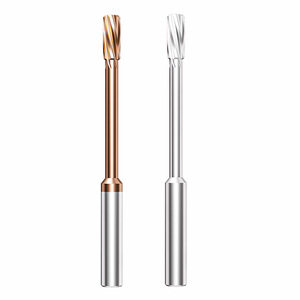
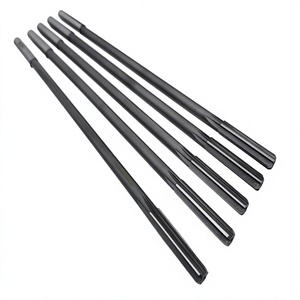
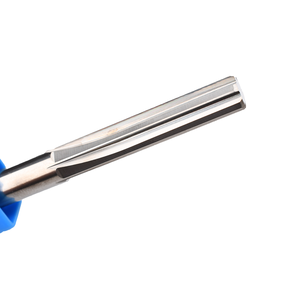
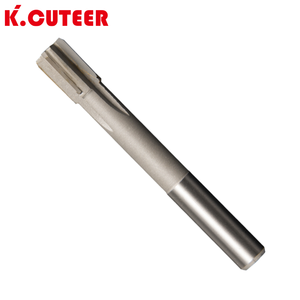
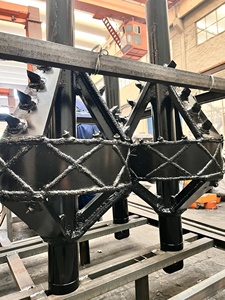
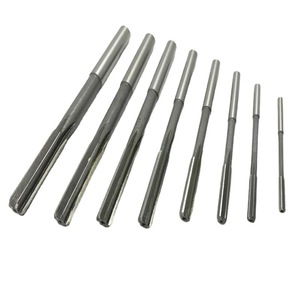
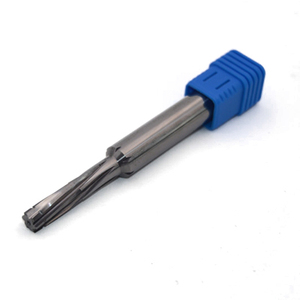
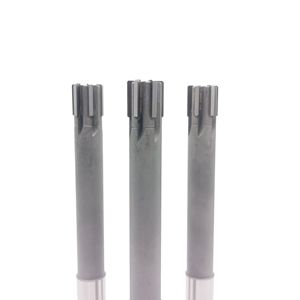
In high-pressure fluid power systems, fluid manifold engineering demands absolute geometric perfection. An SAE straight thread O-ring port (governed by standards such as SAE J1926-1, ISO 11926-1, MS16142, MS33649, and AND10050) requires the seamless integration of four critical geometric zones in a single tool pass: the spotface seal surface, the 12° to 45° lead-in chamfer, the thread minor diameter pilot hole, and the seal seat angle. Achieving fluid-tight sealing under operating pressures exceeding 5,000 PSI hinges entirely on the quality of the port contour cutter.
As a leading SAE Port Contour Cutters Manufacturer & Factory serving New York machine shops, defense contractors, and hydraulic original equipment manufacturers (OEMs), Rock River Tool delivers engineered cutting tools that eliminate multi-pass operations. By executing the spotface, counterbore, chamfer, and ream in a single rigid spindle cycle, our solid carbide and brazed carbide-tipped port cutters dramatically reduce cycle times while guaranteeing zero-leak hydraulic compliance.
Technical Insight: Single-pass SAE porting reduces spindle dwell chatter, eliminates stack-up tolerances caused by multi-tool indexation, and guarantees concentricity between the spotface sealing surface and the thread pitch diameter within ±0.0002 inches (0.005 mm).
Forming an standard O-ring boss port requires meticulous tool design. Standard porting tools must incorporate precise cutting radii and angles to prevent stress risers that lead to high-pressure seal degradation over millions of fatigue cycles. Below is the structural decomposition of our port contour cutter geometry:
Machining complex hydraulic valve blocks in New York state requires matching tool substrate grades to the target workpiece material. Utilizing incorrect carbide grades leads to premature micro-chipping, thermal shock cracks, or severe edge build-up (BUE).
| Carbide Grade | Substrate Class | Hardness / Grain Size | Target Workpiece Material | Machining Characteristics & SFM Range |
|---|---|---|---|---|
| Rock River 883 | C-2 Premium | 92.5 HRA / Micrograin | Cast Iron, Ductile Iron, 6061-T6 Aluminum, Brass, Bronze | High wear resistance; prevents abrasive edge wear in ductile iron. 250 - 650 SFM. |
| Rock River 370 | C-5 / C-6 Steel Grade | 91.8 HRA / Sub-micron | Carbon Steels, Alloy Steels (4140/4340), Tool Steels | High thermal resistance; guards against crater wear during continuous chip formation. 180 - 400 SFM. |
| Solid Micro-Grain | K10 - K30 Sub-micron | 93.0 HRA / 0.6 µm | Stainless Steels (316L, 17-4PH), Inconel 718, Titanium | Maximum tool rigidity; eliminates cutter flex in tough aerospace superalloys. 90 - 220 SFM. |
Originating from our USA manufacturing plant since 1986, Rock River Tool has pioneered brazed carbide and solid carbide tooling architectures. Our engineering group does not merely ship catalog tools; we re-engineer geometries based on real-world shop floor telemetry.
State-of-the-art 5-axis CNC tool grinders execute form cutter profiles with step diameter tolerances held to ±0.0002" and angular accuracy within ±5 arc minutes.
Equipped with TiAlN (Titanium Aluminum Nitride), AlTiN, and nACo nanocomposite coatings for extreme heat dissipation and dry/MQL (Minimum Quantity Lubrication) machining cycles.
Custom through-coolant delivery channels force high-pressure cutting fluid directly onto the reamer pilot and spotface cutting edges, rapidly evacuating chips from blind cavities.
New York State boasts one of the most diverse, high-tech manufacturing ecosystems in North America. From defense aerospace clusters on Long Island to heavy industrial valve manufacturing in Buffalo, our SAE port contour cutters are optimized for regional manufacturing challenges:
In aerospace hubs across Long Island (Farmingdale, Bethpage, and Ronkonkoma), precision machine shops manufacture flight control actuation manifolds, landing gear hydraulics, and military defense valve blocks. Machining materials such as 15-5PH stainless steel, 7075-T6 aluminum, and Titanium 6Al-4V demands MS33649 and MS16142 compliant port contour cutters with zero tolerance for seal seat chatter. Our tools deliver flawless surface finishes, preventing micro-leakages under extreme altitude pressure differentials.
Rochester’s renowned precision manufacturing and optical instrumentation corridor relies on micro-porting tools for analytical instruments, optical polishing fluidics, and medical diagnostic blocks. Custom small-diameter SAE port cutters (down to SAE-2 and SAE-4 sizes) enable tight-centerline manifold designs without sacrificing tool rigidity or flute strength.
Western New York’s heavy machinery manufacturers produce massive hydraulic power units (HPUs), mobile equipment cylinders, and industrial press manifolds. Drilling cast iron and heavy 4140 forged steel blocks requires robust brazed-carbide port cutters that withstand interrupted cuts, hard scale, and deep cavity wall engagement without edge breakage.
The Saratoga and Albany Tech Valley semiconductor corridor (housing global wafer fabs and equipment suppliers) requires ultra-high purity (UHP) fluid and gas distribution blocks. Machining 316L VIM/VAR stainless steel manifold blocks requires our nACo-coated solid carbide port contour tools to guarantee burr-free thread entries and mirror-like sealing faces.
Challenge: A Rochester-based tier-1 supplier suffered high scrap rates due to chatter marks on the 45° O-ring seal surface of 17-4PH stainless steel hydraulic manifolds, failing helium leak testing under MS33649 specifications.
Solution: Rock River Tool engineered a custom, 4-flute brazed carbide port contour cutter with unequal flute indexation (differential pitch) and an AlTiN PVD coating, run at 160 SFM with a 0.0025 IPT feed rate.
Results: Eliminating chatter completely reduced surface roughness from 48 Ra to 18 Ra, increased tool life by 310%, and achieved a 0% leak defect rate across 4,500 produced manifolds.
As New York accelerates its supply chain re-shoring initiatives and expands clean energy and semiconductor manufacturing infrastructure, regional machine shops face unprecedented operational shifts:
In an industrial environment where spindle downtime costs hundreds of dollars per hour, sourcing cutting tools from overseas brokers creates unacceptable risks regarding material quality and lead-time delays. Rock River Tool, Inc. manufactures 100% of its product line in the United States under strict quality inspection regimes.
When you consult with our engineering team, you are speaking directly to tooling specialists who understand cutting speeds, feeds, tool geometry, and metallurgic properties. Whether you are running a job shop in Long Island, an aerospace production line in Rochester, or an equipment manufacturing facility in Buffalo, our factory stands ready to support your high-precision machining objectives.
Send us your tool drawing, target workpiece material, and annual port volume. Our senior engineering team will evaluate manufacturability and provide an optimized tooling recommendation within 24 hours.