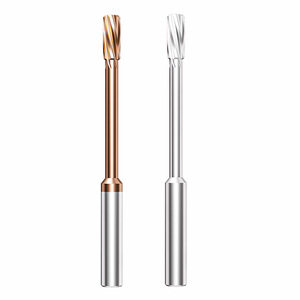
Solid Carbide Machine Reamers (0.5–12.0mm H7 Bronze Coated)
Engineered with ultra-fine tungsten carbide matrix and PVD bronze coating for thermal barrier protection during high-speed machine finishing in abrasive alloy steels.

Explore our specialized carbide-tipped, solid carbide, and HSS deep hole drilling and reaming tools customized for South American heavy industrial, mining, and OEM applications.
Engineered with ultra-fine tungsten carbide matrix and PVD bronze coating for thermal barrier protection during high-speed machine finishing in abrasive alloy steels.
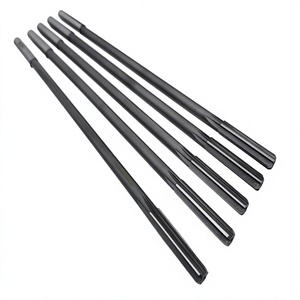
Features high shock tolerance for deep hole hand and machine reaming up to 55HRC. Optimized 15–20° spiral angle ensures efficient chip evacuations without galling.
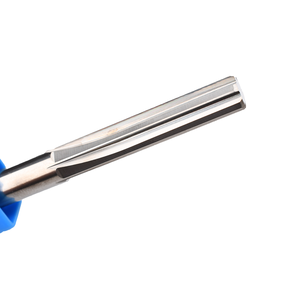
Precision-ground straight flute geometry ideal for through-hole finishing in hydraulic valves, manifold blocks, and copper slurry pump bushings.
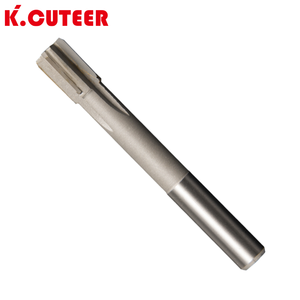
Tailor-made extended shank reamers designed for reach across deep casting chambers, heavy excavator housings, and mining drill assembly rigs.
Heavy-duty fluted reaming tools built for severe subterranean environments, pipeline reaming, and civil mining utility boring throughout Chile.
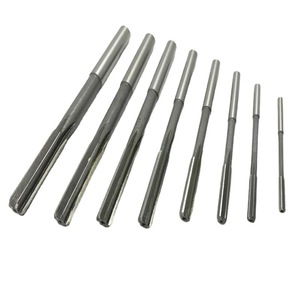
Cost-effective, versatile reaming solutions providing high surface micro-finish (Ra < 0.4µm) for general maintenance and workshop repair operations.
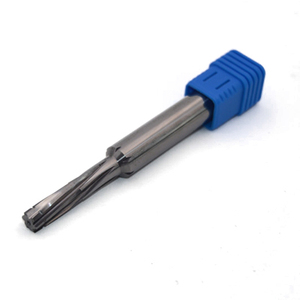
Helical spiral geometry reduces cutting pressure, preventing chatter on thin-walled workpieces while delivering mirror-like inner diameter wall tolerances.
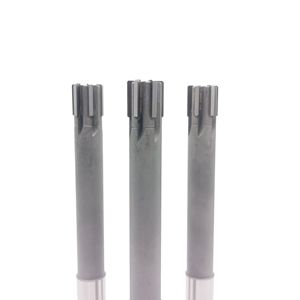
Maximum-stiffness alloy reamer optimized for continuous production cycles, heavy CNC machining centers, and mining gear shaft hole sizing.
Precision deep hole drilling—defined as producing holes with depth-to-diameter ratios exceeding 10:1 up to 100:1—demands exceptional tool dynamic rigidity, specialized cutting edge geometry, and controlled internal coolant fluid dynamics. As an established global manufacturer and exporter supplying the Chilean market, our engineering framework integrates single-lip gun drills, carbide-tipped drills, and multi-fluted reamers to overcome severe metallurgical challenges found in South American heavy industry.
Gun drilling relies on high-pressure oil or water-soluble coolant (typically 20 to 100 bar / 300 to 1500 PSI) delivered through internal cooling holes directly to the cutting zone. The pressurized liquid flushes chips outward along the V-shaped longitudinal flute (outer kidney groove). This continuous flushing mechanism prevents chip compaction, minimizes thermal friction, and eliminates edge micro-chipping in deep blind or through-holes.
Unlike standard twist drills with two symmetrical cutting edges, a single-lip gun drill cuts asymmetrically. Self-guiding burnishing pads located on the tool head press against the newly machined hole wall, creating a hydraulic cushion and continuous cold-working effect. This unique burnishing action stabilizes the cutting center, suppressing runout to less than 0.005 mm per 100 mm depth and yielding surface finishes down to Ra 0.2–0.8 µm.
For deep hole tooling above 6 mm diameter, carbide-tipped construction provides superior economic and mechanical performance over full solid carbide. Brazing premium micro-grain tungsten carbide (C2/C5/C6 grades) onto a high-tensile heat-treated alloy steel shank combines edge wear resistance with structural elasticity. The tough steel body absorbs torsional vibration and shock loads during interrupted cuts or scaly material entries.
Technical Note on Tolerances: While standard twist drilling typically achieves IT11–IT13 hole accuracy, our combined single-lip gun drilling and H7/H8 precision machine reaming processes reliably achieve IT7-level dimensional accuracy and true cylindrical straightness even at L/D ratios over 40:1.
Chile's unique industrial matrix—spanning the world's largest copper mining infrastructure in the Atacama, growing lithium brine extraction plants, naval shipyards in Valparaíso, and heavy forestry machinery hubs in Concepción—demands robust metal-cutting tools optimized for harsh environments. Below are localized engineering applications where our gun drills and precision reamers deliver critical operational advantages.
Primary Hubs: Antofagasta, Calama, Sierra Gorda, Copiapó.
Workpiece Materials: Hardox 400/500, High-Manganese Cast Steel, AISI 4340 Forged Steel.
Application Detail: Reaming deep hinge pin holes, hydraulic cylinder gland mounts, and haul truck suspension linkages. High-impact subterranean rock movement subjects mining equipment components to severe fatigue. Our C2/C5 brazed carbide reamers and extended HSS tools enable field maintenance shops to resize wall-damaged bores back to strict ISO H7 tolerance without tool deflection or thermal stress fractures.
Primary Hubs: Salar de Atacama, Antofagasta Region, Coquimbo.
Workpiece Materials: Super Duplex Stainless Steel (UNS S32750), Hastelloy C276, Titanium Grade 2.
Application Detail: Deep hole gun drilling of high-pressure brine circulation pump shafts, valve body channels, and slurry transport manifolds. Highly corrosive lithium extraction fluids require nickel and chromium-rich alloys that rapidly work-harden during cutting. Our custom-coated carbide machine reamers feature positive rake angles and bronze PVD coatings to suppress built-up edge (BUE) and maintain exact hole alignment under aggressive feeds.
Primary Hubs: Rancagua (El Teniente), Los Andes, Santiago Industrial Zone.
Workpiece Materials: SAE 4140, AISI 316L Stainless Steel, SAE Port Contour Specifications.
Application Detail: Machining internal fluid ports, internal thread pilot holes, and valve seats conforming to MS16142, J514F, and MS33649 standards. Utilizing carbide-tipped port contour cutters integrated with gun-drilled pilot holes allows Chilean valve manufacturers to finish seal grooves, chamfers, spotfaces, and deep internal fluid channels in a single continuous machining pass.
Primary Hubs: Talcahuano, Valparaíso, Concepción, Puerto Montt.
Workpiece Materials: Bronze Alloys (CuAl10Fe5Ni5), Stainless Steel 304/316, Structural Heavy Plate.
Application Detail: Deep axial drilling of ship propeller shaft bushings, rudder stock sleeves, and forestry log-loader hydraulic blocks. The spiral flute carbide reamers and heavy-duty HDD fluted tools provide high metal removal rates, resisting chatter on large-diameter boring operations performed on older, less-rigid machine tools typical of regional repair workshops.
Chile's manufacturing and mineral extraction ecosystem is undergoing a dramatic technological evolution driven by sustainability mandates, automation, and expanding infrastructure. Importing high-performance cutting tools requires aligning with these macro trends:
Underground mining operations (such as Codelco's underground expansion at El Teniente) are replacing manual drilling rigs with automated CNC jumbo drill rigs. These systems require gun drills and subterranean reamers with predictable, repeatable tool life parameters to eliminate unprogrammed downtime during autonomous shift cycles.
Due to water scarcity in northern Chile, coastal seawater desalination plants feed copper concentrators via high-altitude pumping stations. Machining high-pressure pump casings and desalination valve bodies requires specialized carbide deep hole tooling that maintains strict sealing tolerances in corrosion-resistant super-alloys.
Mining machine shops situated at altitudes above 3,000 meters encounter ambient thermal fluctuations and lower air density, impacting pneumatic tool cooling and machine thermal stability. Premium carbide-tipped tooling with optimized thermal dissipation coatings mitigates tool expansion and dimensional drift during continuous shift operations.
Chilean mining consortiums prioritize energy efficiency. High-efficiency single-pass deep hole drilling and reaming reduces machine cycle times, directly cutting kilowatt-hour consumption per machined component compared to traditional multi-step twist drill and bore routines.
With over three decades of cutting tool manufacturing experience since 1986, our plant controls every phase of production—from raw carbide substrate selection and induction brazing to multi-axis CNC grinding and optical inspection. Matching the correct carbide grade and tool geometry to your workpiece is essential for optimizing performance.
| Carbide Grade / Substrate | Class Standard | Microstructure / Hardness | Recommended Target Workpiece Materials | Key Operational Advantages |
|---|---|---|---|---|
| Rock River 883 Grade | ISO K10 – K20 / C-2 | Sub-micron Grain / 92.5 HRA | Cast Iron, Copper Alloys, Aluminum, Titanium, Non-Ferrous Alloys | Maximum resistance to abrasive edge wear; eliminates built-up edge on sticky materials. |
| Rock River 370 Grade | ISO P20 – P30 / C-5 & C-6 | TiC-TaC Alloyed Carbide / 91.8 HRA | Carbon Steels, Alloy Steels (4140/4340), Tool Steels, Stainless Steels | Superior crater wear and thermal shock resistance during high-speed continuous heavy steel cutting. |
| Premium HSS-Co (M35/M42) | AISI HSS Cobalt | 8% Cobalt Matrix / 66–68 HRC | Structural Steels, Scaly Castings, Interrupted Cut Bores | High flexural strength; withstands machine vibration, lateral deflection, and setup instability. |
| Solid Carbide Micro-grain | ISO K20 – K30 Ultra-fine | 0.5µm Grain / 93.0 HRA | Hardened Materials up to 60 HRC, Small Precision Bores (< 12mm) | Highest structural rigidity; ideal for ultra-tight H7 tolerance finishing in high-rigidity CNC centers. |
When catalog sizes do not match non-standard Chilean equipment dimensions, our engineering team manufactures custom step gun drills, multi-diameter reamers, modified shanks (Morse taper, Weldon, straight), and special lead chamfers based on your drawing or sample part.
We supply tool surface modifications including TiN (Titanium Nitride), TiALN (Titanium Aluminum Nitride), DLC (Diamond-Like Carbon), and PVD Bronze coatings engineered specifically to lower coefficient of friction and extend edge life in abrasive Chilean mineral machining environments.
Essential technical, customs, and operational guidance for buyers, machine shop managers, and industrial distributors importing cutting tools into Chile.
We routinely export directly to major Chilean industrial ports including Antofagasta, Valparaíso, and San Antonio, as well as via express air freight to Comodoro Arturo Merino Benítez International Airport (SCL) in Santiago. Full export documentation (Commercial Invoice, Packing List, Air Waybill/Bill of Lading, Certificate of Origin) is provided to ensure smooth clearance through Servicio Nacional de Aduanas.
Drills with working parts of base metal or carbide are generally categorized under HS Code 8207.50, while reamers fall under HS Code 8207.60. Chile maintains extensive free trade agreements (FTAs); buyers presenting a valid Certificate of Origin can often benefit from preferential or zero-rated import duties (Ad Valorem), subject to local VAT (IVA 19%) handling.
Brazed carbide-tipped tools are strongly recommended for hole diameters above 12 mm, for deep L/D ratios where tool breakage costs are high, and for setups on older horizontal boring mills or manual lathes common in Chilean repair workshops. The alloy steel tool body absorbs structural shock, while the brazed carbide tip provides wear resistance at a fraction of full solid carbide cost.
For stainless steels (such as 316L or Super Duplex used in Chilean mining desalination plants), coolant pressure must be maintained between 40 and 80 bar depending on hole diameter. Smaller diameters (< 6 mm) require higher hydraulic pressures to ensure continuous chip evacuation through the single outer flute.
Yes. Many Chilean mining operators run heavy equipment imported from Europe, North America, or Asia. We manufacture metric and fractional inch tools to exact ISO, DIN, ANSI, or custom blueprint specifications, ensuring direct interchangeability with OEM part numbers.
Hole straightness depends on initial pilot hole alignment, precise spindle concentricity, correct feed rate selection, and guide bushing accuracy. We recommend drilling a short pilot hole (1 to 2xD depth with H7 tolerance) prior to engaging the single-lip gun drill, allowing the self-guiding carbide burnishing pads to control path straightness.
Standard catalog items have no strict minimum order quantity, catering to single-tool replacements for urgent machine repair. For custom-engineered blueprint tools, MOQs are kept low to accommodate prototype development and targeted production runs for Chilean manufacturers.
Yes. The cutting lip geometry of single-lip gun drills and the chamfer lead angle of carbide-tipped reamers can be re-ground multiple times using standard diamond wheel CNC tool grinders. We provide recommended re-sharpening angles and clearance geometry charts with our products.
Contact our application engineering team today to review your part prints, select optimal carbide grades, or request a fast commercial quote for direct export to Chile.