
Rock River Tool, Inc.Precision Cutting Tools
Technical Support(800) 345-8924
Talk to an Engineer Explore our high-performance line of cold forming taps, solid carbide machine reamers, and custom threading tooling engineered for European ISO/DIN tolerances.
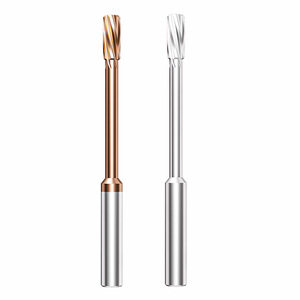
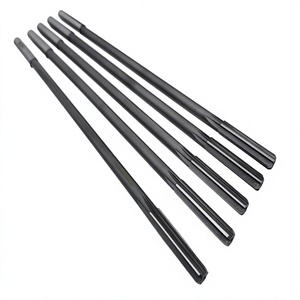
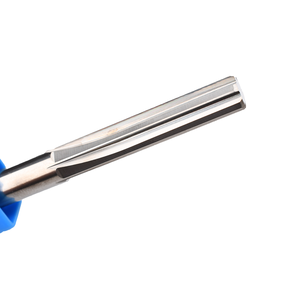
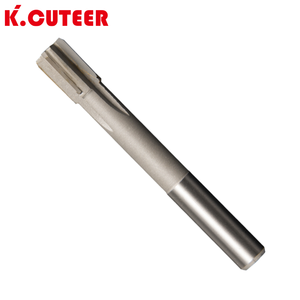
Delivering high-efficiency chipless thread deformation tooling engineered specifically for Polish CNC production environments, automotive hubs, and aerospace clusters.
As Central Europe's primary automotive and precision manufacturing center, Poland's industrial sectors in Katowice, Tychy, Poznań, and Wrocław are rapidly modernizing their machine shops. The traditional cutting tap—which removes material to generate threads—creates metal chips that risk clogging blind holes, marring surface finishes, and breaking tooling inside expensive workpieces. Cold form tapping (gwintowanie bezwiórowe) eliminates chip generation entirely by plastically displacing ductile metal to form high-strength, work-hardened internal threads.
Our export infrastructure and specialized tooling engineering directly support the rigid manufacturing requirements across Poland. From electric vehicle (EV) battery housing manufacturers in Lower Silesia utilizing lightweight EN AW-6082 aluminum, to aerospace component suppliers in Aviation Valley (Dolina Lotnicza in Rzeszów) working with stainless steel 316L and Inconel alloys, our tooling delivers verified ISO 2 (6H) metric thread precision.
To maximize thread integrity and tool life on high-speed CNC machining centers (HSC) across Polish job shops, tooling engineers must evaluate the mechanical differences between traditional cutting taps and modern forming taps (roll taps):
| Performance Characteristic | Cold Forming Taps (Roll Taps) | Traditional Metal Cutting Taps |
|---|---|---|
| Mechanism | Plastic deformation / displacement of metal grain flow | Metal shearing & material chip evacuation |
| Chip Evacuation Risk | Zero Chips: Ideal for deep blind holes & clean rooms | High Risk: Flutes can pack with chips, causing tool breakage |
| Thread Grain Structure | Continuous, burnished grain lines increase shear strength | Cut grain structure creates potential stress concentration points |
| Surface Finish (Ra) | Mirror-like burnished finish (Ra < 0.4 µm) | Standard micro-segmented finish (Ra 1.6 - 3.2 µm) |
| Machining Speeds (SFM) | Up to 1.5x to 2x faster spindle speeds | Limited by chip formation & heat build-up at cutting edge |
| Pre-Drill Hole Tolerance | Tight tolerance required (Calculated pitch hole formula) | Broader pre-drill hole tolerance allowance |
Proven tooling setups optimized for specific workpiece materials and industrial setups commonly found in Polish factories.
Location Focus: Tychy, Bielsko-Biała, and Wałbrzych industrial zones.
Workpiece Material: EN AW-6063-T6 & EN AW-6082 Aluminum Extrusions.
Tooling Challenge: High-volume M6 and M8 threaded mounting holes in structural extrusions requiring zero chip contamination in battery cooling channels.
Our Solution: Cobalt-HSS Form Taps with TiN oil-groove lobes, operating with 10% oil emulsion coolant at 28 m/min cutting speed, delivering over 15,000 perfect threads per tap without maintenance downtime.
Location Focus: Aviation Valley (Dolina Lotnicza - Rzeszów, Mielec, Krosno).
Workpiece Material: Stainless Steel 1.4404 / 316L & Titanium Grade 5.
Tooling Challenge: Extreme work-hardening behavior of austenitic stainless steels causing tap galling and thread pitch distortion under high friction.
Our Solution: Micrograin Solid Carbide Form Taps featuring PVD AlTiN multilayer coatings and pressurized internal coolant feeds (IC). Eliminates work hardening and guarantees strict 6H pitch diameter compliance.
Location Focus: Poznań, Bydgoszcz, and Upper Silesian Heavy Industry.
Workpiece Material: Ductile Cast Iron (GJS-400 / GJS-500) & Carbon Steel 42CrMo4.
Tooling Challenge: Severe abrasive wear on tool flutes and high thread torque requirements on large-diameter M12 to M20 blind holes.
Our Solution: Heavy-duty HSS-E Form Taps with modified lead chamfers (Form C / Form E) and specialized lubrication channels, reducing spindle load by up to 25% while extending tap life.

With manufacturing roots establishing precision grinding standards since 1986, our tooling enterprise combines decades of metallurgical mastery with modern CNC tool grinding technology. Unlike standard catalog suppliers, we control 100% of our grinding, brazing, multi-layer coating, and optical inspection procedures in-house.
Every form tap exported to the Polish market undergoes 3D laser profile scanning to verify lobe pitch geometry, relief angles, and coating thickness, ensuring seamlessly repeatable threads across million-part production runs.
Because forming taps displace metal rather than removing it, the pre-drilled hole size is critically larger than that used for standard cutting taps. Incorrect pre-drill sizing will result in over-formed thread crests, excessive spindle torque, or broken tooling.
For example, when roll tapping an M8 x 1.25 thread in ductile aluminum AW-6082 to achieve 65% thread height, the standard drill size is 7.38 mm (compared to 6.80 mm for a cutting tap). Our application engineers provide custom pre-drill look-up tables formatted for DIN 2174 standards with every shipment to Poland.
Addressing the core technical, logistical, and commercial inquiries from machine shops in Poland.
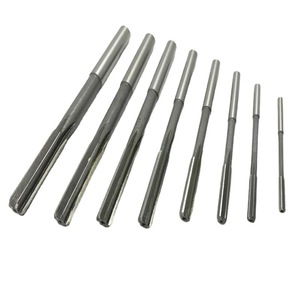
Our complete range of cold forming taps and reamers is manufactured in strict compliance with European standard DIN 2174 / ISO 2 (6H fit) for metric threads, as well as DIN 371 (reinforced shank for M2-M10) and DIN 376 (reduced shank for M12-M30). We also produce ANSI B1.13M standards for US-bound machinery built in Poland.
Standard DIN-metric form taps and solid carbide reamers featured in our catalog are stocked for express international air dispatch, typically reaching logistics hubs in Warsaw, Katowice, or Poznań within 3 to 5 business days. Special modified geometries (custom chamfer lengths, specific lobe designs, or extended shanks) are engineered and shipped within 10 to 14 working days.
Forming taps require workpiece materials with a minimum elongation capability of 8-10%. Excellent candidate materials include structural and alloy aluminum (EN AW-6060, AW-6082, AW-7075), low-carbon ductile steels (S235, S355), stainless steels (1.4301 / 304, 1.4404 / 316L), brass, copper, and structural cast iron (GJS-400). Materials exceeding 36 HRC require specialized ultra-micrograin carbide form taps.
Friction management is the primary factor in cold form tapping success. High-lubricity water-miscible emulsions (8% to 12% oil concentration) or neat tapping oils are highly recommended. For CNC machining centers operating in Silesian automotive plants, high-pressure coolant (minimum 20 bar to 70 bar) delivered through the spindle directly lubricates the forming lobes and dramatically reduces spindle torque.
Because the thread profile is generated through cold working, the metal's grain structure remains unbroken and follows the contour of the thread flanks. This grain refinement increases thread shear strength by 15% to 28% compared to cut threads, providing superior resistance to bolt loosening under heavy dynamic vibration—ideal for rail transport, automotive chassis, and heavy industrial gearboxes.
Yes, as an experienced global supplier serving European Union markets, we provide full commercial documentation, EUR.1 / Certificates of Origin, HS code classifications (8207.40 for tapping tools), and complete shipping manifests for streamlined customs clearance through Polish port authorities and airport customs centers.
Whether you are running high-speed production in Wrocław, aerospace machining in Dolina Lotnicza, or automotive components in Tychy, our engineering team is ready to analyze your prints and supply precision form taps tailored to your exact application.
Get a Quote