
Rock River Tool, Inc.Precision Cutting Tools
Technical Support(800) 345-8924
Talk to an Engineer Engineered to exact ISO/ANSI tolerances for Thailand’s high-precision manufacturing, automotive powertrain, and heavy industrial export sectors.
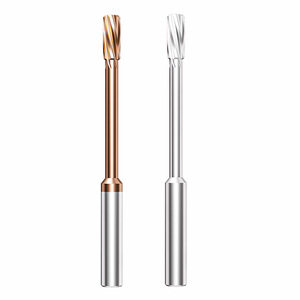
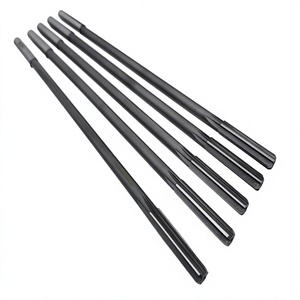
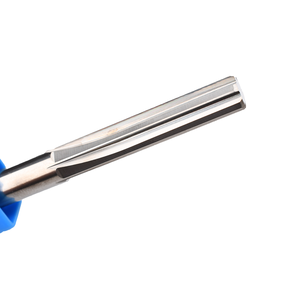
As the premier industrial manufacturing hub of Southeast Asia, Bangkok and its surrounding Eastern Economic Corridor (EEC) zones—including Chonburi, Rayong, and Samut Prakan—represent one of the highest concentrations of precision CNC machining operations globally. The modern manufacturing landscape across Thailand has undergone a significant paradigm shift. Transitioning rapidly from traditional Internal Combustion Engine (ICE) automotive manufacturing to high-density Electric Vehicle (EV) powertrains, aerospace components, medical devices, and oil & gas fluid control systems, local manufacturers face unprecedented demands regarding thread pitch accuracy, tool wear resistance, and cycle time optimization.
Standard off-the-shelf indexable inserts frequently fail to meet the stringent unit-cost and micro-geometrical tolerances demanded by Tier-1 OEM suppliers in Bangkok. Achieving flawless thread pitch profiles (such as ISO Metric 6H/6g, UN/UNJ aerospace standards, API Spec 5B, or NPT pipe threads) across abrasive workpieces like high-silicon aluminum, heat-treated alloy steels (4140/4340), duplex stainless steels, and titanium alloys requires bespoke insert design. This whitepaper analyzes the engineering parameters, metallurgy, physical vapor deposition (PVD/CVD) coating science, and supply chain logistics required when procuring custom OEM threading inserts in Bangkok.
While catalog threading inserts offer standardized profile geometry, custom OEM inserts engineered for Bangkok's manufacturing eco-system integrate material-specific chipbreaker topographies, custom flank clearance angles, and tailored corner radii (Re). This customization eliminates chip re-cutting, reduces cutting forces by up to 22%, and extends tool life by 35% to 60% in automated lights-out CNC production runs.
Engineering a custom tungsten carbide threading insert for high-volume export manufacturing demands absolute control over three foundational elements: the carbide substrate matrix, the microscopic edge preparation (honing), and the tribological surface coating.
The mechanical load during thread turning or thread milling is concentrated heavily on the delicate tip of the insert tooth. Standard turning tools distribute heat across a wider cutting edge, whereas threading inserts endure multi-directional forces and localized thermal spikes. We utilize sub-micron (0.5µm to 0.8µm) and fine-grain tungsten carbide powders alloyed with cobalt (Co) content ranging from 6% to 12%:
The humid tropical environment of Bangkok manufacturing facilities, combined with high-speed CNC coolant delivery, necessitates specialized thin-film coatings to prevent micro-cracking, oxidation, and built-up edge (BUE).
Applied via Physical Vapor Deposition at 450°C. Provides a micro-hardness of ~3300 HV with an oxidation threshold of 900°C. Excellent for sticky stainless steels (304/316L) and nickel-based superalloys.
Sub-micron amorphous carbon coating engineered specifically for non-ferrous EV component threading. Provides an ultra-low friction coefficient (<0.1), preventing aluminum adhesion completely.
Medium-Temperature Chemical Vapor Deposition layer stack ($TiCN + Al_2O_3 + TiN$). Thicker film (8–12µm) delivering extreme thermal insulation for heavy-pitch thread turning in steel cast forgings.
To evaluate the financial and operational impact for factory managers in Samut Prakan, Chonburi, and Bangkok industrial zones, the following empirical dataset compares standard off-the-shelf threading inserts with custom-engineered OEM solutions under high-speed manufacturing conditions:
| Engineering Parameter | Standard Catalog Insert | Custom OEM Threading Insert | Performance Benefit |
|---|---|---|---|
| Thread Pitch Tolerancing | Class 2A / 6g Generic | Class 3A / 4h / 6H Custom Profile | Zero Gauge Rejection |
| Cutting Speed ($V_c$) in 4140 Steel | 90 – 120 m/min | 150 – 210 m/min | +65% Speed Increase |
| Chip Control Topography | Flat Top / Generic 2D Press | 3D Laser-Milled Micro-Breaker | No Stringy Chip Entanglement |
| Edge Preparation ($K$-Factor) | Standard Brushed Honing (25µm) | Controlled Asymmetric Radius (10-15µm) | 22% Lower Cutting Force |
| Tool Life (Parts Per Corner) | ~350 Threaded Component Cycles | ~580–720 Threaded Component Cycles | Up to +105% Life Extension |
| Cost Per Threaded Part | $0.042 USD | $0.021 USD | 50% Direct Cost Reduction |
Bangkok serves as the operational headquarters and logistics nexus for multi-national industrial zones stretching across the Eastern Seaboard. Custom OEM threading inserts are deployed across several key sectors:
Thailand’s transformation into the "Detroit of Asia" for Electric Vehicles requires specialized tooling for machining light-weight aluminum battery enclosures, motor housings, and drive axles. Internal thread milling inserts with custom partial-profile profiles allow high-speed thread creation in blind holes without burr formation, meeting rigid zero-defect mandates from major EV OEMs.
Offshore drilling operations in the Gulf of Thailand rely heavily on heavy-duty API (American Petroleum Institute) threads, such as API Round, Buttress, and Extreme-Line casing connections. We supply custom laydown and vertical threading inserts capable of chasing deep, large-pitch threads in corrosive Inconel 718 and Super Duplex stainless steels without tool deflection.
For micro-electronic connectors, optical housings, and titanium dental implants, standard inserts lack the microscopic ground tooth profile necessary for threads below M1.6. Custom ground solid carbide micro-threading inserts deliver clean, high-luster thread flanks without micro-burrs under dry machining or oil mist setups.
Since 1986, our manufacturing ethos has focused on combining premium raw materials with cutting-edge Swiss and German CNC grinding technologies. Custom OEM threading inserts exported to Bangkok undergo rigorous processing:
Ground on Agathon and Rollomatic multi-axis CNC insert grinders with in-process laser measurement. Ensures tooth form accuracy within ±0.002mm.
100% optical profile verification checking pitch angles, flank clearance, and crest radii against customer CAD drawings prior to coating application.
Every insert batch is laser-etched with substrate lot numbers, geometry codes, and coating tracking codes for strict aerospace quality compliance.
Procuring cutting tools within Thailand involves navigating international trade logistics, customs duties, and supply chain stability. By establishing direct OEM supply lines with experienced exporters, Bangkok-based machine shops achieve distinct strategic advantages:
Expert answers regarding technical specifications, minimum order quantities, custom tooling design, and Thailand import procedures.
Send us your part drawings, workpiece specifications, or target tool numbers. Our application engineers in Bangkok will deliver a technical quote and insert geometry recommendation within 24 hours.