
Rock River Tool, Inc.Precision Cutting Tools
Technical Support(800) 345-8924
Talk to an Engineer Engineered by leading Chinese carbide OEMs for high-precision metal finishing across Kazakh industrial enterprises.
An authoritative analysis of industrial hole-finishing technology, metallurgical metallurgy choices, Eurasian supply chain logistics, and production yield optimization for Central Asian procurement executives.
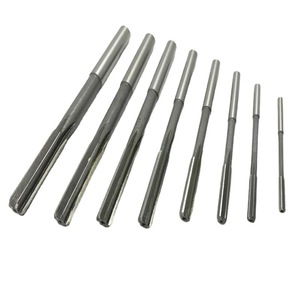
The industrial landscape of Kazakhstan—spanning key manufacturing, mining, and oilfield hubs such as Karaganda, Almaty, Pavlodar, Aktobe, and Atyrau—is undergoing a rapid technological modernization. As domestic machine shops, heavy equipment rebuilders, and pipeline valve manufacturers transition toward high-efficiency CNC machining centers, the demand for precision cutting tools capable of maintaining micron-level tolerances under harsh ambient and operational environments has surged. Among these essential tools, solid carbide reamers, carbide-tipped chucking reamers, and HSS-E specialized reaming tools play a decisive role in achieving IT7-IT6 hole accuracy and surface finishes superior to Ra 0.4 µm.
This industry whitepaper evaluates the engineering parameters, metallurgical compositions, and procurement dynamics of sourcing high-performance carbide reamers directly from tier-one Chinese factories. By bridging cutting-edge grinding technology with the specialized structural demands of Kazakh heavy industry, Chinese export manufacturers provide an unmatched competitive edge: top-tier metallurgical durability at optimized capital expenditure.
Selecting the appropriate tool substrate is the single most critical factor in achieving optimal tool life and preventing premature cutting edge chipping when machining tough Eurasian alloy steels (such as 30KhGSA, 40Kh, or 09G2S). Chinese OEM manufacturers leverage tailored carbide microstructures tailored to specific workpiece behaviors:
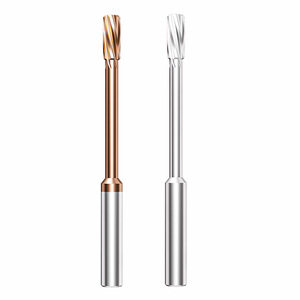
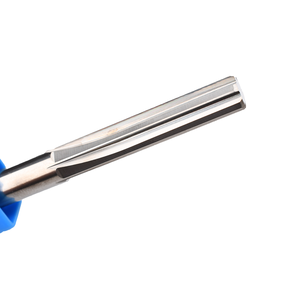
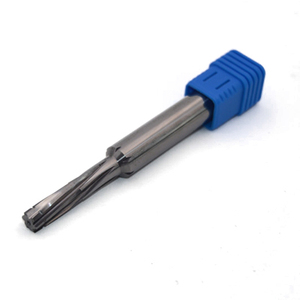
Formulated with sub-micron grain sizes (0.4µm - 0.6µm) and a 10%-12% Cobalt binder. Solid carbide reamers offer maximum structural rigidity, minimal tool deflection under high feed rates, and extreme resistance to abrasive wear during continuous production runs in CNC machining centers.
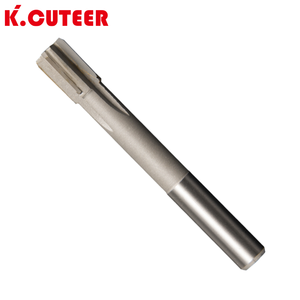
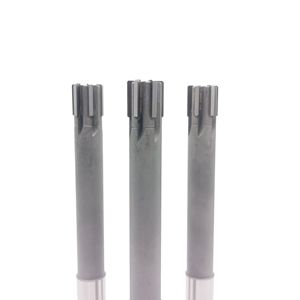
Fuses high-hardness carbide cutting edges onto a tough, shock-absorbing alloy steel shank (42CrMo). This composite structure provides exceptional impact tolerance during interrupted cuts, deep-hole blind reaming, or setups on legacy manual machinery with moderate spindle runout.
Engineered for high-ductility materials, structural steels, and field maintenance environments. High-Speed Steel with 8% Cobalt content (M42 grade) ensures high toughness under non-rigid vibration conditions where solid carbide would experience micro-fracturing.
To assist Kazakh tool engineers and production managers in selecting the ideal tooling parameters, the following matrix outlines operational guidelines for reaming common alloy grades under typical factory conditions across Central Asia:
| Workpiece Material (EAEU Grade) | Hardness Range | Recommended Tool Material | Cutting Speed (Vc m/min) | Feed Rate (f mm/rev) | Coolant Strategy |
|---|---|---|---|---|---|
| 40Kh / 45 Structural Steel | 180 - 240 HB | Solid Carbide (AlTiN / Bronze Coated) | 35 - 55 m/min | 0.12 - 0.25 mm/rev | Emulsion 8-10% Oil |
| 30KhGSA High-Strength Alloy | 280 - 340 HB | Carbide Tipped (C5/C6 Grade) | 25 - 40 m/min | 0.10 - 0.18 mm/rev | High-Pressure Neat Oil |
| 09G2S Low Alloy Pipeline Steel | 140 - 200 HB | Solid Carbide Straight Flute (H7) | 40 - 65 m/min | 0.15 - 0.30 mm/rev | Flood Coolant / MQL |
| Spheroidal Cast Iron (VCh50) | 160 - 220 HB | Carbide Tipped C2 / Grade 883 | 45 - 70 m/min | 0.20 - 0.35 mm/rev | Dry Air Blast / Synthetic |
| 12Kh18N10T Stainless Steel | 200 - 260 HB | Solid Carbide Left-Helix Spiral Flute | 18 - 30 m/min | 0.08 - 0.15 mm/rev | High-EP Synthetic Coolant |
Chinese direct-factory reaming solutions are engineered to directly address the operational challenges present in Kazakhstan’s key industrial sectors:
Reaming precision seals, API flange pin holes, and hydraulic spool valve chambers require exact roundness and zero cylindrical taper. Solid carbide machine reamers with Bronze and TiAlN PVD coatings eliminate chatter marks, maintaining strict H7 diametral tolerances even during long-reach machining in forged 4140 steel manifolds.
Underground mining rigs, excavator linkages, and crusher gearboxes experience immense mechanical stress. Custom-made HSS and Carbide-tipped extended chucking reamers allow workshops to recondition worn pivot pin holes in-situ or rebuild cast steel gear housings to original OEM ISO fit specifications.
For municipal utility expansion and cross-country pipeline laying beneath rivers, HDD trenchless back-reamers are subject to extreme soil abrasion. China’s heavy-duty HDD fluted reamers feature hardfaced alloy matrix bodies equipped with tungsten carbide dome buttons, dramatically increasing hole-opening efficiency in rocky Kazakh clay and gravel strata.
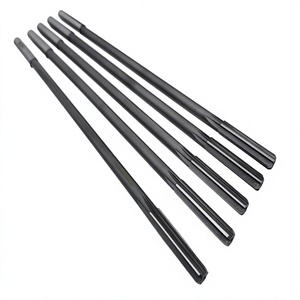
Maintaining locomotive wheelsets and freight car brake linkages demands reliable hole quality under tight turnarounds. High-precision straight and spiral flute machine reamers provide high surface finish (Ra 0.4 µm) without requiring grinding secondary operations, streamlining rail fleet maintenance cycles.
A unique engineering requirement for cutting tools operated in Kazakhstan is resistance to thermal shock and extreme ambient temperature fluctuations. During winter months, unheated workshop facilities or field repair operations can experience temperatures dropping below -30°C to -40°C. Cold workpiece loading can create severe thermal gradients when sudden cutting heat (exceeding 600°C at the shear zone) is generated.
Tier-one Chinese carbide exporters address this challenge by utilizing advanced multi-layer nano-structure PVD coatings (such as AlTiN and TiSiN) combined with stress-relieved steel bodies. The low thermal conductivity of nano-structured coating layers acts as an insulating barrier, preventing rapid heat transfer into the tool core. This prevents thermal micro-cracking along the carbide cutting edge, ensuring consistent hole sizing from the first cut to the end of the shift.
Optimizing hole geometry requires a matching flute design to the target hole configuration (through-hole vs. blind hole):
Why leading industrial procurement managers in Kazakhstan choose our direct manufacturer export channels.
Utilizing state-of-the-art ANCA, Walter, and Rollomatic 5-axis CNC grinding centers, our factories ground each reamer flute, relief angle, and chamfer lead with sub-micron repeatability, guaranteeing consistent H7 tolerance limits across every batch.
Every tool leaving the production floor undergoes stringent non-contact dimensional inspection on Zoller Genius and Keyence measurement platforms. Runout is held strictly within ≤ 0.003 mm to ensure immediate plug-and-play setup accuracy.
From non-standard diameters (e.g. Ø8.03mm +0.005) to complex step reamers and internal coolant-through configurations, our senior application engineering team reviews technical prints within 24 hours to ensure manufacturability.
Essential customs, logistics, certification, and technical answers for buyers importing tooling into Kazakhstan.
Shipments from China to Kazakhstan fall under Eurasian Economic Union (EAEU) import regulatory frameworks. Our factory export department provides complete commercial invoice documentation, packing lists specifying exact HS Codes (e.g., 8207.60 for reaming tools), Certificate of Origin (Form A / Form E), and EAC declaration compliance support for seamless clearance through Khorgos or Alashankou customs hubs.
Standard order transit times via direct rail freight (China-Europe Railway Express / Silk Road Corridor) or overland truck transport through the Khorgos Gateway typically range between 7 to 14 days to major Kazakh logistics terminals in Almaty, Astana, or Shymkent. Express air cargo options are available for urgent production downtime requirements (3 to 5 business days).
Solid carbide is recommended for hole diameters under 14mm-20mm, modern CNC machinery with rigid spindle alignment, high SFM finishing, and tight tolerance requirements (H6-H7). Carbide-tipped reamers are ideal for larger diameters (over 16mm/20mm) where full solid carbide bodies become cost-prohibitive, as well as setups with vibration risk, manual lathes, or interrupted cuts in tough cast materials.
Leaving the correct stock allowance prevents rubbing and premature edge wear. As a standard baseline rule: for hole diameters up to Ø6mm, leave 0.10mm to 0.15mm on diameter; for Ø6mm to Ø18mm, leave 0.15mm to 0.25mm; for diameters above Ø20mm, leave 0.25mm to 0.40mm. Always ensure the pre-drilled hole is straight and free of work-hardening before entry.
Yes. Our engineering division specializes in custom tool fabrication. We manufacture non-standard shank lengths, combined step-drill-and-ream tools, special chamfer angles, inner coolant holes, and specialized PVD surface coatings tailored to specific OEM part numbers. CAD/CAM DXF and STEP drawing support is integrated directly into our quotation process.
Connect directly with our engineering team for technical quotations, custom tool drawing reviews, and bulk factory-direct pricing tailored for Kazakhstan industrial imports.