
Rock River Tool, Inc.Precision Cutting Tools
Technical Support(800) 345-8924
Talk to an Engineer Exclusively stocked and OEM-manufactured for Swiss precision turning centers, medical engineering, watchmaking tooling, and aerospace component machining.
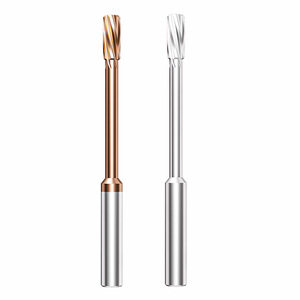
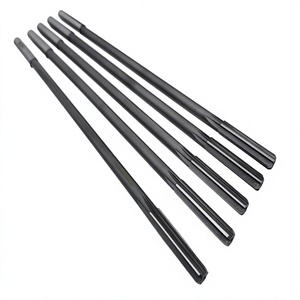
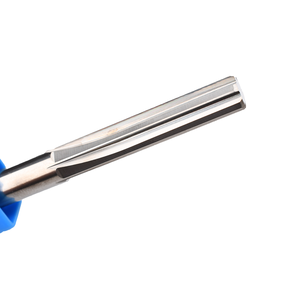
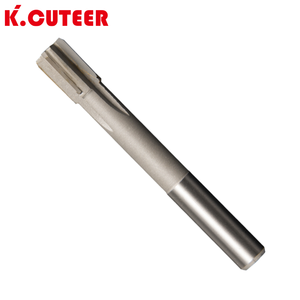
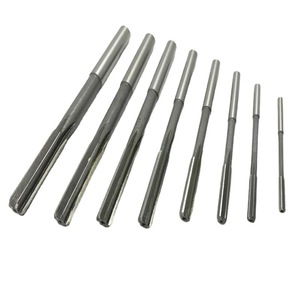
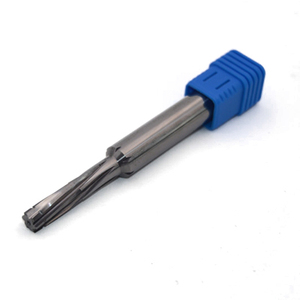
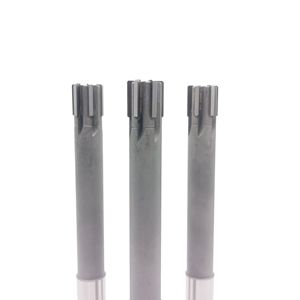
The manufacturing ecosystem in Switzerland—spanning Zurich’s precision machinery sectors, Basel’s medical device production, and the traditional watchmaking arc across the Jura region—requires tooling components that deliver zero-defect surface finishes, rigorous concentricity, and extreme tool life repeatability. In hole-finishing operations, deburring and chamfering are frequently underrated bottlenecks. Standard single-flute or two-flute countersinks produced from High-Speed Steel (HSS) frequently induce micro-chatter marks, edge burrs, and non-uniform chamfer concentricity when subjected to Swiss High-Speed Cutting (HSC) protocols.
Solid carbide three-flute countersinks designed according to DIN 335 Form C (90° included angle) represent the benchmark solution for high-end CNC operations. By balancing cutting forces across three symmetrically engineered cutting edges, cutting harmonics are suppressed, spindle load fluctuations are minimized, and feed rates can be safely increased by up to 250% compared to traditional single-flute alternatives.
Chatter during countersinking occurs when the resonant frequency of the tool-spindle assembly matches the tooth-passing frequency of the cutter. China's premier export-grade 3-flute carbide countersinks utilize unequal flute indexing (variable pitch spacing at 119°-121°-120°) paired with high-spiral chip evacuators. This irregular pitch disrupts cutting force resonance, converting potential harmonic chatter into smooth, damped shear action—vital for machining tough Swiss materials such as 316L Stainless (1.4404), Grade 5 Titanium (Ti-6Al-4V), and hardened tool steel (1.2379).
When a single-flute countersink enters a pre-drilled hole, radial cutting forces are concentrated entirely on one vector, pushing the tool axis off-center unless held by extreme setup rigidity. Two-flute designs improve axial guidance but remain prone to harmonic vibration in thin-walled workpieces or interrupted cuts. The 3-flute carbide architecture establishes a self-centering 3-point contact plane upon workpiece entry. This tripod effect stabilizes the tool axis dynamically inside the hole perimeter, preventing elliptic hole deformation and ensuring chamfer roundness within ±0.003 mm.
China's top OEM tool exporters serving the Swiss market utilize ultra-fine micro-grain tungsten carbide (WC grain size 0.4 µm – 0.6 µm) bound with 8% to 10% Cobalt (Co). This metallurgical synthesis delivers high hardness (up to 92.5 HRA) alongside high transverse rupture strength (TRS > 3,800 N/mm²), ensuring edge sharpness without micro-chipping under thermal shock.
| Performance Characteristic | 1-Flute Carbide Countersink | 2-Flute Carbide Countersink | 3-Flute Carbide (DIN 335 C) | Carbide Tipped (Steel Body) |
|---|---|---|---|---|
| Harmonic Chatter Control | Moderate (Low Speed Only) | Poor (High Harmonic Resonance) | Superior (Unequal Pitch Pitching) | Excellent (Shock-Absorbing Core) |
| Maximum Feed Rate (mm/rev) | 0.03 - 0.08 mm/rev | 0.05 - 0.12 mm/rev | 0.15 - 0.35 mm/rev | 0.10 - 0.25 mm/rev |
| Surface Roughness (Ra) | Ra 0.4 µm | Ra 0.8 µm | Ra < 0.2 µm (Mirror Finish) | Ra 0.4 - 0.6 µm |
| Suitable Workpiece Material | Plastics, Soft Aluminum | Non-Ferrous Metals | Stainless, Ti, Inconel, Hardened Steel | Cast Iron, Large Steel Forgings |
| Ideal Swiss Industry Application | Prototyping & Soft Plastics | General Sheet Metal | Medical Implants, Watchmaking, Aerospace | Heavy Mechanical Engineering |
To optimize tool life and achieve surgical-grade surface finishes, Swiss CNC programming engineers should calibrate feeds and speeds according to carbide grade and coating spec:
Precision-matched supply chain solutions designed for local workshop regulations, Swiss export quality norms, and regional industrial requirements.
Supplying ultra-rigid 3-flute 90° carbide countersinks engineered for heavy-duty CNC machining centers, automated tool changers, and planetary milling heads operating in Zurich's machinery ecosystem.
Delivering micro-grain solid carbide countersinks certified for cleanroom environments. Tailored for burr-free beveling on titanium bone plates, medical grade stainless screws, and surgical instruments.
Specialized micro-diameter 3-flute countersinks (from Ø 0.5mm to Ø 3.0mm) designed for high-precision Swiss automatic lathe setups (Tornos, Citizen) machining brass, gold, and titanium components.
Historically, Swiss procurement managers sourced cutting tools strictly within Western Europe. However, technological advancements in Chinese CNC tool grinding technology—specifically the adoption of 5-axis SCHÜTTE, ANCA, and WALTER CNC grinding centers paired with ZOLLER Genius optical measuring hardware—have closed the quality gap while providing a 40% to 60% cost efficiency advantage.
Every batch exported to Switzerland undergoes automated optical inspection verifying shank runout (TIR < 0.002 mm) and angle accuracy within ± 5 arcminutes.
Full capability to grind custom step-countersinks, non-standard angles (60°, 82°, 100°, 120°), weld-on carbide tips, and specialized shank flats (Weldon or HA DIN 6535).
Seamless export documentation including EUR.1 preference handling, Swiss VAT & Duty clearance assistance, and air cargo routing to Zurich (ZRH) or Geneva (GVA).
We source premium micro-grain carbide rods from virgin tungsten powder suppliers, ensuring zero internal porosity and uniform cobalt binder distribution across production runs.
Expert engineering and commercial guidance for purchasing agents, shop owners, and CNC programmers in Switzerland.
Partner with China's leading exporter of 3-flute solid carbide countersinks. Request technical data sheets, sample evaluation kits, or custom OEM manufacturing quotes for the Swiss market today.
Send an Inquiry