Rock River Tool, Inc.Precision Cutting Tools
Technical Support(800) 345-8924
Talk to an Engineer Engineered for rigorous industrial standards, extreme concentricity, and long wear-life across automotive, defense, and heavy machinery production lines in Serbia.
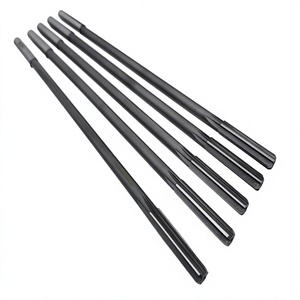
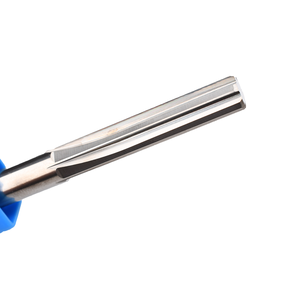
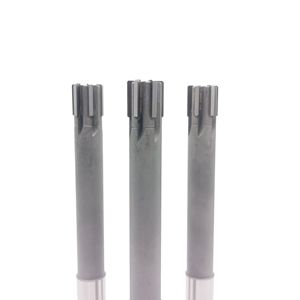
The Republic of Serbia has rapidly re-emerged as a strategic industrial powerhouse in Southeastern Europe. Driven by an influx of Foreign Direct Investment (FDI) in automotive components, industrial machinery, hydraulic systems, and aerospace subcontracting, Serbian CNC machining facilities demand cutting tools that deliver sub-micron precision, thermal stability, and extended operational lifespans. Among foundational cutting tools, Center Drills (Center Countersinks) represent a vital component in establishing exact axis alignment, preventing drill wander, and supporting heavy turning operations on live or dead lathe centers.
A center drill—engineered per rigorous standards such as DIN 333, ISO 2540, and BS 328—serves two core functions: producing a precise pilot hole and machining a 60-degree countersink. In modern high-speed machining centers across Serbian industrial centers like Kragujevac, Belgrade, Niš, Čačak, and Novi Sad, selecting the appropriate center drill supplier requires a nuanced understanding of tool geometry, substrate composition (such as HSS-Co5, HSS-Co8, or Solid Micrograin Carbide), PVD coating technologies, and localized supply chain logistics.
Engineering procurement teams in Serbia frequently evaluate center drills based on workpiece material behavior and mechanical load specifications. Understanding the geometric variations is essential for optimizing machining cycles and preventing tool breakage:
Features a straight 60° countersink angle without a protective chamfer. Ideal for general-purpose centering operations where the finished part does not undergo heavy thermal movement or repeated mounting between centers. Widely specified in standard shaft turning and motor spindle manufacturing.
Includes a secondary 120° protective chamfer at the mouth of the 60° countersink. This design guards the functional center bearing surface against mechanical damage, burr formation, and deformation during transit or subsequent heat-treatment processes—vital for automotive drive axles produced in Šumadija.
Engineered with a convex radius form rather than a straight 60° cone. This configuration ensures a precise point contact with lathe centers regardless of slight axial misalignment, minimizing friction, reducing chatter, and significantly extending live-center bearing lifespan during heavy rough turning.
Serbian machine shops process a diverse range of materials—from structural carbon steels like Č.1530 (C45E) and alloy steels like Č.4732 (42CrMo4) to nodular cast iron (GJS-400) and aerospace-grade aluminum alloys. The table below outlines recommended cutting speeds (SFM / m/min), feed rates, and substrate selections for center drilling operations:
| Workpiece Material Group | Serbian / ISO Designation | Recommended Substrate | PVD Coating | Cutting Speed (m/min) | Feed Rate (mm/rev) |
|---|---|---|---|---|---|
| Unalloyed Carbon Steels | Č.1330 / C22E, Č.1530 / C45E | HSS-Co5 (M35 Steel) | TiN / Bright Finish | 25 - 35 m/min | 0.03 - 0.08 mm/rev |
| High-Tensile Alloy Steels | Č.4732 / 42CrMo4, 34CrNiMo6 | HSS-Co8 / Solid Carbide | TiAlN / AlTiN PVD | 18 - 28 m/min (Carbide: 50-80) | 0.02 - 0.06 mm/rev |
| Stainless Steels (Austenitic) | Č.4580 / X5CrNi18-10 (AISI 304) | Micrograin Carbide | TiAlN / Bronze Nano | 15 - 22 m/min (Carbide: 40-60) | 0.015 - 0.04 mm/rev |
| Grey & Ductile Cast Iron | Č.3130 / GJL-250, GJS-500-7 | Solid Carbide (C2 Grade) | TiCN / Uncoated | 30 - 45 m/min (Carbide: 60-90) | 0.04 - 0.10 mm/rev |
| Aluminum & Copper Alloys | AlSi10Mg, CuZn39Pb3 | HSS-Co5 / Carbide | DLC / Bright Polished | 40 - 70 m/min (Carbide: 100-150) | 0.05 - 0.12 mm/rev |
*Note: When center drilling high-hardness materials (>45 HRC), ensure peck-drilling routines are applied to prevent point micro-chipping, and use high-pressure flood coolant or MQL (Minimum Quantity Lubrication) to clear chips efficiently.
The manufacturing demands for center drills and precision hole-finishing tools in Serbia vary dramatically by region. By aligning cutting tool engineering with specific local industry clusters, factories can drastically improve throughput, reduce scrap rates, and maintain ISO 9001 compliance.
Home to major OEM assembly plants and tier-1 supplier parks, Kragujevac requires high-volume DIN 333 Form B center drills for machining drive shafts, CV joints, and steering knuckles. Coated solid carbide center drills are essential here to keep pace with high-speed robotic turning lines.
Factories in Novi Sad, Subotica, and Zrenjanin manufacture agricultural equipment, gearboxes, and hydraulic pump housings. These applications demand heavy-duty DIN 333 Form R radius center drills capable of withstanding interrupted cuts on raw forged shafts and sand-cast steel housings.
With deep roots in defense manufacturing and precision toolmaking, facilities in Western Serbia work heavily with tough alloy steels, titanium, and defense-grade stainless alloys. Center drills used here must exhibit less than 0.002mm TIR runout to guarantee accurate positioning for secondary reaming and boring.
Serbian metalworking enterprises are evolving rapidly. Technical directors, plant managers, and procurement personnel face shifting market conditions that dictate how cutting tools are specified and sourced:
A. Shift from Conventional Lathes to Multi-Axis CNC Turning Centers: The transition toward high-efficiency Swiss-type automatics and 5-axis turning centers has rendered cheap, low-grade HSS center drills obsolete. Modern CNC programming requires consistent tool length offsets and rigid carbide center drills that withstand high RPM spindle speeds without point burn.
B. Demand for Advanced PVD Surface Coatings: Serbian factories are increasingly moving away from bright/uncoated tools in favor of PVD (Physical Vapor Deposition) coatings such as TiAlN (Titanium Aluminum Nitride) and Bronze Nano Coatings. These coatings reduce friction, lower heat transfer to the cutting tip, and allow machinists to increase surface feet per minute (SFM) by up to 40%.
C. Supply Chain Resilience & Direct Factory Partnerships: Recent geopolitical shifts and European supply chain bottlenecks have prompted Serbian buyers to bypass intermediary stockists. Procurement managers are forming direct partnerships with certified global tooling manufacturers capable of delivering custom geometries, guaranteed carbide grade traceability, and quick RFQ turnaround.
Backing our tooling recommendations is over three decades of advanced manufacturing expertise. Rooted in strict quality management standards, our production facilities utilize state-of-the-art 5-axis CNC grinding centers, sub-micron optical inspection systems, and premium grade raw materials to deliver cutting tools that outperform standard market offerings.
We utilize specialized carbide substrates, including C-2 class grades (883 premium) for abrasive cast iron and non-ferrous alloys, alongside C5/C6 class carbide (370 premium) for high-tensile alloy steels and stainless materials.
Every center drill and machine reamer is ground under controlled thermal conditions to maintain Total Indicated Runout (TIR) within ±0.002mm, ensuring precise center pilot placement and eliminating vibration during high-speed machining.
In addition to standard DIN 333 forms, our engineering group manufactures custom step center drills, bell-type countersinks, non-standard pilot lengths, and modified shanks built directly to customer engineering prints.
Answers to technical, operational, and commercial questions frequently raised by Serbian engineers and procurement teams:
Whether you require standard DIN 333 center drills off the shelf or custom-ground carbide reamers engineered to your drawings, our technical application team is ready to support your operations.
Send an Inquiry