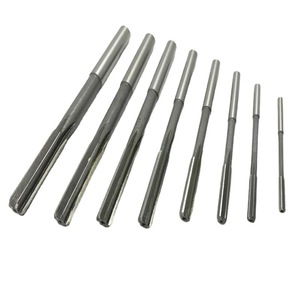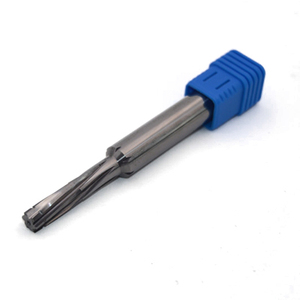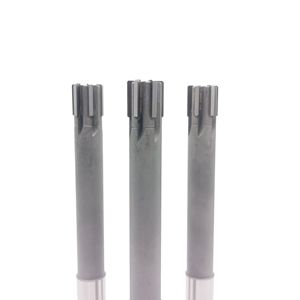
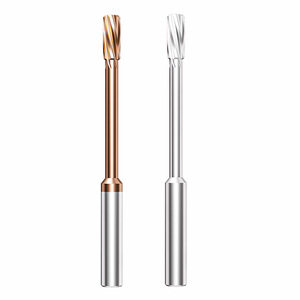
Solid Carbide Machine Reamers, Straight Shank & Spiral Flute
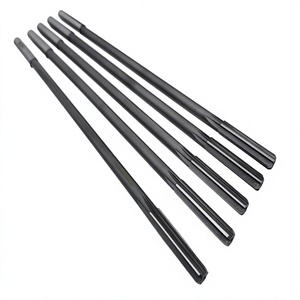
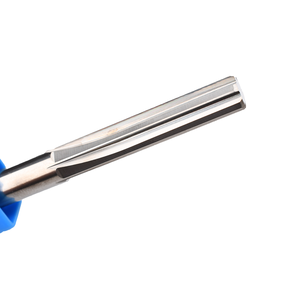
Precision 0.5~12.0mm H7 tolerance machine reamers with Bronze PVD coating. Designed for fine hole finishing in tough steels and non-ferrous alloys.
Engineered for rigid CNC set-ups, tough structural alloys, and chatter-free countersinking. Stocked standard geometries and custom engineered modifications delivered straight to US machine shops.
Precision 0.5~12.0mm H7 tolerance machine reamers with Bronze PVD coating. Designed for fine hole finishing in tough steels and non-ferrous alloys.
H8/H7 precision 55HRC hand & machine reaming tool featuring dry cooling engineering and 15-20° helix angle for deep hole finishing.
Ultra-micrograin solid carbide reamer series offering dimensional stability up to 20mm diameter. Perfect for tight-tolerance production work.
Custom-manufactured high-precision non-standard white steel reamers with extended reach shanks for specialized aerospace and energy fixtures.
Engineered fluted hole opener and reamer for trenchless pipe laying and horizontal drilling machinery requiring extreme shock absorption.
Industrial grade manual and machine straight-shank reamer for general workshop maintenance, structural metal fabrication, and job shops.
Matched tool sets of spiral flute carbide reamers designed for CNC machining centers. Delivers smooth chip evacuation and mirror surface finishes.
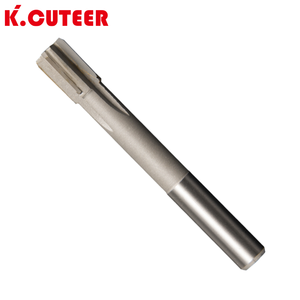
Direct manufacturer supply 20mm solid carbide reamer with high-heat wear resistance for production reaming of cast irons and alloy steels.
Understanding the physics of countersinking, chatter elimination, substrate selection, and tool geometry optimization for high-throughput North American machine shops.
Modern CNC machining demands countersinks that withstand severe heat concentration at the tool perimeter. By utilizing submicron tungsten carbide powders binder-matched with 6% to 12% Cobalt (Co), our solid and carbide-tipped countersinks exhibit extreme micro-hardness (up to 92 HRA) alongside high transverse rupture strength (TRS > 3,800 MPa).
Traditional single-flute and symmetric multi-flute countersinks frequently suffer from regenerative chatter, producing out-of-round polygonal holes. Our advanced carbide countersink lines incorporate asymmetric variable flute indexing and differential helix angles. This breaks surface harmonics, delivering chatter-free Ra 0.4 µm (16 µin) seat finishes.
We manufacture solid and tipped carbide countersinks covering all standardized industrial countersink angles: 60° (center preparation), 82° (US flathead screws), 90° (metric fasteners), 100° (aerospace rivets), and 120° (specialty chamfering), alongside custom step-pilot combination tools to drill and countersink in a single spindle pass.
| Tool Material Substrate | Cutting Speed (SFM) Steel | Cutting Speed (SFM) Alum/Non-Ferrous | Impact / Shock Tolerance | Tool Life Multiplier | Recommended US Application |
|---|---|---|---|---|---|
| Solid Carbide (Micro-grain) | 250 - 450 SFM | 600 - 1200+ SFM | Moderate (Requires Rigid Setup) | 10x vs. Standard HSS | High-speed CNC production, small diameter countersinking, aero composites. |
| Carbide-Tipped (Alloy Body) | 180 - 350 SFM | 500 - 900 SFM | High (Absorbs Vibration) | 6x - 8x vs. HSS | Interrupted cuts, manual mills, large diameter chamfering, cast iron housings. |
| HSS-Co 8% (M42 Grade) | 80 - 140 SFM | 250 - 400 SFM | Very High | 1.5x - 2x vs HSS | Maintenance repair (MRO), job shops, short production runs on manual equipment. |
How specialized carbide countersinks and precision machine reamers solve critical manufacturing bottlenecks across key American industrial corridors.
In Boeing and Tier-1 aerospace sub-assembly plants across Washington and California, 100° rivet countersinks operate on Carbon Fiber Reinforced Polymers (CFRP) stacked over Titanium 6Al-4V airframe structures. Carbide tooling prevents delamination and edge chip-out while maintaining critical depth stop repeatability within ±0.0005 inches.
Across Michigan, Ohio, and Indiana automotive transmission and engine block facilities, automated CNC stations perform high-speed 90° chamfering and valve seat prep on ductile iron castings. Carbide-tipped tools provide superior shock damping against cored-hole casting skin scale, dramatically cutting downtime.
High-pressure manifold blocks and downhole valve bodies manufactured in Houston and Dallas demand clean, burr-free SAE port contours and heavy countersinks in tough AISI 4140, 4340, and Inconel 718. Premium C5/C6 carbide grades withstand high thermal loads during deep chamfering operations.
Key technological shifts shaping how American machine shops select and deploy carbide hole-making and chamfering cutters.
US contract shops are rapidly adopting Minimum Quantity Lubrication (MQL) and dry machining to reduce coolant disposal costs. Advanced carbide countersinks with TiAlN or AlTiN PVD coatings form an aluminum oxide thermal barrier layer at temperatures exceeding 1,400°F (760°C), allowing dry chamfering at elevated speeds.
With domestic defense programs enforcing strict DFARS and Buy American requirements, prime contractors prefer American-manufactured and domestic-supported tooling suppliers. Standardized tooling with full lot traceability provides peace of mind for AS9100 Rev D audit standards.
The industry is transitioning toward ultra-fine submicron substrates combined with multi-layer nanocomposite coatings (such as TiSiN and DLC). This combination increases edge wear longevity when countersinking abrasive non-ferrous alloys, glass-filled plastics, and hardened tool steels up to 62 HRC.
Since 1986, Rock River Tool, Inc. has remained dedicated to producing precision carbide-tipped and solid carbide cutting tools. We combine domestic craftsmanship with advanced 5-axis CNC grinding technology to deliver reliable standard and custom cutting tools.
Expert engineering answers to common procurement, geometry selection, and application technical questions.
Carbide-tipped countersinks braze premium carbide tips onto hardened alloy steel shanks. This configuration is highly recommended for larger diameters (over 1/2 inch), less rigid machinery, manual drill presses, or interrupted cuts. The steel body absorbs severe impact and vibration, preventing brittle edge fracture, while offering a significantly lower cost per tool than large solid carbide blanks.
Chatter occurs when symmetrical cutting flutes enter harmonic resonance with the workpiece material. Single-flute countersinks eliminate resonance because only one edge cuts at a time. Multi-flute chatter-free countersinks use unequal flute spacing (asymmetric indexing), which continuously breaks harmonic frequencies during rotation, producing a smooth, round surface finish.
The most common US standard angles are 82° (for standard US flathead machine screws and wood screws), 90° (for metric flathead fasteners and general deburring/chamfering), 100° (for aerospace rivets and thin sheet metal fasteners), and 60° (for lathe center hole preparation). Custom angles such as 120° are available upon request.
Yes. Because the carbide tip retains sufficient thickness, tools can be factory re-ground multiple times back to original geometry standards. This re-conditioning capability extends total tool service life and reduces long-term tooling expense for high-volume manufacturing facilities.
When running solid or carbide-tipped countersinks in alloy steels (such as AISI 4140), a starting speed of 180 - 250 SFM (Surface Feet per Minute) is recommended with light feed rates (0.001 - 0.003 IPT) to avoid chip packing. For 304/316 Stainless Steel, reduce speed to 120 - 180 SFM with continuous coolant application to prevent work hardening.
Yes. Our in-house grinding department specializes in custom multi-step tools, pilot countersinks, form tools, and non-standard shank modifications. Simply supply your drawing or print, and our application engineering team will review manufacturability, tolerances, and quote lead times within 24 business hours.