
Rock River Tool, Inc.Precision Cutting Tools
Technical Support(800) 345-8924
Talk to an Engineer Engineered for high repeatability, thermal stability under Gulf operating conditions, and extended edge tool life across ferrous and non-ferrous metals.
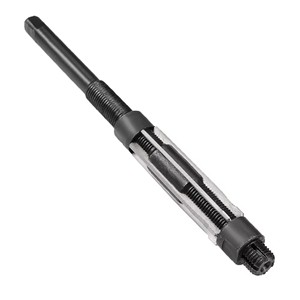
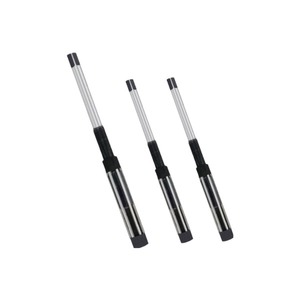
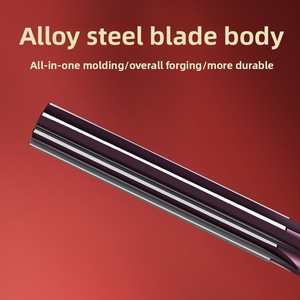
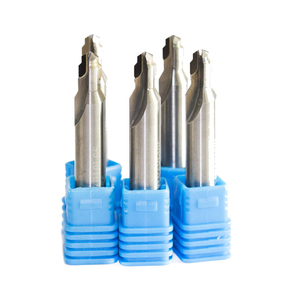
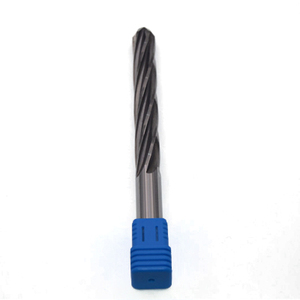
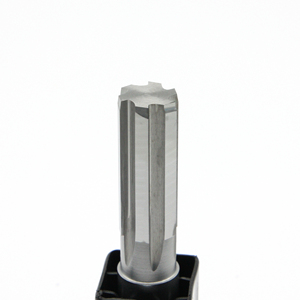
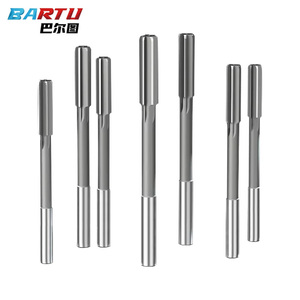
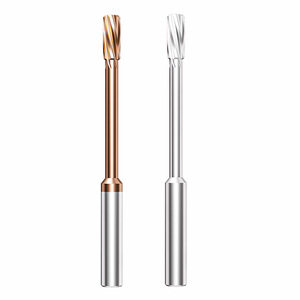
In high-precision mechanical manufacturing and field maintenance across the State of Qatar, achieving exact cylindrical bore geometry, specified surface roughness ($Ra \le 0.4 \mu m$), and tight dimensional tolerances (ISO H6/H7) is a fundamental engineering requirement. Adjustable reamers serve as critical cutting tools when fixed-diameter reamers lack the flexibility required to accommodate custom sleeve sizing, worn component restoration, or non-standard tolerance fits.
Industrial procurement in major Qatari industrial nodes—including the Doha Industrial Area, Mesaieed Industrial City (MIC), Ras Laffan Industrial City (RLIC), and the Hamad Port Maritime Complex—presents specific tribological and metallurgical challenges. Machining super-duplex stainless steels, high-nickel alloys (Inconel, Hastelloy), cast iron pump casings, and structural marine bronzes demands a thorough evaluation of tool geometry, substrate composition, and expansion mechanism stability.
Adjustable reamers function through controlled radial blade displacement. Selection of the expansion style directly governs structural rigidity, maximum depth of cut, and chatter suppression during finishing operations:
| Substrate Grade | Vickers Hardness (HV) | Max Operating Temp | Impact Toughness | Primary Qatari Application |
|---|---|---|---|---|
| HSS-E (Co5 / Co8) | 800 - 900 HV | 600°C | Very High | On-site maintenance, manual reaming of structural steel sleeves in Doha Industrial Area. |
| C-2 Carbide (883 Class) | 1450 - 1600 HV | 900°C | Moderate | Cast iron valve bodies, bronze marine bushings, abrasive non-ferrous alloys in Mesaieed. |
| C5/C6 Carbide (370 Class) | 1500 - 1700 HV | 1000°C | Medium-High | Heavy steel forgings, high-tensile shafts, interrupted keyway reaming in oilfield shops. |
| PCD (Poly-Crystalline) | 5000 - 7000 HV | 750°C | Low-Moderate | High-speed dry/MQL reaming of aluminium heat exchangers & automotive sumps in Lusail cells. |
Ambient workshop temperatures in Doha often exceed 40°C during summer months, inducing thermal expansion in both the machine tool spindle, the workpiece bore, and the reamer body. When executing precision reaming to H6 specifications ($+0.000 / +0.009\text{ mm}$ on a $\phi 20\text{ mm}$ hole), a temperature differential of 15°C between setting gauge and workpiece can cause out-of-tolerance rejects.
To mitigate thermal distortion, leading suppliers recommend implementing Minimum Quantity Lubrication (MQL) or high-pressure coolant-through (HPCT) delivery ($> 40\text{ bar}$). Coolant-through adjustable reamers direct cutting fluid straight to the blade-workpiece interface, flushing swarf instantly to prevent double-cutting and chatter mark formation inside deep blind holes.
Real-world deployment of adjustable reaming tooling across Qatar's major industrial projects and energy complexes.
Overhauling cryogenic valve bodies and duplex 2205 stainless steel flange sleeves requires exact diameter setting after hard-facing overlay welds. Micro-adjustable carbide-tipped reamers provide the rigid edge geometry required to shear tough nickel-alloy overlay without work-hardening the bore wall.
Heavy slurry pump casings in Mesaieed fertilizer plants experience high abrasive wear on internal sleeve locations. Field engineers utilize 6-blade HSS-Co adjustable hand reamers with extended pilot shafts to re-align offset split-housing pin holes directly inside the processing facility, bypassing long overhaul transport delays.
Extensive earthmoving and construction equipment supporting infrastructure expansion in Greater Doha demands frequent overhaul of bucket pin joints, steering knuckle kingpins, and boom sleeves. Multi-blade adjustable hand reamers enable fast on-site resizing to fit oversize aftermarket pins.
Ship repair drydocks at N-KOM (Erhama Bin Jaber Al Jalahma Shipyard) mandate exact alignment of propeller tail-shaft coupling bolt holes. Precision-ground machine adjustable reamers with helical flute geometry ensure zero taper and mirror-finish contact surface to withstand torsional cyclic loading.
Under the framework of Qatar National Vision 2030 and localized supply chain initiatives such as QatarEnergy's Tawteen program, there is an accelerated transition toward in-country precision manufacturing and servicing. Machine shops in Doha are upgrading from traditional manual turning equipment to 5-axis CNC machining centers and automated turning cells.
This technological shift influences cutting tool specification requirements in three major ways:
While HSS adjustable reamers remain essential for maintenance toolboxes, high-volume production facilities in Ras Laffan and Mesaieed are standardizing on brazed solid carbide and adjustable PCD tipping to achieve cutting speeds exceeding 150 m/min in aluminum and 60 m/min in steel alloys.
Modern adjustable reamer setups utilize standardized modular shanks (HSK-A63, Coromant Capto, and DIN 69871 ISO Taper) equipped with internal micro-adjusting mechanism, allowing tool presetting off-machine to eliminate setup downtime.
Qatari EPC contractors and oilfield operators now routinely require EN 10204 3.1 material traceability certificates, optical presetter inspection charts, and strict compliance with ANSI/ASME or ISO tool standard specifications.
Achieving accurate bore sizing when adjusting multi-blade hand or machine reamers requires a systematic calibration sequence:
With an engineering heritage dating back to 1986 (inspired by American toolmaking standards like Rock River Tool), our manufacturing partners produce precision cutting tools designed to withstand the most demanding machining environments. Unlike standard commercial off-the-shelf catalog items, our adjustable reamer lines incorporate key design advantages:
Our brazed carbide-tipped adjustable reamers utilize high-tensile nickel-chrome alloy steel shanks. This construction absorbs mechanical shock during interrupted cuts, preventing blade micro-chipping while keeping overall tool costs significantly lower than solid carbide alternatives.
We stock tungsten carbide blade inserts formulated specifically for target material classes: C-2 Grade (883 class) optimized for cast iron, brass, and bronze; and C-5/C-6 Grade (370 class) for carbon steel, alloy steels, and stainless grades.
When catalog sizes do not match your drawing, our engineering team manufactures modified tool geometries in-house: including Morse Taper shanks, Weldon flats, extended reach necks, step-reamer profiles, and internal coolant passages.
Direct technical guidance covering selection, sizing, maintenance, and logistics in Doha.
For optimal surface finish and dimensional stability, leave 0.20mm to 0.38mm (0.008" to 0.015") of stock on diameter for holes under 25mm. For larger bores up to 50mm, leave 0.38mm to 0.50mm (0.015" to 0.020"). Leaving too much material causes blade overload and chatter, while leaving too little results in burnishing and rapid tool wear.
Standard manual adjustable hand reamers feature square shanks and straight blade leads intended for manual wrench turning. For CNC machine application, you should specify machine-type adjustable reamers featuring floating tapers or cylindrical shanks, high concentricity ground bodies, and suitable lead chamfer angles designed for power feeding.
Steel expands at approximately 12 microns per meter per degree Celsius. If a steel component is reamed at 42°C ambient temperature in an unconditioned Doha workshop to an H7 limit, it will shrink when cooled to the standard 20°C calibration reference temperature, potentially falling out of tolerance. Always allow workpieces and measuring tools to thermally stabilize prior to final reaming.
For stainless and high-nickel oilfield alloys common in Ras Laffan, use heavy-duty neat active sulfurized cutting oil for manual operations, or a 10–12% high-pressure micro-emulsion water-soluble coolant with extreme pressure (EP) additives for CNC machines to prevent built-up edge (BUE).
Yes. Replacement blade sets ground to matched tolerances are available for standard H4 through H16 body sizes. We also supply custom carbide-tipped replacement blades configured to non-standard lead angles or radii to fit existing tool bodies.
With proper tool setup, rigid machine spindles, and controlled feeding, carbide-tipped machine reamers consistently hold ISO H7 tolerance limits ($+0.021\text{ mm}$ for $\phi 30\text{ mm}$). Under precision presetting with floating toolholders, H6 tolerances ($+0.013\text{ mm}$) can be reliably achieved.
Standard catalog adjustable reamers are dispatched rapidly to Doha Industrial Area, Mesaieed, and Ras Laffan. Custom engineered tools, specialized shank modifications, or custom PVD coatings typically ship within expedited manufacturing lead times upon drawing approval.
Use an adjustable reamer designed with an uneven flute spacing layout (staggered flute geometry) or helical spiral blades. Helical blades maintain continuous point contact across keyways or cross-holes, preventing the blade edge from dropping into the gap and chipping.
Speak directly with our technical application engineers to select the optimal blade substrate, shank configuration, and tolerance class for your specific project in Qatar.