Rock River Tool, Inc.Precision Cutting Tools
Technical Support(800) 345-8924
Talk to an Engineer Explore our engineering-grade standard machine reamers, tungsten carbide inserts, and custom boring solutions designed for tight-tolerance aerospace, medical, and general machining applications.
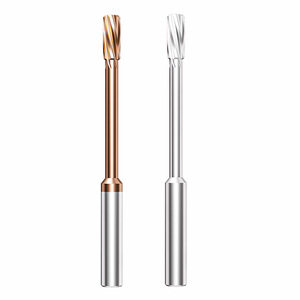
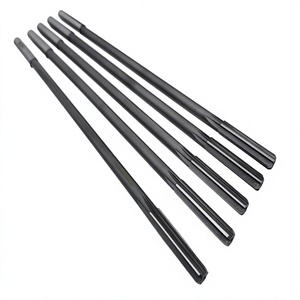
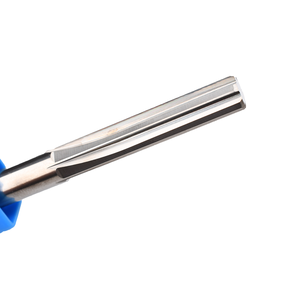
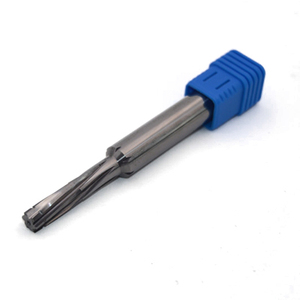
In modern metalworking and industrial CNC machining, selecting the appropriate cutting tool vendor is no longer a simple transaction based on unit price. As material sciences advance and exotic alloys—such as Inconel, Titanium Grade 5, and hardened tool steels exceeding 60 HRC—become standard in production lines, the operational impact of tooling geometry, carbide substrate purity, and physical vapor deposition (PVD) / chemical vapor deposition (CVD) coatings has grown exponentially. Tool wear rate directly influences shop-floor productivity, Machine Tool Overall Equipment Effectiveness (OEE), and long-term cost per edge (CPE).
This technical white paper establishes a holistic framework for procurement directors, manufacturing engineers, and CNC operations managers to evaluate turn-key insert manufacturers, brazed-carbide toolmakers, and high-precision machine reamer suppliers.
The foundation of any high-performance indexable turning insert or solid carbide reamer lies in tungsten carbide (WC) grain size control and cobalt binder distribution. Premium tool manufacturers utilize sub-micron (0.5–0.8 µm) to nano-grain (<0.2 µm) WC powder formulations blended with precise percentages of Cobalt (Co) binder, typically ranging from 6% to 12% by weight depending on the target ISO application group:
| ISO Range | Material Designation | Substrate Grade | Recommended Coating | Key Wear Mechanism Resisted |
|---|---|---|---|---|
| ISO P10–P30 | Carbon & Alloy Steels | C5 / C6 (Grade 370) | CVD TiCN + Al2O3 + TiN | Thermal cratering & plastic deformation |
| ISO K05–K20 | Gray & Ductile Cast Iron | C2 (Grade 883 Fine) | PVD TiAlN / TiSiN | Abrasive flank wear & micro-chipping |
| ISO M15–M35 | Austenitic Stainless | Sub-micron Grain Co 9% | PVD AlTiN / Nano-multilayer | Built-up edge (BUE) & notch wear |
| ISO S05–S20 | Titanium & Inconel | Ultra-fine Grain Co 10% | Uncoated / Ultra-smooth PVD | High thermal stress & work hardening |
Raw ground carbide edges possess microscopic jaggedness that leads to premature micro-fracturing under mechanical load. Industry-leading turning insert manufacturers utilize advanced CNC drag finishing and magnetic abrasive polishing to generate controlled edge hones (radii ranging from 10 µm to 50 µm or engineered T-lands). Proper edge preparation distributes mechanical cutting forces across a wider zone, drastically stabilizing tool life during interrupted cutting operations, such as hexagonal stock turning or splined shaft boring.
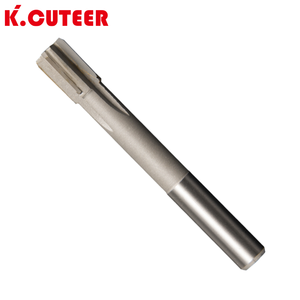
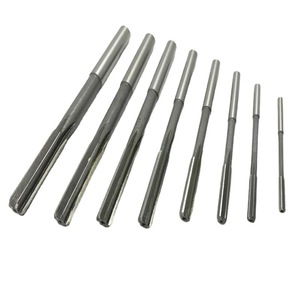
Similarly, in precision machine reamers (H7/H8 tolerance classes), edge preparation combined with ground margin widths determines hole roundness, wall finish (Ra < 0.4 µm), and chatter suppression. Straight flute geometries serve exceptionally well in blind holes where short chips can collect safely, while spiral flutes (15°–20° helix) lift chips out of deep through-holes, preventing scratch marks on finished surfaces.
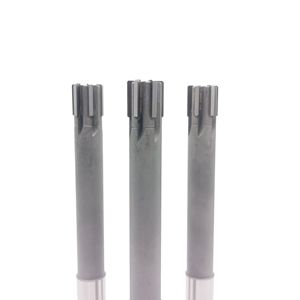
A crucial decision facing purchasing departments is selecting between solid carbide tooling and brazed carbide-tipped tooling. While solid carbide offers maximal static and dynamic stiffness for small-diameter hole making (<12mm), carbide-tipped tooling provides significant financial and physical advantages in medium to large diameter turning, counterboring, and reaming:
Delivering consistent part accuracy requires absolute control over grinding wheel dressing, brazing furnace temperatures, and optical quality assurance.
Utilizing high-precision Walter and Rollomatic 5-axis grinding centers, we maintain runout tolerances under 0.0001 inches (2.5 µm), ensuring perfect tool concentricity and edge symmetry across every manufacturing lot.
Our automated induction brazing processes bond premium carbide tips to heat-treated alloy shanks using silver-copper filler alloys, eliminating thermal void stresses and preventing tip separation under high cutting loads.
From custom step reamers to non-standard ISO turning insert geometry, our engineering team turns around detailed 3D tool models and production quotes within 24 hours, reducing setup lead time for job shops.
Every tool batch undergoes Zoller non-contact optical inspection and laser profiling. Material certs and inspection reports accompany all orders, complying with strict aerospace and defense procurement requirements.
To guard high-volume machine shops against supply chain disruptions, we maintain dedicated safety stock buffers and support scheduled release blanket purchase orders with guaranteed same-day shipping.
Our tooling specialists provide direct phone and video consultations to calculate recommended SFM, IPM feed rates, chip loads, and depth-of-cut starting points tailored precisely to your machine rigidity and coolant setup.
How smart tooling, sustainable circular economics, and high-pressure coolant channels are reshaping global cutting tool supply chains.
Modern turning inserts and reamers are increasingly engineered with internal coolant channels targeting pressure above 70 bar (1,000 PSI) directly at the cutting zone. High-pressure jet delivery breaks tough chips into manageable C-shapes while reducing thermal degradation on PVD nano-coatings.
With virgin tungsten ore prices fluctuating globally, top manufacturers are integrating full closed-loop scrap carbide recycling. Procurement teams can now return worn turning inserts and spent reamers for credit, promoting ESG compliance while lowering net tooling costs.
Procurement 4.0 demands full digital twin integration. Manufacturers are providing STEP 3D models and standardized ISO 13399 tool parameters to streamline CAM simulation, collision checking, and automated tool-dispensing vending machine management.
Expert answers to common engineering questions regarding turning inserts, machine reamer tolerances, and custom tool sourcing.
Carbide-tipped reamers are ideal for holes over 0.500 inches (12.7mm) in diameter, deep-hole reaming applications, interrupted cuts, and machining cast iron or abrasive non-ferrous alloys. The tough steel body absorbs heavy shock loads and vibration that might fracture a solid carbide tool body, while drastically reducing upfront tool cost.
Standard H7 precision reamers hold diameter tolerances within +0.0004 in / -0.0000 in (+0.010mm / -0.000mm). Under rigid machine setups with appropriate coolant lubrication and recommended pre-drill allowances (typically leaving 0.010 to 0.015 in. stock diameter), hole finish reliably achieves Ra 0.4 to 0.8 µm (16 to 32 micro-inches).
Steel turning requires grades with high chemical stability and crater-wear resistance (such as C5/C6 or ISO P10–P30 carbide coated with CVD TiCN/Al2O3). Cast iron turning relies on high hardness, low-binder C2 carbide grades (ISO K10–K20) paired with PVD TiAlN or TiSiN coatings to withstand abrasive wear from sand inclusions and graphite flakes.
Yes. Custom diameters, special flute lengths, chamfer angles, pilot steps, coolant-through holes, and non-standard shank styles (Morse taper, reduced shank, flat shanks) are manufactured in-house. Engineering blueprints are reviewed for manufacturability prior to quoting and production.
As a rule of thumb for steel, stainless steel, and iron alloys: leave 0.010 in. to 0.012 in. (0.25mm to 0.30mm) of stock on diameter for reamers under 0.500 in., and 0.015 in. to 0.020 in. (0.38mm to 0.50mm) for diameters between 0.500 in. and 1.500 in. Leaving too little stock causes burnishing rather than clean cutting, leading to rapid tool wear.
CVD (Chemical Vapor Deposition) coatings are thicker (8–20 µm) and excel in high-heat, heavy rough turning of steels at elevated SFM. PVD (Physical Vapor Deposition) coatings are thinner (2–5 µm), maintaining sharp cutting edges for precise finish turning, stainless steels, and sticky alloys where low friction is paramount to avoid built-up edge (BUE).
Speak directly with our tooling engineering team to review your part prints, calculate custom speed & feed parameters, or request competitive volume pricing.
Inquire Now