Rock River Tool, Inc.Precision Cutting Tools
Technical Support(800) 345-8924
Talk to an Engineer Explore our export-grade line of solid carbide, high-speed steel (HSS), and brazed reaming and drilling tooling optimized for strict geometric tolerances and high surface integrity.
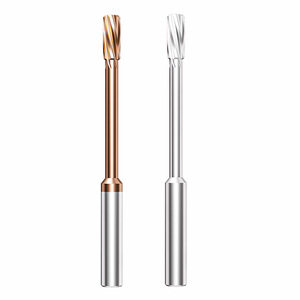
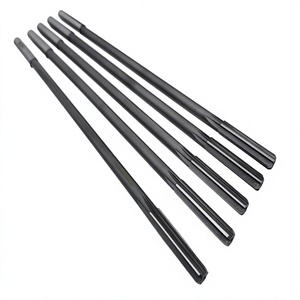
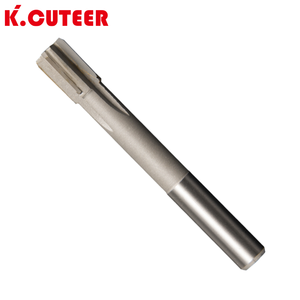
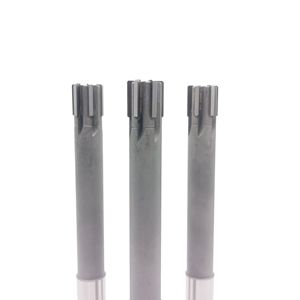
The global precision metalworking and deep hole machining sector is undergoing a profound technological transition. As automotive, aerospace, oil & gas, defense, and medical device manufacturing push the boundaries of alloy hardness and structural complexity, procurement managers and tooling engineers can no longer view gun drills and machine reamers as generic consumable hardware. Modern high-depth-to-diameter (L/D) ratio machining demands high-performance tooling systems engineered to withstand severe torsional stress, thermal friction, and chip packing conditions.
Sourcing strategies are rapidly evolving from transactional unit-cost purchasing toward Total Cost of Ownership (TCO) and Cost-per-Hole Optimization. Industry 4.0 production environments require precision-ground single-lip gun drills, solid carbide reamers, and indexable deep hole tools that exhibit ultra-predictable tool life, consistent chip evacuation behavior, and absolute geometric compliance to ISO standards such as H7 and H8 hole tolerances.
Strategic Sourcing Insight: Modern automated CNC production lines experience catastrophic downtime when low-grade deep hole drills suffer premature drift, chip jamming, or cutting edge micro-chipping. High-tier suppliers mitigate these risks through advanced sub-micron tungsten carbide grain selection, vacuum induction brazing, and high-pressure internal coolant channel geometries.
Adoption of 70 to 150 bar (1000–2200 PSI) internal coolant delivery systems requires gundrills with optimized kidney-shaped or dual-round coolant holes to maximize fluid velocity and hydraulic chip expulsion.
Demands for deep micro-holes (diameters from 0.5mm to 3.0mm with L/D ratios exceeding 30x) in medical tubing and fuel injection nozzles require solid carbide construction with near-zero total indicator runout (TIR).
Tier-1 manufacturers increasingly depend on suppliers capable of grinding non-standard step reamers, multi-flute pilot tools, and custom shank adapters tailored to specific CNC machine spindle interfaces.
Deep hole drilling and hole finishing represent two of the most tribologically demanding operations in subtractive manufacturing. A gundrill consists of three key structural elements: a solid carbide or carbide-tipped head, a hardened alloy steel driver tube (crimp tube), and a precision machine shank. The failure of any single component—or the brazed interface connecting them—results in catastrophic tool failure and work-in-progress scrap.
Selecting between solid carbide machine reamers/gundrills and carbide-tipped alloy steel tools involves analyzing part geometry, machine rigidity, and dynamic shock conditions:
| Performance Metric | Carbide-Tipped Gun Drills / Reamers | Solid Carbide Deep Hole Tools | High-Speed Steel (HSS-Co) Tools |
|---|---|---|---|
| Dynamic Rigidity & Stiffness | Moderate to High (Steel Body Flexibility) | Maximum (Highest Young's Modulus) | Lower (Susceptible to Deflection) |
| Interrupted Cut Tolerance | Excellent (Absorbs Vibration & Impact) | Moderate (Prone to Edge Chipping if Loose) | Superior (High Impact Ductility) |
| Achievable Hole Accuracy | IT8 to IT7 Precision Range | IT7 to IT6 Precision Range | IT9 to IT8 Precision Range |
| Maximum Depth Ratio (L/D) | Up to 100x Diameter | Typically up to 30x–50x Diameter | Up to 20x Diameter |
| Cost-per-Tool (Large Diameter) | Economical (Carbide at Edge Only) | High Substrate Cost | Lowest Initial Investment |
Modern machine reamers and deep hole drills rely heavily on advanced Physical Vapor Deposition (PVD) surface treatments to combat adhesive wear and thermal degradation. Specially formulated coatings such as Titanium Aluminium Nitride (TiAlN), Aluminium Titanium Nitride (AlTiN), and specialized Bronze/DLC coatings create an impenetrable thermal barrier. These coatings reduce friction coefficients to below 0.3, enabling smooth chip glide along the outer flutes and preventing Built-Up Edge (BUE) formation when machining sticky austenitic stainless steels or ductile aluminum alloys.
Rooted in an industrial manufacturing heritage established in 1986, our production matrix integrates North American and global precision standards to produce cutting tools engineered for demanding shop-floor realities. Unlike low-tier traders or brokers, our core competitive advantage rests upon total in-house manufacturing control—from raw carbide rod selection and vacuum induction brazing to 5-axis CNC grinding and optical 3D inspection.
We strictly match carbide grades to target workpieces: C-2/883 premium grade for non-ferrous, cast iron, and bronze; C-5/C-6/370 grade for carbon steels, alloy steels, and stainless grades.
Custom flute length extensions, non-standard pilot diameters, step angles, and internal coolant hole configurations are engineered and ground directly from customer CAD drawings.
Every export order undergoes strict dimensional inspection using laser micrometers and Zoller tool setters to ensure absolute compliance with nominal H7/H8 tolerance bounds.
Whether supplying high-volume straight shank solid carbide reamers for automated automotive valve guide finishing, or heavy-duty fluted reamers for Horizontal Directional Drilling (HDD) field rigs, our technical team works closely with procurement divisions to maximize tool longevity and eliminate process volatility.
Below are authoritative responses compiled by our application engineering team addressing common technical inquiries from CNC programmers, tooling buyers, and machine shop superintendents.
Consult with our application engineers to optimize your deep hole drilling parameters, request technical drawings, or place custom tooling inquiries today.
Contact Us