
Rock River Tool, Inc.Precision Cutting Tools
Technical Support(800) 345-8924
Talk to an Engineer High-rigidity tooling systems engineered for tight-tolerance grooving, precision reaming, and ultra-smooth surface finishing across alloy steel, stainless steel, and non-ferrous alloys.
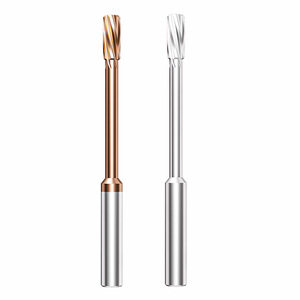
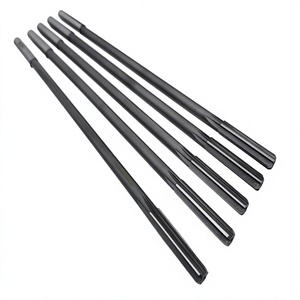
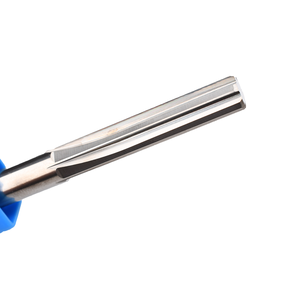
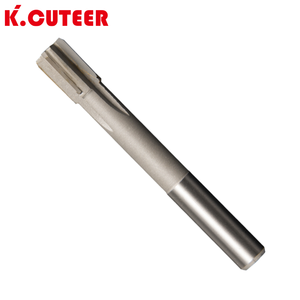
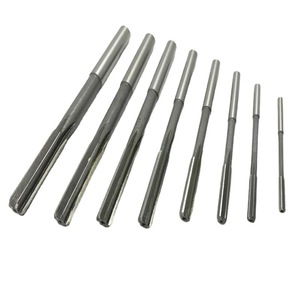
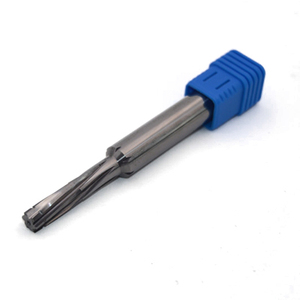
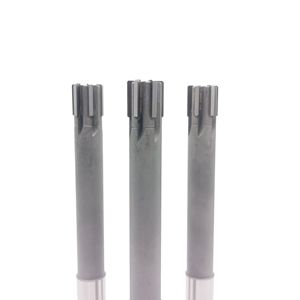
In modern CNC machining, external grooving, internal recessing, face grooving, and precision hole reaming represent critical operational bottlenecks. Achieving accurate dimensional repeatability—often within micro-inch tolerances—demands cutting tool geometries that maintain extreme edge integrity under high thermal and mechanical stresses. As a top trusted grooving insert manufacturer and international exporter, our manufacturing standard integrates sub-micron tungsten carbide powder metallurgy, proprietary PVD/CVD multi-layer coatings, and specialized chip-breaker geometries designed to eliminate chip packing and thermal degradation.
Whether executing deep narrow face grooving or micro-bore reaming on tough materials like Inconel 718, Ti-6Al-4V titanium, or hardened 4140 alloy steel, selecting the proper tooling substrate and geometry is paramount to optimizing Total Cost of Ownership (TCO) and reducing cost-per-part in high-volume production lines.
Tool failure in grooving and reaming operations typically results from edge chipping, flank wear, or built-up edge (BUE). Our production lines utilize application-tailored carbide grade systems designed to balance hardness (HV) and fracture toughness (K1C):
| Tooling Technology | Hardness & Rigidity | Interrupted Cut Resistance | Ideal Workpiece Material | Economic Sweet Spot |
|---|---|---|---|---|
| Solid Micro-Grain Carbide | Extreme (HV 1600-1800) | Moderate (Requires rigid setup) | Stainless, Inconel, Hard Steel (>45 HRC) | Small diameters (<12mm) & micro-grooving |
| Brazed Carbide Tipped | High Edge / Flexible Shank | Superior Shock Absorption | Cast Iron, Scaled Steels, Large Bore Ports | Medium to large tools (>1/2 inch) |
| High-Speed Steel (M2 / M35 Co) | Moderate (HV 800-900) | Maximum Flex Toughness | Mild Steel, Non-ferrous, Manual Repair | Deep manual reaming & low-speed maintenance |
| PVD Bronze-Coated Solid Carbide | Ultra-Hard Surface Layer | High (Anti-friction lubricity) | Aluminum, Copper Alloys, Sticky Steels | High-speed production CNC finishing lines |
Manufacturing world-class grooving inserts and precision reaming systems requires strict quality control at every stage of production. Established with decades of tooling engineering legacy (since 1986), our facility integrates end-to-end quality protocols that exceed international standards:
Combining advanced powder metallurgy, rigorous quality verification, and direct factory pricing to give your machining operations a decisive competitive edge.
We utilize virgin tungsten carbide powders with ultra-fine grain sizes, achieving optimal hardness-to-toughness ratios for demanding interrupted grooving and high-speed finishing.
Every lot undergoes 100% optical profile projection and laser micrometric inspection, ensuring your CNC lathes achieve tight cylindrical and slot width specifications without offset adjustments.
As a premier exporter serving North America, Europe, and Asia-Pacific, we offer structured inventory agreements, custom laser etching, and international freight logistics.
As global manufacturing shifts toward Industry 4.0 and automated unmanned CNC cells, tooling procurement strategies are evolving rapidly beyond simple unit purchase price:
Technological breakthroughs in substrate engineering and digital tool modeling are reshaping productivity standards for the next decade:
Clear engineering answers regarding specifications, OEM modifications, performance tuning, and export procedures.
Select Solid Carbide when machining high-hardness materials (>45 HRC), micro-diameters (<12mm), or when ultimate static stiffness is required on ultra-rigid CNC machine setups. Choose Carbide Tipped tools for interrupted cuts, scaled cast iron, less rigid or older machine setups, and larger tool diameters (>1/2 inch). Carbide tipped tools utilize a steel alloy body that absorbs shock and vibration while drastically reducing replacement tooling cost.
Our standard H7 precision reamers are ground to ISO H7 nominal limits (+0.000/-0.004 mm). Under stable machine conditions with proper stock allowance (leaving 0.15mm to 0.25mm on diameter prior to reaming) and appropriate cutting fluid delivery, our reamers consistently achieve surface roughness values of Ra 0.2 µm to Ra 0.4 µm (8 to 16 micro-inches).
Yes. We specialize in custom OEM tool engineering. Our application engineering department reviews your 2D/3D CAD models (STEP, DXF, PDF) to evaluate tool geometry, carbide grade suitability, and grinding clearance. We provide DFM (Design for Manufacturability) feedback and rapid prototype production lead times.
For medium alloy steels (e.g., 4140/4340), start coated solid carbide grooving tools at 350-500 SFM (100-150 m/min) with feed rates of 0.002-0.005 IPT (0.05-0.12 mm/rev) depending on groove width. For carbide reaming in the same material, run at approximately 1/2 to 2/3 of standard drilling speed with 2-3x the feed per revolution to ensure positive chip formation without burnishing.
We support flexible EXW, FOB, CIF, and DDP export terms with worldwide express air and sea logistics options. For standard catalog items, low MOQ requirements apply; for specialized custom insert or reamer modifications, MOQs are determined based on raw material batch requirements and grinding setup complexity.
Connect directly with our application tooling engineers today. Send us your workpiece material specs, surface finish targets, or part blueprints for a fast technical consultation and competitive quotation.