
Rock River Tool, Inc.Precision Cutting Tools
Technical Support(800) 345-8924
Talk to an Engineer Explore our export-grade solid carbide reamers, HSS deep-hole tools, and directional drilling cutters engineered for micro-inch surface finishing and extended wear life.
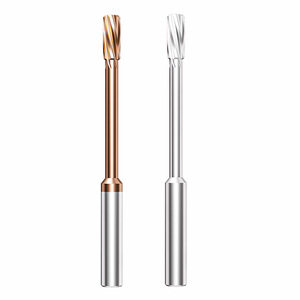
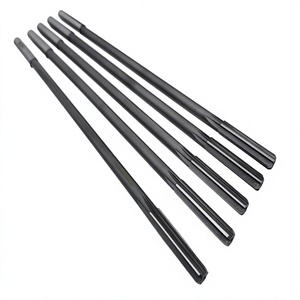
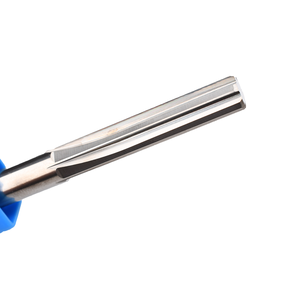
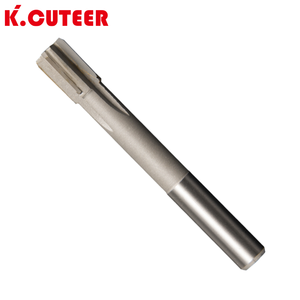
In modern subtractive manufacturing, holemaking accounts for over 40% of all metal removal operations in automotive, aerospace, die & mold, and energy sector production. As global OEMs continuously push for lighter alloys, hardened structural steels, and abrasive composites, the performance ceiling of CNC drills and reamers directly governs overall line efficiency, cycle time, and cost-per-hole economics.
Leading Chinese CNC drill manufacturers have transitioned from low-cost volume suppliers to world-class tool grinding centers. Utilizing 5-axis CNC grinding machines (such as ANCA, Walter, and Rollomatic) paired with Swiss PVD physical vapor deposition coating technologies, Chinese exporters provide solid carbide drills, carbide-tipped tools, and high-speed steel (HSS-Co) reamers that equal European tier-1 brands in tool life and accuracy while reducing tooling procurement expenditure by 30% to 50%.
Top-tier Chinese manufacturers utilize ultrafine micro-grain tungsten carbide (grain size 0.4μm to 0.6μm) with 10% to 12% Cobalt content. This delivers optimal balance between transverse rupture strength (TRS > 4,000 MPa) and hardness (HV30 > 1,600), preventing premature micro-chipping during high-feed drilling.
Utilizing multi-layered Nano-AlTiN, TiSiN, and Specialized Bronze (Bronze PVD) thermal barriers, tools withstand friction temperatures exceeding 900°C. This prevents built-up edge (BUE) formation when drilling gummy materials like 316L stainless steel or 6061-T6 aluminum.
Symmetric double-margin designs, specialized S-curve point geometries, and parabolic chip flutes minimize thrust force by up to 35%. This self-centering capability eliminates the need for prior spot-drilling steps in high-speed production environments.
Helical internal coolant channels (up to 70 bar pressure) ensure continuous chip evacuation from deep holes (up to 30xD). This eliminates chip re-cutting, thermal shock cracking, and catastrophic drill breakage in blind-hole machining.
Selecting the correct CNC drill grade and flute configuration is essential for maximizing surface finish (Ra), maintaining hole roundness, and achieving strict IT7 to IT8 dimensional tolerances. Below is an engineering benchmark table derived from empirical machining data across key industrial alloy groups.
| Workpiece Material Group | Recommended Substrate & Coating | Cutting Speed (SFM / m/min) | Feed Rate (mm/rev) | Achievable Hole Tolerance |
|---|---|---|---|---|
| Carbon & Low-Alloy Steels (1045, 4140, 4340 < 32 HRC) |
Solid Carbide + AlTiN Coating (Straight/Spiral Flute) | 80 - 140 m/min (260 - 460 SFM) |
0.12 - 0.28 mm/rev | H7 (ISO 286-2) |
| Austenitic Stainless Steels (304, 316L, 2205 Duplex) |
Sub-micron Carbide + TiSiN / Bronze Coating (15° Spiral) | 45 - 85 m/min (150 - 280 SFM) |
0.08 - 0.18 mm/rev | H7 - H8 Class |
| Gray & Ductile Cast Irons (GG25, GGG50) |
C-2 Class Carbide / Brazed Tip + AlTiCrN (3-Flute Geometry) | 90 - 160 m/min (300 - 520 SFM) |
0.15 - 0.35 mm/rev | H7 Bore Finish |
| Aluminum & Non-Ferrous (AlSi10Mg, 7075-T6, Copper) |
Uncoated / DLC Polished Solid Carbide (30° High Spiral) | 150 - 350 m/min (500 - 1150 SFM) |
0.15 - 0.45 mm/rev | H6 - H7 Precision |
| Hardened Steels & Die Steels (H13, D2, SKD61 45-60 HRC) |
Nano-grain Solid Carbide + High-Al TiAlN (Short Stub Drill) | 30 - 65 m/min (100 - 210 SFM) |
0.04 - 0.10 mm/rev | H7 Bore Fit |
The global cutting tool market is undergoing a seismic shift driven by automated CNC machining centers, high-pressure Minimum Quantity Lubrication (MQL) adoption, and stringent manufacturing sustainability targets. B2B tooling buyers, supply chain executives, and chief manufacturing engineers must align with exporters who incorporate these four macro trends:
Procurement is shifting away from single-purpose jobber drills toward multi-step combination tools. Single-pass step drills perform drilling, chamfering, and spot-facing simultaneously, reducing machine indexing time and tool magazine slots by over 40%.
Leading Chinese exporters have integrated direct CAD/CAM-to-grinding software pipelines. Non-standard reamers, extended reach shanks, and specific Morse taper modifications can now be engineered, ground, and shipped within 7 to 10 working days.
With global machine shops minimizing flood coolant usage to lower hazardous waste treatment costs, drill geometries feature micro-polished chip channels and optimized land margins designed specifically for dry or aerosol MQL cutting.
Top exporters provide batch-level metallurgical material certification, 3D Zoller measurement certificates, and laser-etched matrix barcodes on tool shanks for automatic tool management system integration (RFID/Tool Cabinets).
Over the past decade, Chinese cutting tool exporters have built integrated production hubs combining raw tungsten powder refining, carbide rod extrusion, precision CNC grinding, and surface coating under strict ISO9001 quality management standards. Key competitive advantages include:
Expert answers to common engineering, tolerance, and supply chain inquiries regarding Chinese CNC drill manufacturing.
For optimal bore geometry and surface finish (Ra < 0.4μm), leave approximately 0.15mm to 0.25mm of stock on diameter for reamers under 10mm, and 0.25mm to 0.40mm for diameters between 10mm and 20mm. Leaving insufficient stock can cause burnishing and rapid edge wear, while excessive stock leads to chip clogging and wall scoring.
Carbide-tipped tools braze a premium carbide cutting edge onto a tough, shock-absorbing alloy steel shank. They are preferred for interrupted cuts, casting skin removal, less rigid or older CNC machinery, and large hole diameters (>20mm) where solid carbide bodies become cost-prohibitive and susceptible to shock breakage.
Leading exporters utilize automated CNC grinding wheel dressers, constant-temperature grinding oil filtration systems, and 100% optical inspection using Zoller measuring centers. Every production lot is verified for diameter tolerance, radial runout (TIR < 0.003mm), and back-taper correctness.
Standard catalog tools ship within 24–48 hours. Custom engineered tools (non-standard diameters, special flute lengths, step geometries, or custom Morse shanks) typically require 7 to 12 calendar days, including CAD drawing confirmation, 5-axis grinding, PVD coating, and quality sign-off.
For high-silicon aluminum (>9% Si), DLC (Diamond-Like Carbon) or PCD Tipped drills are recommended. For standard aluminum machining (e.g., 6061/7075), mirror-polished uncoated carbide flutes or ZrN (Zirconium Nitride) coatings effectively eliminate chip welding and edge buildup.
Connect directly with our application engineering team to evaluate your tool prints, optimize machining feeds & speeds, or receive direct wholesale factory pricing on standard and custom CNC holemaking tools.
Get Catalog