
Rock River Tool, Inc.Precision Cutting Tools
Technical Support(800) 345-8924
Talk to an Engineer Standard and customized machine reaming solutions manufactured by verified OEM suppliers, featuring micro-grain carbide, bronze PVD coatings, and specialized flute geometries for high-speed CNC finish machining.
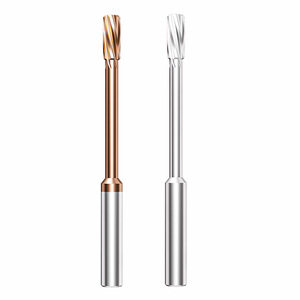
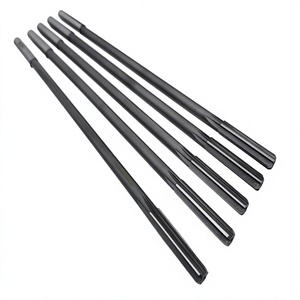
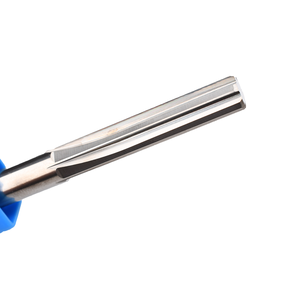
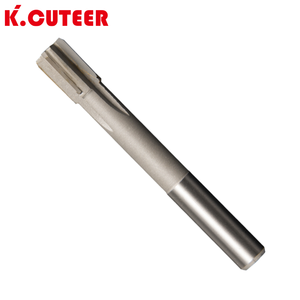
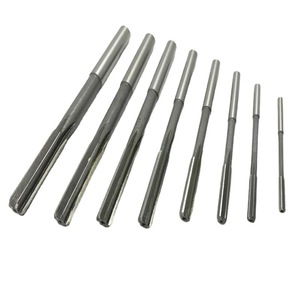
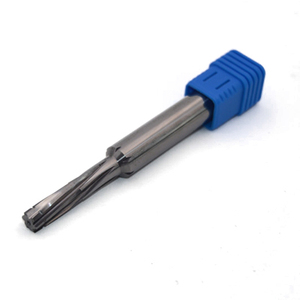
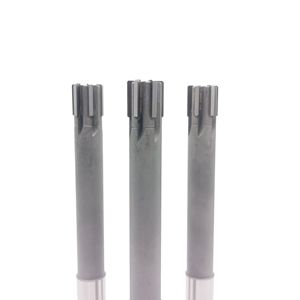
In modern precision machining—encompassing aerospace hydraulics, automotive powertrain components, and high-speed CNC mold manufacturing—the final bore finishing operation dictates the geometric fidelity and assembly integrity of critical mechanical components. While drilling establishes the initial hole geometry, chucking reamers serve as the ultimate finishing medium to achieve sub-micron dimensional tolerances, superior roundness, and pristine surface finishes (Ra < 0.4 µm).
Over the past decade, China has transitioned from a high-volume low-cost cutting tool exporter to a advanced manufacturing hub producing world-class precision rotary tooling. Leading Chinese tool factories now utilize 5-axis CNC cutter grinders (such as ANCA TX7, Walter Helitronic, and Rollomatic) paired with Swiss-made PVD physical vapor deposition coating chambers and Zoller Genius 3 inspection systems. For international procurement managers, tool distributors, and tier-1 OEM manufacturing engineers, sourcing high-precision chucking reamers from top Chinese factories provides a compelling balance of high information gain, superior wear resistance, and exceptional cost-to-performance ratios.
However, securing predictable hole quality requires a thorough understanding of the supplier landscape, substrate metallurgy, flute geometry optimization, and standard ISO tolerance classes (specifically H7 and H8 limits). This procurement guide analyzes the core technological capabilities, substrate selections, future manufacturing trends, and quality verification frameworks required to build a resilient, high-efficiency cutting tool supply chain.
Top Chinese manufacturers utilize ultra-fine and nano-grain tungsten carbide (WC) substrates with cobalt fractions ranging from 6% to 10% (typically C-2 class for non-ferrous and cast iron; C-5/C-6 class for alloy steels). This metallurgical density prevents micro-chipping along the cutting margin during interrupted reaming cuts.
Chucking reamers sourced from premium tier-1 Chinese suppliers feature total indicator reading (TIR) runout tolerances held within 0.002mm to 0.003mm between the tool shank and cutting margins. This guarantees accurate hole sizing without unwanted taper or bell-mouthing.
Modern reamers employ advanced nano-structured coatings including Bronze PVD, AlTiN (Aluminum Titanium Nitride), and TiSiN. These coatings reduce friction coefficients down to 0.3, drastically mitigating Built-Up Edge (BUE) formation when machining sticky stainless steels or aluminum alloys.
Selecting the correct tool body material and tip construction is crucial for balancing tool longevity against shank flexibility, shock absorption, and total cost per hole.
A frequent decision point for tool buyers is determining when to specify solid carbide chucking reamers versus carbide-tipped (brazed) tools or High-Speed Steel (HSS/HSS-E). Solid carbide reamers deliver maximum dynamic stiffness, making them ideal for high-speed CNC milling centers where spindle runout is minimal and cutting speeds (SFM) are maximized. Conversely, carbide-tipped chucking reamers utilize premium carbide inserts brazed onto a tough alloy steel shank. This composite construction allows the steel shank to absorb chatter and vibration during interrupted cuts or on older machine setups while maintaining micro-grain carbide wear resistance at the cutting edge.
| Tool Feature / Condition | Solid Carbide Reamer | Carbide Tipped (Brazed) | High-Speed Steel (HSS-E) |
|---|---|---|---|
| Workpiece Hardness Range | Up to 55-65 HRC | Up to 45-55 HRC | Up to 32-38 HRC |
| Rigidity & Deflection Resistance | Maximum stiffness; zero shank flex | Moderate stiffness; shock absorbing steel body | Flexible shank; high deflection tolerance |
| Interrupted & Scaly Cuts | Risk of micro-chipping if unstable | Excellent; steel shank cushions impact | Superior impact resistance; lower wear life |
| Surface Speed (SFM) Capacity | High (100 - 300 m/min) | Moderate-High (60 - 180 m/min) | Standard (15 - 45 m/min) |
| Economic Diameter Range | Optimal for Ø0.5mm to Ø12.0mm | Optimal for Ø12.0mm to Ø50.0mm+ | Optimal for large, low-speed manual reaming |
| ISO Tolerance Class | H7 (Micron Precision ≤ 0.005mm) | H7 / H8 Precision | H8 / H9 Standard Precision |
Flute orientation directly dictates chip evacuation behavior. Straight Flute Chucking Reamers are engineered primarily for blind holes or short through-holes in non-chip-packing materials (such as cast iron and brass). For deep through-holes in ductile metals (e.g., carbon steel, alloy steel, stainless steel), Left-Hand Helix / Right-Hand Cut (Spiral Flute) Reamers are strongly recommended. The spiral angle pushes chips forward ahead of the cutting edge, preventing chip entrapment, scuffing, or scoring of the precision-reamed bore wall.
As global manufacturing shifts toward automated smart factories, high-speed machining (HSM), and eco-friendly dry/MQL cutting, Chinese tool manufacturers are pioneering several key technological advances.
Traditional flood cooling struggles to reach the cutting margin inside deep holes (depth-to-diameter ratios > 5xD). Modern Chinese factories are rapidly expanding production of micro coolant-fed solid carbide reamers. Dual internal oil holes deliver high-pressure lubricant straight to the bevel lead angle, instantly flushing chips and reducing thermal thermal expansion of the workpiece.
As titanium alloys (Ti-6Al-4V) and nickel-based Inconel superalloys become prevalent in aerospace and energy sectors, tool suppliers are moving beyond standard TiN coatings. Specialized nanocomposite coatings (such as Bronze PVD, TiSiN, and Diamond-Like Carbon DLC) provide oxidation stability up to 1,100°C, enabling dry reaming and extending edge life by 300%.
Modern Chinese factories are breaking the traditional 6-week lead time for custom tools. Utilizing digital CAD/CAM simulation, 3D tool modeling, and flexible CNC grinding cells, OEMs can now design, ground, inspect, and ship custom step reamers, extended-length shanks, and non-standard decimal diameters within 7 to 10 working days.
To ensure uninterrupted production and avoid costly line stoppages, overseas procurement teams should evaluate potential Chinese suppliers across five core quality control benchmarks.
When issuing Requests for Quotation (RFQs) to Chinese chucking reamer suppliers, low price alone should never be the sole metric. High-speed reaming requires uncompromising geometrical accuracy. A minor variation in the bevel lead angle (typically 45° for general work or 15-20° for deep hole dry finishing) can cause premature chatter or undersized holes.
Direct answers to the most common questions raised by CNC programmers, tooling engineers, and procurement managers when sourcing chucking reamers from China.
Direct factory wholesale, rigorous quality control, and engineering support for global tool buyers and distributors.
By establishing direct supply lines with established Chinese chucking reamer manufacturers, global buyers eliminate intermediary markups while gaining direct access to custom tooling engineering teams. Modern Chinese production facilities house state-of-the-art 5-axis CNC cutter grinding software capable of modifying rake angles, relief clearance angles, primary margin widths, and spiral helix profiles to match unique workpiece alloys.
Whether you require standard off-the-shelf straight shank carbide machine reamers (ranging from micro 0.5mm diameters to 20mm), heavy-duty HSS hand and machine reamers, or specialized horizontal directional drilling (HDD) fluted reamers for infrastructure projects, factory-direct partners deliver rapid quoting, sample prototyping, and full volume manufacturing backed by strict ISO quality assurance protocols.
Request our complete 2026 Product Catalog, detailed Speeds & Feeds engineering charts, and factory-direct wholesale pricing for high-precision solid carbide and carbide-tipped chucking reamers.