
Rock River Tool, Inc.Precision Cutting Tools
Technical Support(800) 345-8924
Talk to an Engineer Direct OEM factory inventory featuring H7/H8 micro-tolerances, advanced PVD bronze/TiAlN coatings, and premium sub-micron alloy substrates engineered for high-speed CNC metalworking.
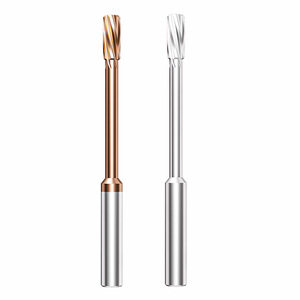
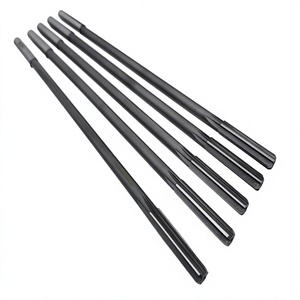
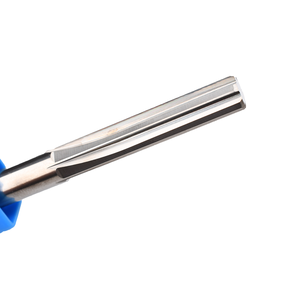
Why Tier-1 automotive integrators, aerospace subcontractors, and precision CNC job shops are shifting from traditional OEM markups to direct Chinese carbide manufacturing partnerships.
The global metal-cutting industry is undergoing a fundamental realignment. Historically dominated by European, Japanese, and North American toolmakers, the market for indexable carbide inserts, solid carbide reamers, and round cutting tools has seen an unprecedented technological elevation across leading Chinese manufacturing hubs. Driven by massive capital expenditures in ultra-fine tungsten carbide powder synthesis, 5-axis CNC grinding centers (such as ANCA, Walter, and Rollomatic), and physical vapor deposition (PVD) / chemical vapor deposition (CVD) coating infrastructure, China’s top carbide insert factories now deliver performance metrics rivaling top-tier global brands at a 30% to 50% lower Total Cost of Ownership (TCO).
For international procurement directors, strategic buyers, and manufacturing engineers, navigating the Chinese supplier landscape requires moving past surface-level price comparisons. Evaluating supplier capability demands a deep analysis of metallurgical grade consistency, binder phase control, gradient sintering technology, micro-geometry edge honing, and strict ISO compliance. This whitepaper provides the analytical framework needed to identify, audit, and partner with China's premier carbide insert manufacturers while maximizing machining efficiency and supply chain resilience.
Selecting the optimal combination of tungsten carbide substrate grain size, cobalt content, and nano-layer coating architecture for specific industrial applications.
| ISO Material Group | Primary Carbide Substrate Grade | Grain Size (µm) | Coating Technology | Chipbreaker & Geometry Focus | Target Machining Application |
|---|---|---|---|---|---|
| ISO P (Steel) Carbon & Alloy Steels |
P15 - P30 Grade (6-8% Co content with TaC/TiC additions) | 0.8 - 1.2 µm (Fine) | Multi-layer CVD TiCN + Al2O3 + TiN (Yellow top coat) | Curved rake face with wide chip channel for smooth chip evacuation under medium-to-heavy feed. | Automotive driveshafts, structural steel turning, heavy roughing. |
| ISO M (Stainless) Austenitic & Duplex |
M10 - M25 Grade (8-10% Co high-toughness substrate) | 0.5 - 0.8 µm (Sub-micron) | PVD AlTiN / TiAlN or AlCrN Nano-Composite | Sharp cutting edge, polished flute geometry to prevent work hardening and Built-Up Edge (BUE). | Medical implants, chemical valve bodies, food processing equipment. |
| ISO K (Cast Iron) Grey & Ductile Iron |
K10 - K20 Grade / Premium C-2 (6% Co ultra-hard substrate) | 1.0 - 2.0 µm (Medium) | Thick CVD Al2O3 + PVD TiSiN for heat barrier | Negative land edge prep with high corner strength to withstand abrasive sand inclusions. | Engine blocks, brake drums, gearbox housings, heavy machinery castings. |
| ISO N (Non-Ferrous) Aluminum & Copper |
N05 - N15 Uncoated / DLC (High hardness WC-Co) | 0.4 - 0.6 µm (Ultra-fine) | Uncoated Mirror Polished or DLC (Diamond-Like Carbon) | High positive rake angle (up to 25°), razor-sharp edge prep, polished rake face. | Aerospace structural ribs, automotive aluminum wheels, electronics enclosures. |
| ISO S (Superalloys) Inconel, Titanium, Hastelloy |
S05 - S20 Grade (10-12% Co gradient substrate) | < 0.5 µm (Nano-grained) | HiPIMS PVD TiAlN/TiSiN with ultra-smooth surface finish | Micro-honed edge radius (10-15 µm), positive shear geometry to minimize cutting temperatures. | Jet engine turbine blades, oil & gas downhole components, aerospace fasteners. |
The performance differential between tier-1 Chinese manufacturers and low-tier trading companies lies in Sinter-HIP (Hot Isostatic Pressing) technology. Advanced Chinese factories utilize overpressure sintering at 1,450°C under 100 bar of Argon gas. This process eliminates internal micro-porosity (reaching A00 B00 C00 porosity ratings under ISO 4505 standard), dramatically increasing transverse rupture strength (TRS) to over 3,800 N/mm² and eliminating catastrophic tool breakage during interrupted cuts.
Understanding regional specialization allows global procurement executives to align their product specs with the regional strengths of Chinese manufacturing hubs.
Core Focus: Heavy-duty Carbide Inserts, Milling Cutters & Raw Substrates.
Home to China's foundational tungsten state enterprise research centers. Zhuzhou excels in large-scale metallurgical pressing, gradient carbide insert bodies, and heavy turning inserts for steel and railway industries.
Core Focus: Solid Carbide Round Tools, Micro-End Mills & Precision Reamers.
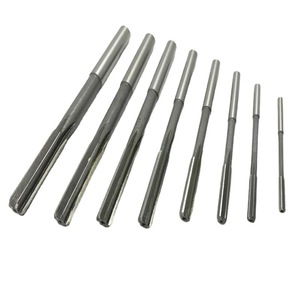
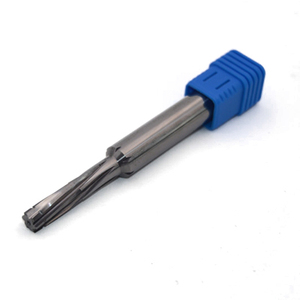
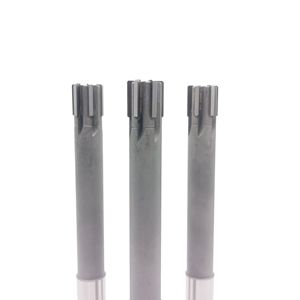
Changzhou (specifically Xinbei district) concentrates thousands of high-precision CNC grinding facilities equipped with ANCA and Walter machinery. It is the premier hub for tight-tolerance (H7/H6) finishing tooling.
Core Focus: Ultra-Hard Carbide Alloys, Mining Inserts & Wear Parts.
Renowned for specialized alloy formulations containing high tantalum and niobium carbide fractions, Zigong specializes in extreme wear-resistant components, drilling tools, and severe-duty oil field inserts.
Core Focus: Tool Holders, Indexable Cutter Bodies & Rapid Turning Systems.
The world's densest ecosystem for indexable turning toolholders, bored steel bars, and milling heads, providing seamlessly integrated tool-body and insert assembly testing.
Key technological advancements transforming Chinese carbide tool production from standard commodity products into engineered high-performance solutions.
High-Power Impulse Magnetron Sputtering (HiPIMS) is replacing conventional arc-evaporation PVD. This process generates droplet-free, ultra-dense coatings with residual compressive stress up to -4.5 GPa. The result is superior resistance to micro-chipping and flank wear during high-speed dry machining of hardened steels (HRC 55-65).
Using laser ablation and sub-micron press mold tooling, Chinese manufacturers are producing complex 3D chipbreakers designed for targeted chip control. These geometries vary chip curl radius dynamically across depth-of-cut changes, reducing cutting forces by up to 22% and lowering machine spindle power consumption.
By controlling nitrogen atmosphere during sintering, top Chinese factories create a cobalt-enriched outer layer (15–30 µm deep) devoid of brittle cubic carbide phases (gamma-phase free layer). This yields a hard, wear-resistant core coupled with an ultra-tough outer surface that suppresses thermal shock cracks during heavy wet-milling.
Leading suppliers are incorporating green supply-chain practices by establishing zinc-process and chemical recycling loops for scrap carbide. This ensures access to high-purity virgin-grade equivalent APT (Ammonium Paratungstate) while reducing carbon footprint metrics required by European ESG compliance mandates.
A step-by-step Quality Control checklist for international procurement teams conducting onsite or virtual audits of Chinese carbide insert manufacturers.
Verify whether the factory uses 100% virgin WC powder or unverified scrap blends. Check for automated micro-granulation spray dryers and Swiss-made Agathon / Dorst CNC presses capable of ±0.005mm pressing repeatability across multi-cavity dies.
Demand proof of Sinter-HIP furnace maintenance logs. Review internal lab testing for Co magnetic saturation (Co-magnetism), coercivity force (Hc), density (ISO 3369), and hardness (Vickers HV30 / Rockwell HRA). Ensure zero eta-phase (carbon deficiency) exists.
Inspect edge honing systems (brush honing, drag finishing, or laser micro-machining). Ensure edge radius (K-factor) is targeted within ±3 µm. Verify coating thickness measurement using Calo-testing or X-ray fluorescence (XRF) and adhesion via Rockwell C indentation tests (VDI 3198 standard).
Addressing core technical, logistical, and commercial inquiries from global metalworking buyers.