
Rock River Tool, Inc.Precision Cutting Tools
Technical Support(800) 345-8924
Talk to an Engineer Explore our export-grade adjustable hand and machine reamers engineered for high-precision finishing, repair work, and specialized CNC production lines.
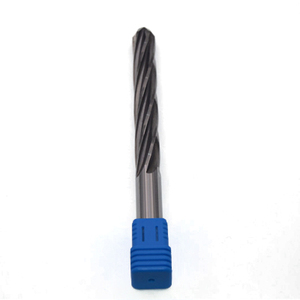
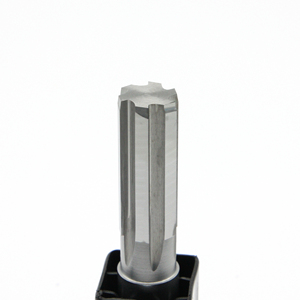
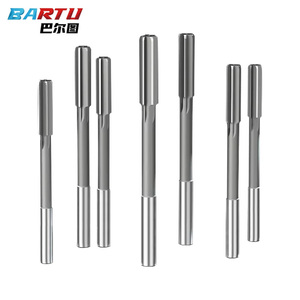
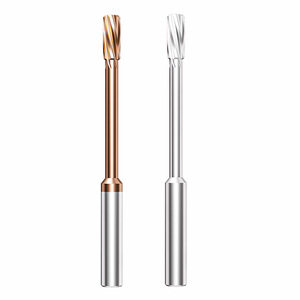
A comprehensive buyer’s manual detailing metallurgy, micro-expansion mechanics, cost-per-hole (CPH) optimization, and procurement trends in precision hole finishing.
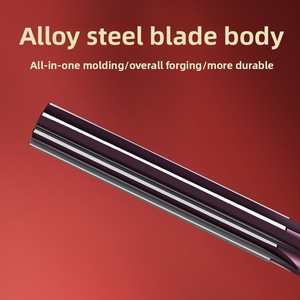
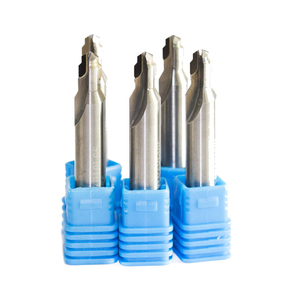
Utilizing high-tensile alloy bodies fitted with premium grade tungsten carbide (C2/883 for cast iron/aluminum and C5/C6/370 for steel) or Polycrystalline Diamond (PCD) inserts. Designed to survive interrupted cuts while retaining extreme edge sharpness.
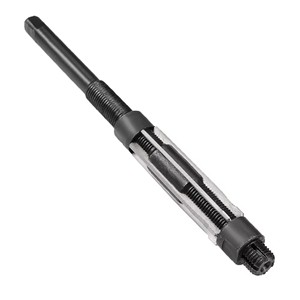
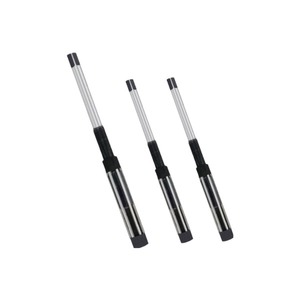
Adjustable blade mechanisms allow machinists to compensate for wear or dial into non-standard decimal diameters. Threaded expansion nuts and tapered slots guarantee parallel expansion across the entire cutting length.
By integrating raw material sourcing, 5-axis CNC grinding, vacuum brazing, and surface treatment in-house, our enterprise delivers premium OEM/ODM adjustable reamer tooling at a fraction of Western tier-1 pricing.
Understanding the engineering tradeoffs is vital for procurement leaders aiming to maximize tool life and achieve sub-micron surface finishes (Ra < 0.4 µm).
| Tool Category | Cutting Edge Material | Best Workpiece Application | Tolerance Capability | Shock Tolerance | Relative Tool Life |
|---|---|---|---|---|---|
| Standard Hand Reamers | HSS M2 / M35 Grade | Maintenance, repair, structural steel, bronze | H7 to H8 (±0.005mm) | Very High (Absorbs deflection) | Standard (1x) |
| Brazed Carbide Tipped | C2 (883) / C5-C6 (370) Carbide | Cast iron, alloy steels, abrasive aluminum | H6 to H7 (±0.0025mm) | Moderate (Steel core flexes) | High (6x – 10x) |
| Solid Carbide Adjustable | Micro-grain Carbide Matrix | CNC high-speed finishing, titanium alloys | IT5 to H6 (±0.0015mm) | Lower (Requires rigid machine) | Very High (12x – 15x) |
| PCD Diamond Adjustable | Polycrystalline Diamond (PCD) | High-silicon aluminum, MMC, composites, copper | Sub-micron (±0.0010mm) | Sensitive to chip loading | Ultra-High (30x – 50x) |
Solid carbide reamers provide absolute rigidity, but in diameters over 1/2 inch (12.7mm), solid carbide bodies become prohibitively expensive and susceptible to brittle catastrophic fracture under interrupted cuts or spindle deflection. A brazed adjustable carbide reamer combines a high-toughness nickel-alloy steel body with micro-grain carbide cutting edges. The steel shank flexes under shock loads while the carbide edges maintain precise cutting tolerances, lowering total Cost-Per-Hole (CPH) by up to 40%.
As smart manufacturing and high-throughput automated machining dominate automotive, aerospace, and hydraulic industries, adjustable reamer design is undergoing radical evolution.
Future adjustable reamers feature integrated MQL (Minimum Quantity Lubrication) or high-pressure coolant holes exiting directly behind each adjustable blade. This sweeps stringy chips away from finished bore surfaces, preventing scoring in blind holes.
Manual blade adjustment using external calipers is rapidly being superseded by calibrated micrometer adjustment screws built into the reamer body. Machinists can expand the diameter by exact 0.001mm increments directly on the tool setter without disassembling the cutter head.
Global procurement teams favor sustainable tooling lifecycle designs. Rather than discarding entire reamer bodies, modern adjustable systems feature standardized replaceable carbide blade sets (H4-H14 standards) that can be swapped and re-ground up to 5 times.
How leading global importers, tooling distributors, and OEM tier-1 buyers qualify and purchase adjustable reamer sets directly from our production lines.
Send your workpiece drawing or tool spec. Our application engineers analyze bore diameter, pre-drill stock allowance, tolerance class (e.g., H7/H6), and material hardness.
We select optimum carbide blade grades (C2/883 vs. C5/370 vs. PCD), compute expansion pitch, and optimize flute geometry (straight flutes for blind holes, spiral for interrupted cuts).
Tools are ground on Walter and ANCA 5-axis CNC machines using diamond grinding wheels. Precision thread cutting ensures micro-level adjustment stability.
100% inspection of diameter, expansion range, radial runout, and surface roughness (Ra). Export orders include mill test reports and inspection certificates.
Clear, practical answers regarding reamer selection, calibration procedures, feed rates, and factory export logistics.
To adjust the reamer diameter, loosen one adjusting nut (usually the lower nut) while tightening the opposite nut. This drives the blades up or down along the tapered slots in the body. Always measure across opposite cutting edges using a micrometer or optical comparator. Ensure all blades seat evenly to maintain radial concentricity and prevent uneven blade loading.
For hand reaming and machine reaming under 1/2 inch (12.7mm), leave 0.008 to 0.012 inches (0.20mm to 0.30mm) of stock on diameter. For larger diameters up to 1-1/2 inch (38mm), leave 0.012 to 0.018 inches (0.30mm to 0.45mm). Leaving too little stock causes the reamer to burnish or rub rather than cut, leading to rapid blade wear and chatter.
PCD (Polycrystalline Diamond) adjustable reamers are recommended for high-volume machining of non-ferrous metals, particularly high-silicon aluminum alloys (automotive engine blocks, cylinder heads), metal matrix composites (MMC), and abrasive plastics. While PCD carries a higher initial investment, it offers 30x to 50x longer tool life than solid carbide and maintains sub-micron tolerances without frequent adjustment downtime.
Yes. As a primary China adjustable reamer factory and exporter, we specialize in OEM custom orders. We manufacture custom expansion ranges, special shanks (Morse Taper, Weldon, Cylindrical with flats), extra-long reach shanks, and specific blade counts (4-flute, 6-flute, 8-flute) based on your CAD drawings or physical samples.
Our reamer bodies feature precision-ground tapered guide slots with tolerances under 0.002mm. The adjusting nuts and blades are ground matching sets. When expanded, all blades slide along identical incline angles, guaranteeing that radial runout remains under 0.005mm across the full adjustment envelope.
Standard export orders are packaged in individual oil-dipped protective plastic cases, boxed in heavy-duty Master cartons, and palletized with vacuum packaging to prevent ocean corrosion. We support EXW, FOB, CIF, DDP, and Express Courier shipping options with full documentation (Certificate of Origin, Form E, ISO Quality Reports).
Starting benchmark speeds and feeds for carbide-tipped and high-speed steel adjustable reamers across major material categories.
| Workpiece Material | Hardness (HB) | HSS Reamer Speed (SFM) | Carbide Reamer Speed (SFM) | Feed rate per Rev (mm/rev) |
|---|---|---|---|---|
| Low Carbon Steel (1018, 1020) | 120 - 180 HB | 45 - 65 SFM | 120 - 180 SFM | 0.15 - 0.35 mm/rev |
| Alloy Steel (4140, 4340) | 200 - 280 HB | 30 - 45 SFM | 90 - 140 SFM | 0.10 - 0.25 mm/rev |
| Grey Cast Iron (Class 30/40) | 180 - 240 HB | 40 - 55 SFM | 130 - 200 SFM | 0.20 - 0.40 mm/rev |
| Aluminum Alloys (6061, 7075) | 60 - 120 HB | 80 - 120 SFM | 250 - 400 SFM | 0.25 - 0.50 mm/rev |
| Brass & Bronze Alloys | 80 - 160 HB | 60 - 90 SFM | 180 - 300 SFM | 0.20 - 0.45 mm/rev |
Looking for reliable bulk supply, custom print-to-tool manufacturing, or OEM tooling distribution? Connect directly with our engineering team for instant technical consultation and competitive factory pricing.