
Rock River Tool, Inc.Precision Cutting Tools
Technical Support(800) 345-8924
Talk to an Engineer Explore our top-tier solid carbide and brazed indexable tooling lines engineered for demanding thread processing, high-precision finishing, and heavy metalworking operations.
Demystifying substrate metallurgy, nano-coating architectures, and chip breaker geometry for industrial procurement teams and manufacturing engineers.
In high-precision manufacturing—spanning aerospace hydraulic manifolds, oil field tubular goods (OCTG), automotive powertrains, and medical devices—the integrity of cut threads is non-negotiable. Threading inserts operate under unique mechanical constraints compared to general turning or milling inserts. Because the tool geometry closely matches the thread pitch profile, chip evacuation pathways are restricted, and heat accumulation at the tooth apex can cause rapid plastic deformation.
Information Gain Key Insight: The true performance of a indexable threading insert depends on the structural balance between its submicron Tungsten Carbide (WC) grain matrix and its physical vapor deposition (PVD) coating thickness. Increasing Cobalt (Co) binder content improves thermal shock resistance during interrupted cuts, but requires an ultra-dense TiAlN/nACo nano-laminate film to prevent side-flank friction wear.
Modern indexable threading inserts and solid carbide tools utilize tailored carbide grade systems. Choosing the correct ISO workpiece application range (P, M, K, N, S, H) is critical to avoiding premature edge chipping:
| ISO Material Group | Substrate Classification | Grain Size (µm) | Primary Coating Architecture | Machining Target Characteristics |
|---|---|---|---|---|
| P10 - P30 (Steels) | C5 / C6 Alloyed Carbide | 0.8 – 1.2 | CVD TiCN + Al₂O₃ + TiN | High speed thread turning, long-chip carbon steels |
| M15 - M35 (Stainless) | Micro-Grain WC-Co | 0.5 – 0.8 | PVD AlTiN / TiAlCrN Nano-layer | Austenitic & duplex stainless steel; anti-built-up edge (BUE) |
| K10 - K25 (Cast Iron) | C2 Grade Solid Carbide | 1.0 – 2.0 | PVD TiAlN / Uncoated polished | Abrasive grey cast iron, ductile iron, short chip breakage |
| S05 - S20 (Superalloys) | Ultra-Fine Micro-Grain | 0.3 – 0.5 | PVD nACo / High-Al TiAlN | Inconel, Titanium Grade 5, Hastelloy thread milling/turning |
Procurement teams must evaluate whether to specify Full Profile or Partial Profile 60°/55° inserts based on production batch sizes and machine tool versatility:
An independent evaluation based on manufacturing precision, proprietary coating tech, global logistics support, and Total Cost of Ownership (TCO).
Industry pioneer famous for their CoroThread® 266 system with iLock® interface. The unique rail interface prevents insert movement caused by high cutting forces, ensuring exceptional thread surface finish and repeatable pitch accuracy.
Global leader in multi-functional tooling. Iscar's PENTACUT and Laydown Threading insert families offer indexable multi-corner cutting edges with advanced IC908 and IC1007 PVD coatings for stainless steel and heat-resistant alloys.
Specialized manufacturer dedicated almost exclusively to thread turning, thread milling, and grooving under the world-renowned Vardex brand. Offers the industry's broadest selection of partial and full-profile thread standard inserts (ISO, UN, Whitworth, NPT, API).
American tooling giant known for high-durability carbide grades such as Beyond™ KCU10 and Top Notch™ threading clamping mechanisms. Excellent resistance to shock loads in heavy-duty oil & gas thread profiling.
High-precision manufacturer recognized for solid carbide micro-thread mills and internal thread turning inserts. Extremely popular in medical Swiss-type machining for tiny pitch diameters down to M1.0.
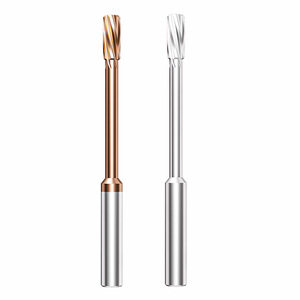
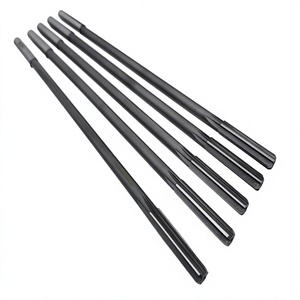
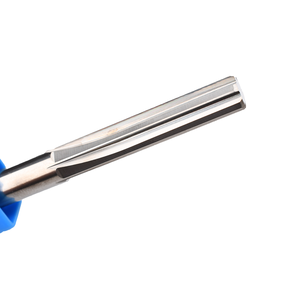
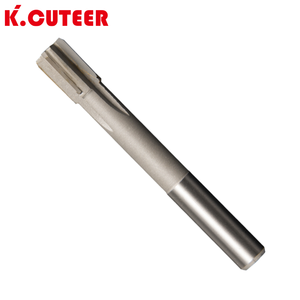
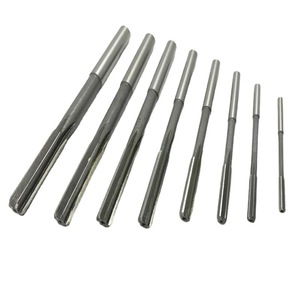
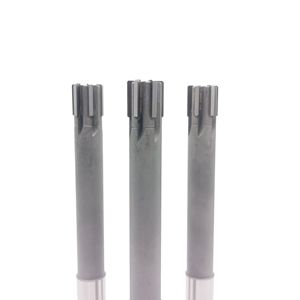
Specialized high-precision cutting tool manufacturer established in 1986. Fusing premium American tungsten carbide brazing techniques with custom-ground form geometry. Excels in standard/custom carbide-tipped reamers, step-threading tools, and high-shock tolerance indexable cutting tools.
German engineering excellence featuring Tiger-tec® Gold coating technology. Walter's thread turning inserts provide unmatched edge stability and lower flank wear under high cutting speeds (SFM).
Offers the reliable Snap-Tap® thread turning system. Features high-rigidity anvil pockets that protect the toolholder body from catastrophic insert failure during deep thread passes.
Renowned for advanced ceramic, cermet, and MIRACLE® coated carbide inserts. Delivers exceptional mirror-like thread surface finishes on alloy steel and hardened mold components.
Pioneer in micro-grain carbide substrates and specialized chipbreaker geometry. Kyocera's PR1535 and PR1725 grades are widely specified for difficult-to-cut materials like titanium and nickel alloys.
Key technological shifts reshaping the cutting tool industry over the next 5 to 10 years.
Modern CNC lathes integrate targeted 70-150 bar coolant jets directed precisely between the insert rake face and the escaping chip. This dramatically lowers cutting temperature, breaks tough stainless steel chips, and extends insert edge life by up to 200%.
3D-printed steel and heavy-metal tool shanks with internal curved coolant channels allow liquid to flow around structural dampening cores. This eliminates chatter during long-reach internal thread turning operations (up to 7x D ratio).
Smart tool blocks with embedded piezo-electric accelerometers monitor micro-vibrations and thermal spikes. CNC controls can automatically adjust feed rate (mm/rev) or initiate insert indexing before thread pitch distortion occurs.
Why evaluating tool cost per indexable edge alone leads to false cost savings in high-volume machining facilities.
When procuring industrial threading inserts, purchase managers often make the mistake of selecting the lowest initial purchase price per unit. However, tool procurement costs typically account for less than 3% of total machining expenses, whereas machine hourly rates, operator labor, scrap rates, and unexpected downtime account for over 80%.
To mathematically quantify tool value, engineering procurement uses the Cost Per Thread (CPT) Formula:
By switching to premium-grade micro-grain inserts with nano-composite PVD coatings (e.g., AlTiCrN), a shop may pay 25% more per insert. However, if the tool delivers 80% higher thread output per cutting edge and eliminates burr-removal manual labor, the net Cost Per Thread drops significantly.
Since 1986, Rock River Tool / Mercari Precision Tooling has engineered standards and custom specials right from our dedicated manufacturing plant in the USA. We combine the high wear resistance of premium grade tungsten carbide with the shock absorption of high-alloy steel bodies—providing tool solutions built for real shop floor challenges.
Speak directly with the tool engineers who design and grind your tools—no third-party translation errors.
Non-standard diameters, step reamers, modified shanks, and unique thread profiles ground in-house.
C2 class carbide for non-ferrous/cast iron; C5/C6 grades for tough alloy steels and stainless steel alloys.
Rigorous optical profile inspection ensures zero-defect tool geometry before shipment.
Expert answers to common technical inquiries regarding thread insert selection, feed methods, and reamer geometries.
Radial infeed moves the tool perpendicular to the workpiece centerline, cutting on both sides of the insert simultaneously. This creates V-shaped chips that can cause heat build-up and vibration. Modified Flank Infeed angles the tool travel (typically 3° to 5° offset from the thread angle), directing most cutting forces to a single edge. This produces curling chips, improves cooling, and significantly increases insert life in steel alloys.
Carbide-tipped tools combine a high-hardness carbide tip brazed onto a tough alloy steel body. They are ideal for interrupted cuts, cored castings, older or flexible machinery, and larger hole diameters (over 1/2 inch) where solid carbide is cost-prohibitive and vulnerable to catastrophic snapping under deflection.
Physical Vapor Deposition (PVD) coatings are thinner (2–5 µm) and applied at lower temperatures (~500°C), preserving sharp cutting edges essential for clean thread profiles and low cutting forces. Chemical Vapor Deposition (CVD) coatings are thicker (8–18 µm) with higher thermal protection, but slightly round the cutting edge—making them ideal for heavy steel roughing rather than fine-pitch precision threading.
As a standard engineering practice, leave approximately 0.010 in. to 0.015 in. (0.25 mm to 0.38 mm) of stock allowance on diameter for reaming operations up to 1/2 inch. Leaving too little stock causes the reamer to rub rather than cut, resulting in rapid flank wear and oversized bores.
Yes. Custom tooling engineering teams regularly grind step-reamers, special pitch angles, non-standard shanks, and modified corner radii directly from customer CAD drawings or prints. Full manufacturing review ensures geometry manufacturability before production.
To eliminate chatter: (1) Ensure the minimum overhang ratio possible on the boring bar; (2) Use heavy metal or carbide-reinforced shanks for long ratios over 4x D; (3) Apply Modified Flank Infeed to reduce radial tool pressure; (4) Verify center height accuracy—setting the tool tip slightly above center (+0.1 mm) maintains stability.