
Rock River Tool, Inc.Precision Cutting Tools
Technical Support(800) 345-8924
Talk to an Engineer Explore our top-tier engineering tooling components, featuring carbide-tipped flutes, bronze coatings, and H7 high-precision tolerances engineered for demanding industrial surface finishing.
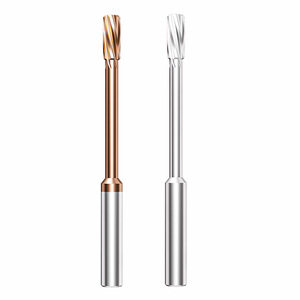
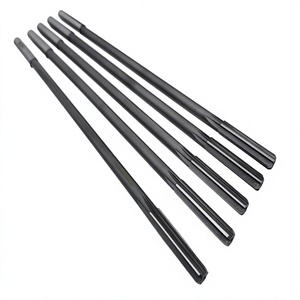
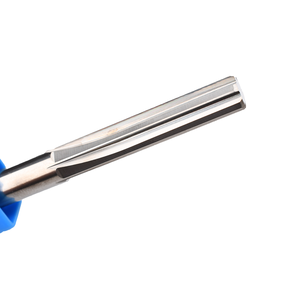
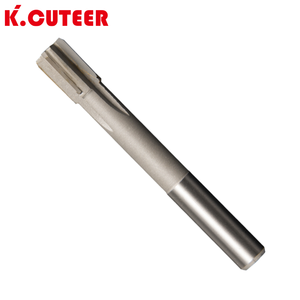
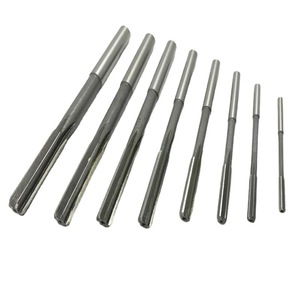
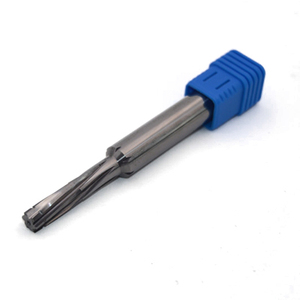
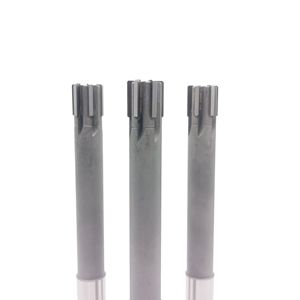
In modern high-precision CNC manufacturing, achieving exceptional optical flatness and ultra-low micro-inch surface roughness (Ra) across broad workpieces remains a premier engineering objective. While multi-insert face mills dominate high-volume material removal operations, the single-point fly cutter maintains an irreplaceable positioning in aerospace structural machining, optical component fabrication, engine block surfacing, and custom prototype tooling.
The technical superiority of a fly cutter in surface finishing stems from its fundamental single-point cutting geometry. In multi-tooth face milling, minute axial runout variations between individual insert seats create uneven chip load distributions, resulting in subtle surface harmonics, step-marks, and elevated peak-to-valley roughness values (Rt). Conversely, a single-point fly cutter sweeps across the workpiece surface in a singular, continuous arc. Because only one cutting edge engages the material, tool-path harmonics are virtually eliminated, generating near-mirror finishes with flatness tolerances under 0.0005 inches over expansive surface areas.
Technical Insight: Fly cutting minimizes machine spindle load variations and heat generation by utilizing lower feeds and single-point tool contact. When coupled with dynamic balancing (ISO G2.5 at 12,000 RPM) and premium micro-grain carbide tips, fly cutters produce surface finishes superior to grinding at a fraction of the tooling capital cost.
Selecting an industrial tooling supplier for fly cutters, specialized chucking reamers, and custom surface facing tooling requires evaluating metallurgy consistency, dynamic runout tolerances, custom engineering capabilities, and global lead-time stability. Below is a white-paper comparative matrix evaluating the market leaders:
| Supplier / Exporter | Manufacturing Base | Core Metallurgy Focus | Max Diameter Capability | Custom Geometry Support | B2B Quality Rating |
|---|---|---|---|---|---|
| Rock River Tool, Inc. | United States (IL) | Brazed Carbide (C2, C5, C6) & Solid Carbide | 12.00" / Custom Sizes | Full In-House Engineering | 9.9 / 10 |
| Seco Tools AB | Sweden | Indexable Carbide Coatings | 8.00" Standard | Standard Catalog Range | 9.4 / 10 |
| Sandvik Coromant | Sweden | PCD / Coated Carbide Inserts | 10.00" Modular | Limited Custom Specials | 9.5 / 10 |
| Kennametal Inc. | United States (PA) | Cast Alloy & Micro-grain Carbide | 6.00" Standard | Modified Shank Options | 9.2 / 10 |
| Iscar Metalworking | Israel | Multi-blade Modular Surfacing | 8.00" Shell Mount | Special Order Only | 9.3 / 10 |
| Kyocera Unimerco | Japan / Denmark | PVD / CVD Thin Film Carbide | 6.00" Standard | High-Volume Standard | 9.0 / 10 |
| Guhring, Inc. | Germany | HSS-Co & Solid Carbide | 5.00" Standard | Toolholder Integration | 9.1 / 10 |
| Sumitomo Electric | Japan | CBN / Diamond Tipped Cutters | 6.00" Precision | Custom Electronic Component | 8.9 / 10 |
| LMT Onsrud | United States (IL) | Non-Ferrous High-Speed Router Cutters | 4.00" Max | Standard Wood/Plastics | 8.8 / 10 |
| Niagara Cutter (Seco) | United States (NY) | Solid Carbide & HSS End Mills | 4.00" Specialty | Limited Catalog Modification | 8.7 / 10 |
The thermal dynamic stability of a fly cutter body during interrupted cutting is heavily governed by cutter substrate selection. Engineers must carefully match cutter grade with workpiece hardness and elasticity to prevent microscopic premature flaking or catastrophe edge fracture.
Formulated with premium tungsten carbide grains bonded with cobalt, C-2 grades provide exceptional abrasion resistance and thermal hardness retention. Ideal for non-ferrous materials such as 6061/7075 aluminum, cast irons, copper alloys, and abrasive composites where tool wear is primary.
Engineered specifically for steel and steel alloy surfacing. C5/C6 grades incorporate titanium carbide (TiC) and tantalum carbide (TaC) additions that reduce cratering caused by high-temperature diffusion during heavy chip formation in carbon steels and structural alloys.
Unlike full solid-carbide tools which are notoriously brittle in large diameter fly cutter applications, a brazed cutter utilizes a hardened alloy steel shank body. The steel core absorbs operational harmonics and heavy impact shock while holding the high-hardness carbide tip rigid at the shear zone.
As manufacturing paradigms transition toward Industry 4.0 automation, smart supply chains, and zero-carbon footprints, the industrial cutting tool landscape is undergoing profound structural shifts.
Global logistics disruptions have forced tier-1 aerospace and automotive manufacturers to abandon extended overseas procurement cycles. Domestic tooling manufacturing with direct engineering access (such as US-based facilities) eliminates freight bottlenecks, drastically reducing lead times for custom-built fly cutters and stepped reamers.
Environmental standards are driving the adoption of Minimum Quantity Lubrication (MQL) and dry surface milling. Modern fly cutters require specialized flute rake geometry and anti-friction physical vapor deposition (PVD) coatings (such as Bronze TiAlN or CrN) to prevent metal galling without massive flood coolant reliance.
With modern CNC machining centers running spindles upwards of 15,000 to 24,000 RPM, unbalanced toolholders create destructive chatter and rapid spindle bearing wear. Next-generation fly cutters integrate counter-balanced geometry and pre-set balancing screws to satisfy strict ISO 1940 G2.5 parameters.
Raw material sustainability has made tungsten carbide recycling a strategic imperative. Progressive manufacturers maintain closed-loop carbide recycling programs, enabling industrial buyers to trade in worn brazed-tip tools for credit while lowering overall lifecycle tooling expenditures.
For four decades, Rock River Tool, Inc. has established the benchmark for high-precision carbide-tipped and solid carbide cutting tools. Operating out of our modern domestic manufacturing plant, every reamer, counterbore, drill, and fly cutter head is precision ground under direct quality supervision.
Unlike off-the-shelf catalog distributors who re-sell imported generic lines, we control the complete manufacturing loop—from raw substrate micro-grain inspection to computer-controlled silver-copper brazing, multi-axis CNC grinding, and optical edge profiling.
Direct technical answers from our application engineering group to assist purchasing departments, manufacturing engineers, and CNC machinists.