
Rock River Tool, Inc.Precision Cutting Tools
Technical Support(800) 345-8924
Talk to an Engineer In modern precision manufacturing—spanning aerospace structural components, automotive powertrain blocks, heavy industrial die mold fabrication, and energy sector turbine housings—face milling remains the fundamental workhorse operation for planar metal removal. Achieving optimal surface planarity, microscopic runout tolerances ($< 5\,\mu\text{m}$), and superior surface integrity ($\text{R}_\text{a} < 0.4\,\mu\text{m}$) requires a strategic alignment between indexable geometry, sub-micron carbide tool substrates, advanced PVD/CVD nanostructured coatings, and dynamic machine tool rigidity.
Selecting the right face mill vendor directly impacts your plant’s Total Cost of Ownership (TCO), metal removal rates (MRR), cycle times, and scrap rates. This comprehensive white paper evaluates the global tooling ecosystem, offering procurement directors, manufacturing engineers, and CNC operations leaders actionable data on market leaders, technical innovations, and future manufacturing paradigms.
Engineered for high-rigidity CNC machining, tight dimensional tolerances (H7/H8), and prolonged tool life across cast iron, stainless steel, and aerospace alloy stock.
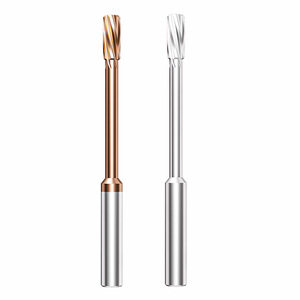
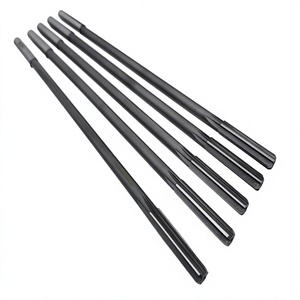
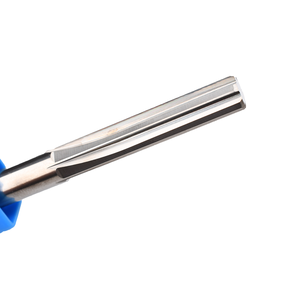
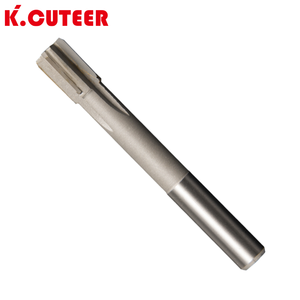
An objective evaluation based on indexable insert precision, cutter body dynamic stability, proprietary grade R&D, and global enterprise support.
Core Engineering Advantage: Benchmark innovator in indexable milling technology. Renowned for their CoroMill® series, Sandvik leads the industry in silent tools (vibration-damped cutters), differential pitch engineering, and advanced Inveio® unidirectional crystal alignment coating technology.
Best For: High-value aerospace, automotive engine block manufacturing, and critical low-chatter finishing operations.
Core Engineering Advantage: Industrial titan in tungsten carbide powder metallurgy. Kennametal’s Dodeka™ 12-edge face milling platforms and KSSM™ heavy-duty cutters offer exceptional metal removal rates (MRR) in forged steel, alloy steels, and ductile iron machining.
Best For: Heavy equipment components, oil & gas valve bodies, and extreme depth-of-cut roughing.
Core Engineering Advantage: Pioneer of high-feed face mill geometries and multi-corner economical insert designs. Iscar's HELIDO and DO-GRIP platforms feature double-sided wiper inserts capable of producing ultra-smooth surface finishes even at elevated table feeds.
Best For: Mold & die pocket face milling, high-feed shallow depth planing, and fast chip evacuation.
Core Engineering Advantage: Exceptionally tight manufacturing tolerances and superior thermal fatigue resistance. Their AHX640S series (7-corner double-sided inserts) excels in roughing cast iron, while the ASX450 series dominates general-purpose face milling.
Best For: Automotive cast iron housings, structural aluminum planing, and high-concentricity spindle setups.
Core Engineering Advantage: Known for the QuattroMill® and Double Octomill™ systems. Seco focuses on minimizing cutting forces through optimized positive axial shear angles, making their cutters ideal for less rigid machine tool spindles.
Best For: Thin-walled components, weak workholding setups, and older CNC machining centers.
Core Engineering Advantage: German engineering precision featuring the M4000 series and Walter Xtra·tec® XT face mills. Walter integrates systemized digital tooling data (ISO 13399) and highly wear-resistant Tiger·tec® Gold PVD/CVD coatings.
Best For: Stainless steel, heat-resistant superalloys (HRSA), and automated Industry 4.0 production cells.
Core Engineering Advantage: Industry leader in cermet and ceramic face mill inserts, as well as ultra-high-speed aluminum face milling cutters featuring adjustable PCD (Polycrystalline Diamond) cartridge edge systems.
Best For: High-speed dry milling of cast iron, mirror-finish aluminum milling, and ceramic high-temp machining.
Core Engineering Advantage: Specialist in heavy-duty, large-diameter face milling cutters (up to 500mm+). Their Power-Quad and Gold-Quad cutters incorporate robust clamping mechanics to withstand high-impact interrupted cuts.
Best For: Heavy bridge mills, gantry machine centers, rail component milling, and structural steel plate planing.
Core Engineering Advantage: Highly competitive pricing coupled with advanced tool geometry. Their Rich-Mill series and Future-Mill cutters deliver excellent cost-performance ratios without compromising core tool life or surface roughness limits.
Best For: General job shop operations, mid-volume contract production, and budget-conscious tooling upgrades.
Core Engineering Advantage: Manufacturing custom carbide-tipped cutting tools, solid carbide head tooling, and modified special cutter geometries since 1986. Specializes in shock-absorbing alloy bodies tipped with C2/C5/C6 sub-micron micro-grain carbide.
Best For: Non-standard step tooling, custom port/face cutters, tough interrupted cuts, and direct engineering collaboration.
| Lead Angle ($\kappa_r$) | Primary Edge Profile | Axial / Radial Forces | Optimal Materials | Primary Industry Focus |
|---|---|---|---|---|
| 45° Face Mill | Octagonal / Square | Balanced Axial & Radial Forces | General Steels, Cast Iron, Stainless | General Engineering, Machine Shop Work |
| 90° Square Shoulder | Triangular / Rhombic / APKT | High Radial Force, Low Axial Force | Thin-Walled Components, Step Face | Aerospace Frames, Medical Housings |
| High-Feed (10°-17°) | Trigon / Specialized Curve | 90% Axial Force (Spindle Direction) | Hardened Die Steels (>55 HRC) | Mold & Die Cavity Roughing |
| Round Insert (Button) | Circular (RPKT / RDMT) | Variable Force (Thickness Dependent) | Inconel, Titanium, HRSA Alloys | Turbine Blades, Aerospace Engines |
How Industry 4.0 digitisation, additive manufacturing, micro-grain metallurgy, and environmental sustainability are reshaping metal removal tooling strategies.
Integration of piezoelectric vibration sensors and RFID microchips directly inside face mill cutter bodies. Real-time telemetry alerts CNC controllers to micro-chipping, chatter resonance, and thermal spikes before catastrophic failure occurs, driving true autonomous unmanned machining.
Selective Laser Melting (SLM) 3D printing enables face mill bodies with curved internal coolant channels. These internal fluid networks target high-pressure coolant or supercritical $\text{CO}_2$ directly onto the insert shear zone, extending tool life by up to 300% in nickel superalloys.
Regulatory pressures and green manufacturing standards are driving plants toward Minimum Quantity Lubrication (MQL) and dry face milling. Substrate developments focus on multi-layered DLC (Diamond-Like Carbon) and HiPIMS PVD coatings with extreme thermal barriers.
Rock River Tool and our global manufacturing partners bring over 38 years of dedicated cutting tool grinding expertise to your machine shop. When standard catalogue face mills fall short of your tolerance or cycle time goals, our engineering group builds custom tooling to your exact print.