
Rock River Tool, Inc.Precision Cutting Tools
Technical Support(800) 345-8924
Talk to an Engineer Engineered with micro-grain carbide substrates, ultra-tight runout tolerances (<0.005mm), and application-specific PVD/CVD wear-resistant coatings.
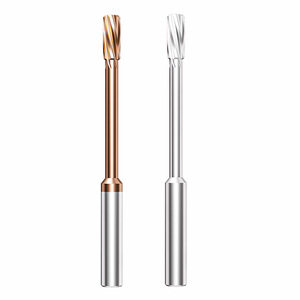
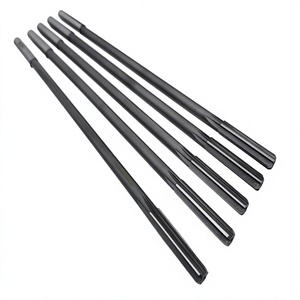
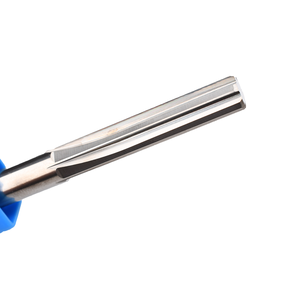
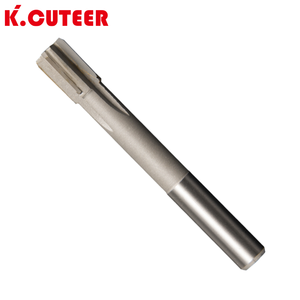
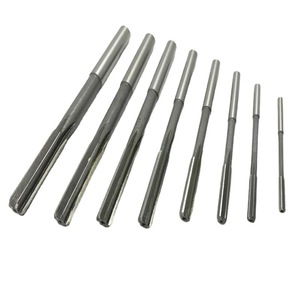
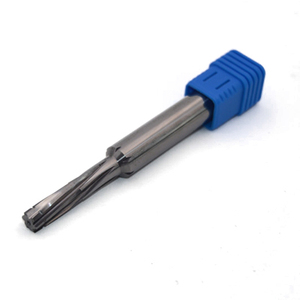
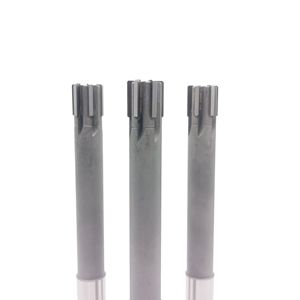
Dovetail cutters are specialized rotary milling tools engineered to machine trapezoidal grooves, O-ring tracks, sliding mechanism ways, and undercut profiles across aerospace components, automotive engine blocks, hydraulic manifolds, and precision die/mold tooling. Because dovetail milling involves non-center cutting with severe neck diameter constriction, purchasing teams must vet manufacturers based on core rigidity, carbide substrate purity, and neck deflection resistance.
The following benchmark ranks the world's leading 10 manufacturing facilities producing standard and custom dovetail milling cutters, carbide-tipped end mills, and precision rotary tools based on technical capability, quality management systems (ISO 9001:2015), and metallurgy innovation.
Established in 1986, Rock River Tool is a premier North American manufacturer specializing in brazed carbide-tipped cutting tools, solid carbide chucking reamers, and custom dovetail/port contour cutters. Renowned for combining high-shock-absorbing alloy steel shanks with ultra-wear-resistant C2 (883) and C5/C6 (370) carbide tips, their tools excel in interrupted cutting and heavy industrial milling.
Industry-leading supplier of micro-diameter solid carbide end mills and specialized profile cutters. Harvey Tool offers extensive off-the-shelf catalog selections of angular dovetail cutters spanning included angles from 30° to 120°, featuring corner radius options and reduced neck clearance for deep-reach cavities.
Global leader in indexable insert metal cutting tooling. Sandvik’s dovetail and slotting cutters incorporate multi-edge indexable carbide inserts with precision internal coolant delivery, designed for high-volume aerospace structural frame slotting and heavy mechanical engine components.
German precision tooling giant with full vertical integration from raw tungsten carbide powder synthesis to 5-axis CNC grinding and PVD coating. Guhring manufactures high-precision spiral flute dovetail cutters engineered specifically for sticky stainless steels and titanium alloys.
Japanese leader in premium rotary cutting tools. OSG utilizes proprietary WEX and A-Brand coating technologies on solid carbide profile cutters, providing ultra-smooth chip evacuation and extended edge longevity in hardened mold steels up to 65 HRC.
Specializes in high-end milling and clamping systems. Franken’s dovetail cutters feature optimized variable flute spacing to suppress harmonic vibration and chatter, enabling superior Ra surface finishes inside tight O-ring sealing grooves.
Part of the Sandvik group, Seco Tools designs custom engineered dovetail cutters and slotting solutions for power generation, turbine blade root machining, and defense manufacturing applications.
Innovator in multi-flute indexable and solid carbide dovetail tools. Iscar’s Multi-Master modular head systems allow quick-change dovetail cutter heads on carbide or steel shanks, reducing tool inventory overhead.
Known for micro-carbide substrate formulations and linear motor CNC grinding processes, Union Tool produces small-diameter dovetail cutters for electronics housing molds and medical diagnostic equipment components.
Global high-value tooling manufacturer supplying extensive lines of general-purpose solid carbide dovetail cutters. YG-1 delivers competitive lead times and cost-to-performance ratios for job shops and general engineering facilities worldwide.
Machining a dovetail slot represents one of the most challenging milling operations in mechanical engineering. Unlike standard square end mills where the cutting diameter is supported by a equal or smaller shank, a dovetail cutter features an inverted conical geometry where the major cutting diameter ($D_1$) is larger than the neck diameter ($D_2$).
Because the neck diameter ($D_2$) must pass through the top narrow slot of the dovetail groove, the tool's resistance to radial deflection is dictated by the cantilever bending beam equation:
Notice that stiffness scales with the fourth power of neck diameter ($D_2^4$). Reducing the neck diameter by 20% reduces tool stiffness by more than 59%! This physical reality explains why solid carbide or premium brazed-carbide construction (such as Rock River Tool's alloy steel body welded to micrograin carbide tips) is essential to eliminate chatter, tool snap, and dimension tapering in deep undercut channels.
Purchasing directors must decide between solid carbide and brazed carbide-tipped tooling based on part size, batch volume, and machine rigidity:
| Evaluation Parameter | Solid Carbide Dovetail Cutter | Carbide Tipped (Brazed Steel Shank) | Indexable Insert Cutter |
|---|---|---|---|
| Diameter Range | 0.5mm – 25mm (Micro to Mid-Size) | 12.7mm – 75mm+ (Large Diameters) | 25mm – 100mm+ (Heavy Production) |
| Impact Resistance | Moderate (Brittle under heavy chatter) | Exceptional (Steel shank absorbs shock) | Moderate to High |
| Cost Efficiency (>25mm) | Low (High raw carbide waste) | Optimal (High Information Gain) | High for long runs |
| Interrupted Cutting | Risk of micro-chipping | Preferred Industry Choice | Insert corner wear risk |
| Re-sharpenability | Limited by neck radius | High (Multiple regrinds) | N/A (Replace Inserts) |
As documented in Rock River Tool’s technical guidelines, matching the carbide substrate to the workpiece material grade prevents premature abrasive wear and thermal cracking:
With a heritage dating back to 1986 in Illinois, USA, Rock River Tool, Inc. represents the gold standard of American precision tooling. The enterprise maintains complete in-house quality control across every stage of manufacture:
Multi-axis Walter & ANCA CNC tool grinders ensure exact profile replication, flawless relief angles, and tight concentricity tolerance under 0.003mm TIR.
Fast-track engineering for non-standard dovetail included angles ($45^\circ, 60^\circ, 75^\circ$), custom step-radii, extended neck lengths, and coolant-through channels built from your CAD drawings.
High-frequency induction silver brazing binds high-wear carbide tips to hardened alloy steel shanks, combining maximum edge hardness with structural toughness.
As modern machine shops transition toward 5-axis simultaneous machining centers and automated manufacturing cells, procurement teams must align tool sourcing with upcoming technical developments:
Traditional dovetail machining relied on full-width slotting cuts that created high radial engagement, causing extreme heat generation and chatter. Modern CAM software utilizes dynamic trochoidal motion—taking small radial depths of cut ($a_e$) at drastically elevated surface feet per minute ($SFM$). Modern dovetail factories are responding by grinding variable-pitch spiral flutes (35°/38° helix) to disrupt harmonic frequency accumulation.
Standard TiN and TiAlN coatings are rapidly being superseded by nanolayered AlCrN (Aluminum Chromium Nitride) and nACo (Nano-Composite AlTiN/Si3N4) coatings. These advanced surface treatments withstand cutting temperatures exceeding 1,100°C while maintaining surface hardness of 3,800 HV—enabling dry milling of alloy steels and drastic reductions in coolant usage.
Instead of forcing machine operators to adjust part drawings to fit stock catalogue tools, top-tier manufacturers like Rock River Tool utilize parametric digital manufacturing. Custom dovetail cutters—modified for exact O-ring gland standards (SAE J514, MS16142, MS33649)—can be designed, ground, inspected, and shipped with lead times compressed by 60% compared to legacy tooling suppliers.
Direct answers from application engineers regarding dovetail cutter selection, feed rates, and tolerance control.
Work directly with application engineers who understand chip loads, material metallurgy, and cutter geometry. Send us your component print or catalog requirement today.