
Rock River Tool, Inc.Precision Cutting Tools
Technical Support(800) 345-8924
Talk to an Engineer Direct factory supply of high-precision boring heads, solid carbide chucking reamers, and customized hole-finishing tools crafted for tight-tolerance CNC machining.
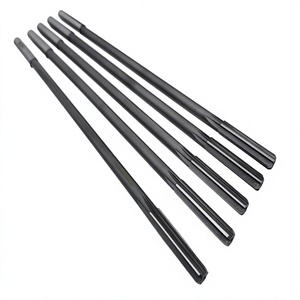
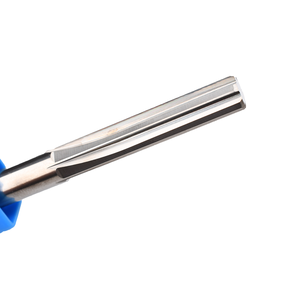
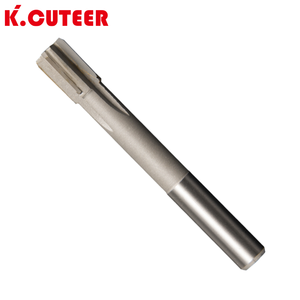
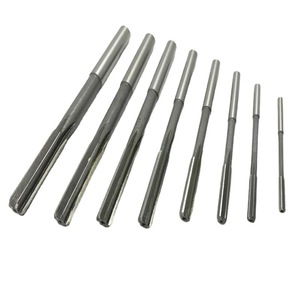
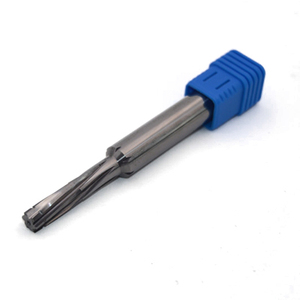
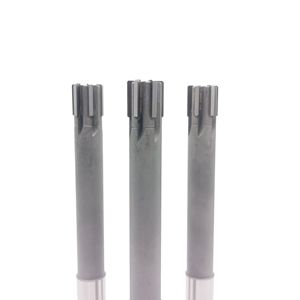
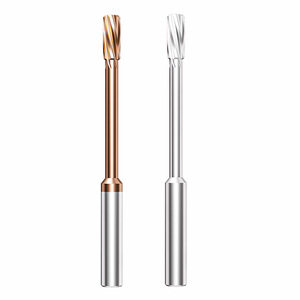
Mastering internal bore geometry requires an intricate balance of dynamic stiffness, thermal compensation, edge shear dynamics, and metallurgical compatibility.
Micro-finish boring operations above 8,000 RPM demand perfect concentricity and self-dampening mechanics. OEM boring heads engineered with asymmetric insert placement and tuned mass dampeners eliminate harmonic regenerative chatter. This ensures surface roughness values down to Ra 0.2 μm in hardened alloy steel and aerospace grade titanium.
Continuous high-speed reaming and fine boring generate intense thermal gradients along the cutter shank. By combining premium tungsten carbide cutting edges brazed onto low-expansion alloy steel shanks, OEM tools maintain nominal diameter integrity across prolonged production cycles, preventing taper defects in deep bore geometries.
Applying C-2 (grade 883) micro-grain carbide for non-ferrous aluminum and cast iron prevents edge built-up (BUE), whereas C-5/C-6 (grade 370) carbide substrates coupled with multi-layer PVD AlTiN or Diamond-Like Coatings (DLC) offer exceptional wear resistance against high-temperature oxidation during steel machining.
Selecting the optimal tooling architecture based on bore diameter, tolerance class, surface finish targets, and batch production volumes.
| Machining Attribute | Brazed Carbide Tipped Boring Head | Solid Carbide Chucking Reamer | Modular Micro-Adjustable Head |
|---|---|---|---|
| Target Hole Tolerance | IT6 – IT8 (±0.005 mm) | H7 – H8 (±0.003 mm) | IT5 – IT7 (±0.001 mm) |
| Diameter Range Flexibility | Fixed / Semi-Adjustable | Fixed Nominal Size | Wide Range Dial Micro-Adjustment |
| Shock & Interruption Tolerance | Superior (Alloy steel shank absorbs shock) | Moderate (Brittle core in heavy cuts) | High (Reinforced tool holder structure) |
| Surface Finish Range (Ra) | 0.4 μm – 0.8 μm | 0.2 μm – 0.6 μm | 0.1 μm – 0.4 μm |
| Cost Per Edge (Large Dia > 25mm) | Low to Moderate | High (Expensive raw carbide mass) | Economical Indexable Inserts |
| Reconditioning Potential | Multi-regrind & re-braze capability | Limited regrind margin | Insert replacement / Body reusable |
The global precision tooling sector is undergoing a massive paradigm shift toward smart automation, sustainable lubrication, and digital twin integration. Custom OEM/ODM manufacturers are leading this revolution through multi-faceted technical innovations:
As global original equipment manufacturers transition toward zero-defect manufacturing, boring head suppliers must deliver complete digitalized tooling ecosystems.
Supply chain managers and tooling engineers are re-engineering their sourcing criteria to balance total cost of ownership (TCO), supplier responsiveness, and custom agility.
Leading automotive and aerospace procurement teams no longer evaluate boring tools based on initial unit price. The focus has pivoted toward total tool life, cycle time reduction, and cost-per-hole. Premium carbide tipped tools that increase feed rates by 30% while maintaining H7 tolerances slash total manufacturing cost drastically.
Standard off-the-shelf catalogues frequently fail to solve complex compound bore challenges. Enterprise clients are prioritizing contract manufacturers capable of converting custom engineering drawings into physical ground prototypes within tight turnarounds, supporting fast-track production line ramp-ups.
Global compliance standards (ISO 9001, Aerospace AS9100) require strict metallurgical verification. Sourcing partners must provide transparent material origin certificates, precise carbide grain size documentation, and complete batch heat-treatment records for all critical components.
Since 1986, our manufacturing facility has specialized in designing and grinding high-performance carbide tipped reamers, custom boring heads, drills, and specialty cutting tools. We bridge the gap between heavy industrial strength and sub-micron precision.
Every tool geometry is ground on multi-axis CNC cutter grinders. Induction brazing of carbide tips is fully controlled to eliminate micro-voids and thermal stress cracks.
Standard and specialized port contour cutters engineered precisely to MS16142, SAE J514F, SAE J1926, and MS33649 specifications for aerospace and hydraulic manifold manufacturing.
We select target carbide grades based on your exact workpiece material—from Grade 883 (C2) for non-ferrous alloys to Grade 370 (C5/C6) for high-tensile steels.
Detailed analysis of part print tolerances, machine spindle interface, and coolant delivery requirements.
Formulating optimal flute helix, rake angles, relief clearance, and carbide grade matching.
Multi-axis grinding followed by custom edge preparation (honing) and specialty PVD coating.
100% optical profile and runout inspection prior to batch packaging and dispatch.
Direct responses from our application engineering group regarding tolerances, custom tooling prints, substrate selection, and runout control.
Carbide tipped tools utilize ultra-hard tungsten carbide brazed exclusively onto the cutting edges while retaining a high-tensile alloy steel tool body. This structural dynamic provides significantly superior shock absorption during interrupted cuts, scaly surfaces, or less rigid machine set-ups. Additionally, for bore diameters exceeding 12.7 mm (0.5 inches), carbide tipped tooling offers substantial cost savings over solid carbide bodies while drastically reducing the risk of catastrophic tool breakage.
Standard precision chucking reamers and fine boring heads manufactured in our facility are ground to nominal size to deliver H7 tolerance limits (±0.003 mm to ±0.006 mm depending on diameter). Under optimal pre-drilling conditions (leaving 0.25 mm to 0.38 mm of radial stock), proper coolant delivery, and rigid fixturing, surface finishes of Ra 0.4 μm (16 micro-inches) or finer are standard. Plus-tolerances and custom step geometries can be ground upon request.
Selecting the correct carbide substrate grade is the single most critical factor in maximizing tool life. For non-ferrous materials, cast irons, and abrasive aluminum alloys, we utilize C-2 class micro-grain carbide (such as our Grade 883), which offers high abrasion resistance without micro-chipping. For alloy steels, stainless steel, and tough exotics, we integrate C-5 and C-6 class titanium-cobalt alloyed carbide (such as Grade 370), which resists thermal crater wear and plastic deformation under high heat.
Clients can submit detailed engineering drawings, DXF/STEP models, or standard tool catalog numbers with requested modifications (such as non-standard shank diameters, step angles, special pilot diameters, internal coolant holes, or custom PVD coatings). Our engineering team performs a thorough DFM (Design for Manufacturability) review within 24 hours, evaluating clearance geometry, grinding wheel access, and thermal stability prior to issuing a formal production quote.
Yes. We supply tooling packages to global manufacturers and industrial supply distributors worldwide. We provide custom tool laser marking (part numbers, brand logos, QR traceability codes), standardized protective packaging, complete export documentation, and dedicated application engineering support for international partners.
Whether you require standard chucking reamers off the shelf or a custom-engineered OEM boring head family for high-volume manufacturing, our application engineers are standing by to review your prints.