
Rock River Tool, Inc.Precision Cutting Tools
Technical Support(800) 345-8924
Talk to an Engineer Precision-ground solid carbide, high-speed steel (HSS), and customized roughing mills engineered to optimize heavy machining across steel, cast iron, and high-temp alloys.
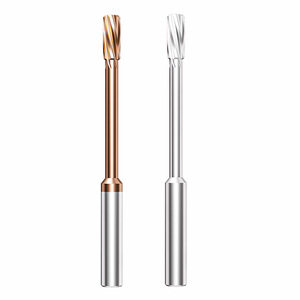
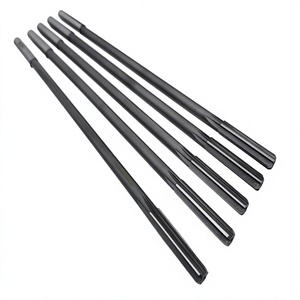
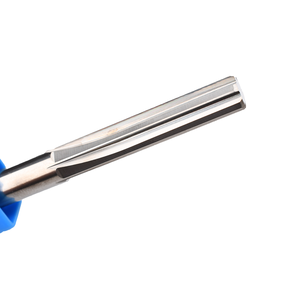
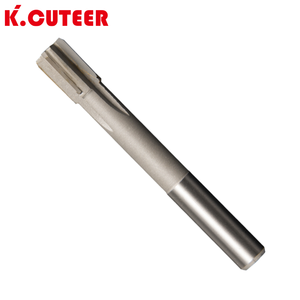
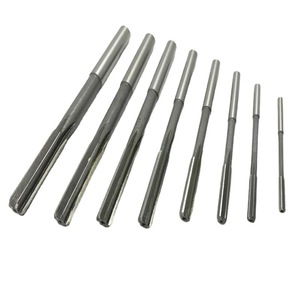
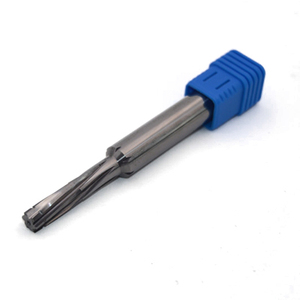
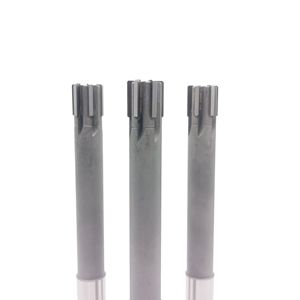
In modern CNC metalworking and heavy-duty manufacturing, the preliminary roughing phase represents up to 70% of total metal volume removal. Procurement managers and manufacturing engineers seeking to optimize production throughput must look beyond initial tooling purchase price and evaluate tools based on Metal Removal Rate (MRR), tool life predictability, chip control, and power efficiency.
As a leading China wholesale roughing mill manufacturer, our engineering design principles integrate advanced wave-profile geometries (corn tooth cutters), multi-layer physical vapor deposition (PVD) coatings, and ultra-fine tungsten carbide grain substrates to solve the classic dilemmas of rough milling: thermal breakdown, harmonic chatter, and premature cutting edge chipping.
Technical Gain Insight: Roughing end mills are engineered with sinus shaped or knurled cutting edges (wave profiles). By breaking long, continuous chips into small, manageable segments, these tools drastically reduce cutting forces by up to 30% and mitigate spindle vibration during aggressive slotting and peripheral milling operations.
Selecting the optimal tool substrate material depends directly on machining stability, workpiece material hardness, machine power capacity, and batch production volumes:
Utilizing micro-grain tungsten carbide (0.4µm - 0.6µm) with 10%-12% Cobalt binder content. Delivers maximum rigidity, extreme hardness (up to 92 HRA), and high-speed operation up to 65 HRC workpiece materials.
Combines heavy-duty alloy steel tool bodies with precision-brazed premium carbide tips. Provides incredible shock resistance for interrupted cuts, deep cavity milling, and legacy or low-rigidity machinery.
High-Speed Steel containing 5% to 8% Cobalt. Exceptional toughness and flexural strength. Ideal for non-ferrous roughing, soft steels, and operations prone to severe mechanical deflection.
The following engineering data table outlines standard operational performance metrics across common ISO material groups for our roughing end mill lines:
| ISO Material Code | Workpiece Alloy Type | Recommended Coating | Cutting Speed ($V_c$ m/min) | Feed Per Tooth ($f_z$ mm/t) | Chip Breaker Profile Type |
|---|---|---|---|---|---|
| ISO P (Steels) | Carbon Steel, Alloy Steel (<35 HRC) | AlTiN / TiAlN Nanocomposite | 120 - 220 m/min | 0.05 - 0.18 mm/t | Fine Wave Pitch (HR) |
| ISO M (Stainless) | Austenitic & Duplex Stainless Steel | nACo Nano-Blue Coating | 80 - 150 m/min | 0.04 - 0.12 mm/t | Medium Wave Pitch (NR) |
| ISO K (Cast Iron) | Grey & Ductile Cast Iron | C-2 Class / TiSiN Coating | 100 - 180 m/min | 0.06 - 0.22 mm/t | Coarse Wave Pitch (WR) |
| ISO S (Superalloys) | Inconel, Titanium Alloys, Hastelloy | AlCrN / Uncoated Polish | 35 - 75 m/min | 0.03 - 0.08 mm/t | Special Radius Corner Flat Wave |
| ISO N (Non-Ferrous) | Aluminum Alloys, Copper, Brass | DLC / High Polish Uncoated | 250 - 600 m/min | 0.08 - 0.25 mm/t | 3-Flute Large Helix Smooth Wave |
The global CNC metal cutting tool market is undergoing a major structural evolution. Industrial buyers, wholesale distributors, and OEM tool procurement managers are shifting away from fragmented spot-buying toward strategic supplier partnerships focused on total cost of ownership (TCO) and supply chain resilience.
Modern CAD/CAM software allows tool paths to execute dynamic radial engagement (Trochoidal Milling). Procurement demand is surging for specialized roughing end mills featuring variable pitch and variable helix angles (e.g., 35°/38° staggered helix). These designs prevent harmonic resonance and enable full axial depth of cut ($a_p$ up to $2.5 \times D$) at extreme feed rates, transforming how structural metal is machined in aerospace and automotive sectors.
Standard TiN and simple TiAlN coatings are rapidly being replaced by advanced physical vapor deposition (PVD) coatings such as AlCrN (Aluminum Chromium Nitride) and nACo Nanocomposite Blue coatings. These coatings provide extreme oxidation stability up to 1100°C and micro-hardness ratings exceeding 3500 HV. Sourcing teams prioritize China wholesale manufacturers equipped with state-of-the-art Swiss or German coating chambers (such as Oerlikon Balzers systems).
Off-the-shelf standardized tooling often falls short when machining proprietary aerospace forgings or specialized valve body castings. Direct sourcing from China manufacturers with integrated 5-axis CNC grinding facilities (such as ANCA and Walter machines) allows buyers to order custom step-roughing tools, special neck lengths, custom shank flats (Weldon / Whistle Notch), and internal coolant-through configurations with rapid prototyping turnaround times under 14 working days.
Technological advancement in cutting tool manufacturing is driven by the demand for higher automation efficiency, reduced machine downtime, and eco-friendly dry/MQL (Minimum Quantity Lubrication) machining. Key technological breakthroughs shaping the next generation of roughing mills include:
By breaking the symmetry of flute spacing and helix angle, tool chatter is suppressed at its core. This enables deeper depth of cuts and preserves spindle bearings on aging CNC machinery.
Micro internal coolant ducts deliver high-pressure fluid directly to the chip-breaking edge. This instantly flushes chips out of deep slots and prevents re-cutting of chips during high-temp machining.
Next-gen sub-micron carbide rods combining ultrafine grain size (<0.5µm) with high fracture toughness ($K_{IC}$ values above $10.5 \text{ MPa}\cdot\text{m}^{1/2}$), enabling roughing tools to withstand severe mechanical impact during heavy intermittent cuts.
Below are essential technical and commercial answers compiled by our chief application engineers for global B2B buyers and tooling distributors.
Roughing end mills feature wavy or knurled edge teeth (wave profile) along their outer diameter flutes. This wave geometry breaks large continuous chips into tiny segments, significantly reducing cutting forces, heat buildup, and power consumption. Standard finishing end mills have smooth continuous edges designed to produce smooth surface finishes ($Ra < 0.8\mu m$) but cannot match the metal removal rate of a roughing tool without risking chatter or tool breakage.
Carbide tipped roughing mills braze premium carbide cutting edges onto a tough alloy steel tool body. This structure offers far superior shock absorption than solid carbide, making it the preferred choice for interrupted cuts, heavy cored castings, legacy CNC machines with spindle runout, and large tool diameters (over 1/2" or 16mm) where solid carbide becomes cost-prohibitive and fragile.
Key parameters include: (1) Workpiece material type and hardness (HRC); (2) Tool diameter and flute length; (3) Shank design (Straight, Weldon flat, Morse Taper); (4) Wave profile pitch (Coarse/NR, Fine/HR); (5) Coating type (AlTiN, nACo, or Uncoated); and (6) Internal coolant delivery requirement. Providing CAD drawings or samples ensures exact engineering compliance.
Sourcing directly from established Chinese manufacturers delivers a typical cost advantage of 40% to 65% while maintaining equivalent precision and tool life. By utilizing premium imported carbide rods (from Germany/Taiwan) and Swiss/Australian 5-axis grinding equipment (ANCA, Rollomatic), Chinese manufacturers meet ISO 9001 quality standards at significantly lower overhead costs.
Our standard roughing mills are manufactured to h8/h7 shank tolerances and e8/e7 cutting diameter tolerances. For precision reaming and rough-finish combination tools, tolerances up to H7 precision are strictly maintained and verified via Zoller Genius laser optical inspection machines prior to shipment.
Look for manufacturers with: (1) In-house 5-axis CNC grinding capabilities; (2) ISO 9001:2015 certification; (3) Full material traceability for carbide rod batches; (4) Zoller or Helicheck optical measuring reports; and (5) Willingness to provide sample tools for field cutting trials.
Founded on a legacy of precision cutting tool production since 1986, our enterprise brings together deep metallurgical expertise, advanced CNC grinding technology, and stringent quality control systems to support global industry leaders in metalworking, aerospace, automotive, and fluid power.
From blank preparation and brazing to 5-axis grinding, coating, and final inspection, every manufacturing phase is controlled in-house. Every batch undergoes 100% optical inspection on Zoller Genius 3 machines.
We source premium virgin carbide rods (C-2 class for cast iron/aluminum, C5/C6 class for alloy steels). Full raw material certifications are provided with every wholesale shipment.
Supporting OEM custom orders, distributor white-labeling, custom laser marking, and specialized export packaging. Fast shipping logistics for standard stock and prototype custom tools.
Need custom roughing mill geometries, standard stock wholesale quotes, or technical assistance with speeds and feeds? Contact our senior tooling engineers now.
Inquire Now