MADE IN USA  Carbide Tipped & Solid Carbide Cutting Tools — manufacturing since 1986
Mon–Fri 7:00am–5:30pm CDT · (800) 345-8924

China Wholesale Indexable Drill Manufacturers & Factory

Industrial Engineering Whitepaper & Global OEM/ODM Precision Tooling Procurement

Factory Direct Catalog

Flagship Indexable & High-Precision Hole-Making Tooling

Engineered for heavy-duty metal removal, CNC machining centers, and high-feed hole finishing. Directly sourced from top-tier Chinese manufacturing facilities.
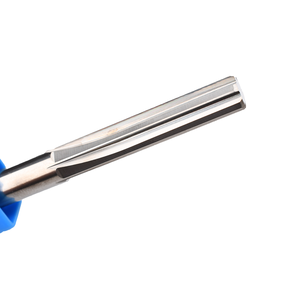
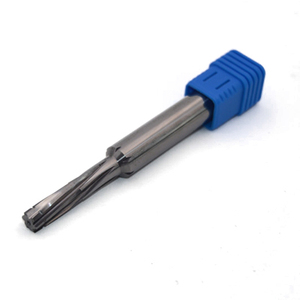
Solid Carbide Machine Reamers
Solid Carbide Machine Reamers, Straight Shank & Spiral Flute
  • 0.5mm ~ 12.0mm Range
  • H7 Machining Precision
  • Bronze Wear Coating
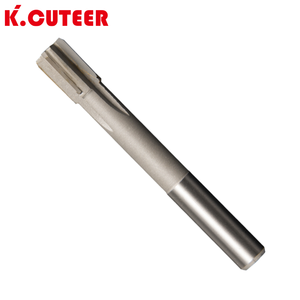
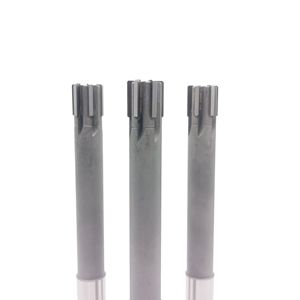
H7 HSS Machine Reamer
H7 HSS Machine Reamer Straight Shank Deep Hole Tool
  • H8 Precision Rating
  • 55HRC Hardness Limit
  • 15°-20° Spiral Angle
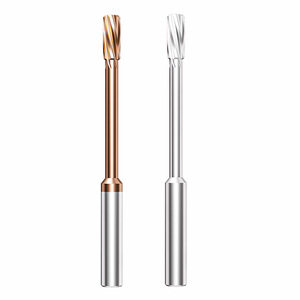
Carbide Machine Reamer
1mm to 20mm Carbide Machine Reamer Coated Straight Flute
  • Full Diameter Coverage
  • H7 Precision Tolerance
  • TiAlN Multi-layer Coating
Custom Made HSS Reamer
Custom-Made HSS Extended Shank Non-Standard Reamer
  • Custom Print Engineering
  • H7/H8 Micro Tolerances
  • White Steel High Toughness
HDD Machine Fluted Reamer
Horizontal Directional Drilling Machine Fluted Reamer
  • Heavy Rig Compatibility
  • High Torque Resistance
  • Mining & Civil Piping
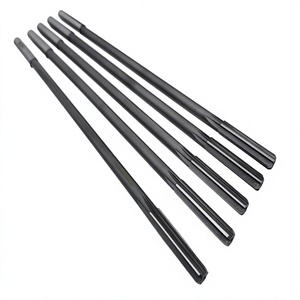
Straight Shank High Precision Reamer
Wholesale High-Speed Steel Precision Metal Manual Reamer
  • Wholesale Bulk Value
  • Multi-material Versatility
  • Precision Ground Margins
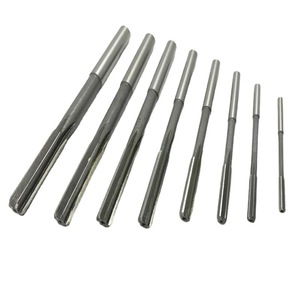
CNC Milling Reamer Set
CNC-Machine Milling Spiral Flute Carbide Reamer Tool Sets
  • Modular Toolsets
  • High Shear Spiral Edge
  • Vibration Damping Body
20mm Carbide Reamer
China Direct Factory 20mm High Precision Alloy Carbide Reamer
  • 20mm Large Diameter
  • Ultra Micro-grain Carbide
  • Mirror Polish Flutes
38+
Years Combined Tech Heritage
±0.002mm
Grinding Runout Accuracy
C2/C5/C6
Substrate Grade Matching
100%
In-House Laser Inspection
Technical Whitepaper

State of Indexable Drilling Technology & China Sourcing Dynamics

In modern subtractive manufacturing, hole-making accounts for over 35% of total machining time across aerospace, automotive, hydraulic valve block, and heavy equipment production lines. Selecting the optimal tooling setup—specifically comparing indexable insert drills, solid carbide drills, and brazed carbide-tipped tools—directly impacts cycle times, tooling spend per part, and overall spindle utilization.

As leading China Wholesale Indexable Drill Manufacturers & Factories, modern Chinese tooling producers have transitioned from high-volume standardized manufacturing to ultra-precision, high-efficiency engineering partners. By deploying advanced 5-axis CNC grinding centers (such as ANCA and Walter), state-of-the-art PVD/CVD physical vapor deposition coating chambers, and ISO 13399 compliant quality control protocols, Chinese factories deliver tooling systems that achieve identical metal removal rates (MRR) and edge stability as Western legacy brands at a fraction of the total cost of ownership (TCO).

Indexable Insert Mechanics

Utilizing mechanical clamping of replaceable tungsten carbide inserts, indexable drills eliminate re-sharpening downtime. Outer and center inserts balance radial forces, allowing for drilling speeds exceeding 250 m/min in alloy steel.

Internal Coolant Dynamics

Equipped with dual helical internal coolant channels, high-pressure coolant (HPC at 20–70 bar) flushes chips forward or backward instantly, preventing chip re-cutting and thermal fracturing of the insert cutting edge.

ISO Structural Stability

Constructed from high-tensile nickel-chromium-molybdenum steel tool bodies (42-45 HRC), our indexable drills resist structural deflection under heavy axial loads up to 10D depth-to-diameter ratios.

Factory Competence

Rock River Tool Heritage Combined with China OEM Capabilities

Reflecting decades of technical expertise established by US pioneers such as Rock River Tool, Inc. (manufacturing precision tooling since 1986), our enterprise bridges legacy tool engineering standards with high-capacity Chinese manufacturing power. By adhering to rigorous metallurgical grade selection and cutting edge geometry design, we provide world-class custom and standard tooling.

1. Application-Matched Carbide Grades

Cutting tool longevity depends directly on microstructural carbide selection. We utilize premium sub-micron and fine-grain tungsten carbide substrates:

  • C-2 Class (Grade 883 Equivalent): Formulated with high cobalt binder content and uniform grain structure. Ideal for cast iron, abrasive aluminum alloys, copper, and non-ferrous materials to resist edge adhesion.
  • C-5 / C-6 Class (Grade 370 Equivalent): Engineered with titanium/tantalum carbide additions for thermal barrier protection. Designed specifically for medium-to-high carbon alloy steel, stainless steel, and hardened iron.

2. Advanced Tolerances & Surface Integrity

Whether producing H7/H8 precision chucking reamers or heavy-duty indexable U-drills, our production lines maintain strict micron-level quality control:

  • Runout Accuracy: Flute and shank concentricity held within ≤ 0.003mm to ensure equal chip loading across all cutting teeth.
  • Surface Roughness: Mirror-polished chip flutes ($R_a < 0.2 \mu m$) eliminate built-up edge (BUE) and ensure smooth chip evacuation during deep hole operations.

Comprehensive Tooling Comparison Matrix: Indexable vs. Solid vs. Tipped

Understanding when to deploy indexable insert drills versus solid carbide or brazed-tipped tools is critical for tooling buyers and manufacturing engineers optimizing production costs.

Performance Indicator Indexable Insert Drills Solid Carbide Drills Carbide Tipped (Brazed) Tools
Diameter Range 12.0mm to 80.0mm+ 0.5mm to 20.0mm 6.0mm to 50.0mm
Machining Depth Capability 2D, 3D, 4D, 5D, 7D, 10D 3D, 5D, 8D, 12D, 30D (Gundrills) 2D, 3D, 5D, Custom Lengths
Initial Tool Cost Medium (Tool Body Investment) High (Full Solid Tungsten Body) Moderate (Steel Body + Carbide Tip)
Cost Per Edge / Consumable Lowest (Indexable Inserts) High (Requires CNC Regrinding) Medium (Brazed Tip Re-tipping)
Vibration & Shock Tolerance High (Tough Alloy Steel Shank) Low/Moderate (Brittle on Interrupted Cuts) Highest (Flex Steel Body Absorbs Shock)
Hole Tolerance & Finish IT9 to IT11 (Medium-Fine) IT7 to IT8 (Ultra-Precision) IT7 to IT9 (Reaming/Finishing)
Down Time During Wear < 1 Minute (Swap Insert In-Machine) Requires Machine Reset & Re-setup Requires Machine Reset & Re-setup
Industry Trends

Future Sourcing & Procurement Trends in Indexable Drilling (2025–2030)

The global industrial cutting tool market is undergoing significant technological transformations. B2B buyers, distributor network procurement managers, and plant operations directors must align their procurement strategies with four distinct industry developments:

1. High-Pressure Coolant (HPC) Optimization

Modern CNC machine tools are standardizing 70+ bar internal coolant delivery. Future indexable drills feature optimized nozzle exit geometry that directs fluid straight to the insert shear zone, reducing cutting temperatures from 800°C to under 300°C and doubling tool life.

2. Multi-Layered PVD & CVD Nanocomposite Coatings

Transitioning from single AlTiN coatings to nano-structured TiAlSiN and AlCrN multi-layer coatings. These advanced physical vapor deposition layers provide oxidation resistance up to 1100°C and extremely low friction coefficients against gummy stainless steels.

3. Digital ISO 13399 Tool Data Integration

Top Chinese wholesale manufacturers now supply complete STEP 3D CAD models and ISO 13399 tool parameters. This allows factory floor engineers to run virtual CAM collision checks and digitally twin indexable drilling paths prior to physical spindle movement.

4. Sustainable Tungsten Recycling & Circular Sourcing

With virgin tungsten carbide raw material prices fluctuating, top OEM suppliers are introducing closed-loop recycling programs. Purchasing indexable insert drills dramatically lowers raw carbide consumption by weight compared to solid tools, supporting corporate ESG goals.

Direct Knowledge Base

Frequently Asked Questions for B2B Procurement

Clear engineering answers to guide your wholesale sourcing and custom blueprint quotes.

When should I choose indexable insert drills over solid carbide drills?
Indexable insert drills are ideal for hole diameters above 12mm where solid carbide becomes cost-prohibitive. They excel in high-volume production, interrupted cuts, structural steel, and applications where changing worn inserts on the machine in under a minute minimizes spindle downtime. Solid carbide remains preferred for micro-diameters (below 12mm) and tight tolerances requiring IT7 or better.
What hole tolerance and surface finish can be achieved with indexable drills?
Standard indexable drills achieve hole tolerances within ISO IT9 to IT11, with surface roughness typically around $R_a 1.6 \text{ to } 3.2 \mu m$. When tighter tolerances (H7 precision, $R_a 0.4 \mu m$) are required, procurement teams pair indexable drilling (for fast stock removal) with carbide machine reamers for the final finishing pass.
Can your factory produce non-standard or custom-designed indexable tools?
Yes. Our engineering team provides full OEM/ODM manufacturing based on customer CAD prints or sample tools. We customize drill body lengths (up to 10D), shank configurations (Weldon flat, straight cylindrical, Whistle Notch, or Morse taper), special chamfer step geometries, internal coolant routing, and insert pocket angles.
How do you match carbide insert grades to workpiece materials?
Insert selection follows ISO material classifications:
  • ISO P (Steel): C5/C6 medium-cobalt grades with thick MT-CVD TiCN+Al2O3 coatings for thermal crater wear resistance.
  • ISO M (Stainless Steel): Sub-micron carbide with PVD TiAlN coating and sharp, positive chip-breakers to prevent work hardening.
  • ISO K (Cast Iron): High-hardness C2 class carbide (Grade 883 equivalent) with smooth surface finishing to resist abrasive wear.
  • ISO N (Aluminum): Uncoated or DLC-coated mirror-polished inserts with high rake angles to eliminate built-up edge.
What is the minimum coolant pressure recommended for deep indexable drilling?
For standard 2D to 3D depths, internal coolant pressure of 10–15 bar (145–215 PSI) is acceptable. For deep hole drilling (5D to 10D), a minimum coolant pressure of 20 to 50 bar (290–725 PSI) with filtered emulsion coolant is strongly recommended to guarantee chip evacuation and prevent catastrophic insert chipping.
How does your Chinese factory ensure quality control and batch consistency?
Every batch undergoes automated 3D optical profile measuring, laser dynamic balance testing for high-speed operation, ultrasonic flaw inspection on raw alloy bodies, and hard coating thickness verification. We operate under strict ISO 9001 certified manufacturing protocols.

Need Custom Tooling Engineering or Factory Wholesale Pricing?

Send us your part prints, target hole tolerances, material specifications, or annual target volume. Our technical sales engineers respond within 12 business hours.

Inquire Now