Rock River Tool, Inc.Precision Cutting Tools
Technical Support(800) 345-8924
Talk to an Engineer Explore our high-performance carbide and high-speed steel thread forming and reaming tools, manufactured with CNC micro-geometry for exacting industrial tolerances.
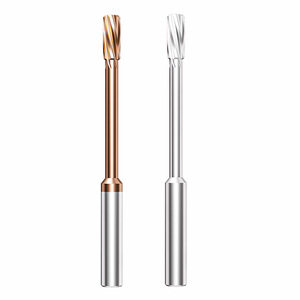
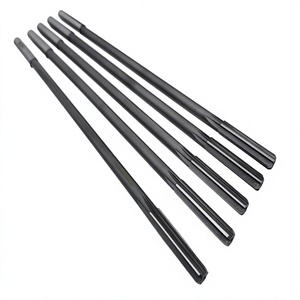
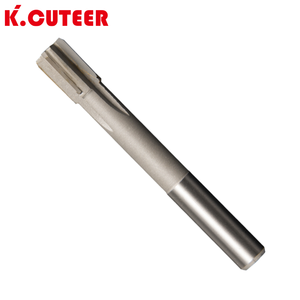
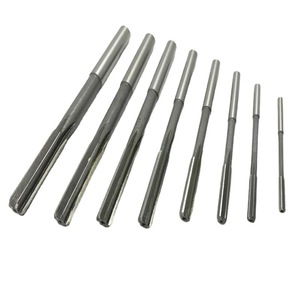
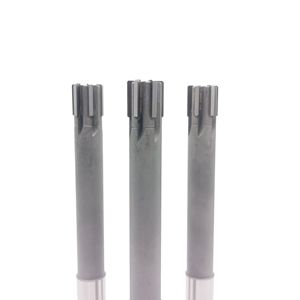
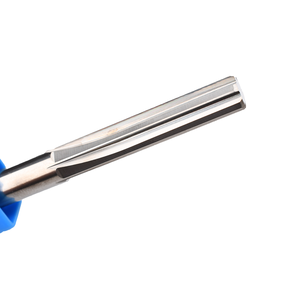
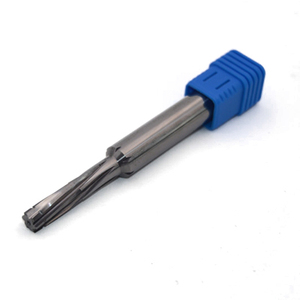
In modern high-speed CNC manufacturing, internal thread creation has undergone a paradigm shift from traditional cutting operations to cold plastic deformation. As a premier China wholesale form tap manufacturer and OEM supplier, our engineering focus centers on cold forming taps—also widely recognized as roll form taps or fluteless taps. Unlike cutting taps that shear metal fibers to generate swarf and chips, form taps displace ductile metal strain-hardened along the thread profile contour.
When a form tap engages a pre-drilled bore, the lobes of the tool pressure-form the workpiece material, forcing it to flow plastically into the radial relief lobes of the tap. This process preserves the continuous grain structure of the metal matrix rather than severing it. The result is a thread crest characterized by a distinct U-shaped compression peak (commonly referred to as the form tap crest notch), yielding up to 50% higher thread shear strength and superior resistance to dynamic vibration fatigue compared to cut threads.
Cold deformation compresses internal molecular structures rather than cutting through alloy fibers. This grain flow continuity substantially enhances flank shear capability under heavy load pressures.
By eliminating chip formation entirely, form taps solve chip clogging in blind holes, eliminate tool breakage caused by bird-nesting swarf, and streamline automated high-volume production lines.
The burnishing action of high-pressure forming lobes produces a mirror-smooth surface finish (Ra < 0.4 µm) along the thread flanks, drastically lowering friction coefficient during fastener assembly.
Comparative analysis based on 304 Stainless Steel and 6061-T6 Aluminum machining trials under identical coolant delivery conditions.
| Performance Parameter | Cold Roll Form Taps (China Wholesale OEM) | Spiral Flute / Straight Cut Taps | Industrial Benefit / Advantage |
|---|---|---|---|
| Thread Grain Structure | Unbroken, cold-formed compressed metal grain | Cut and severed grain fibers at flanks | +30% to +50% higher tensile load resistance |
| Chip Generation | Zero chips (100% chipless operation) | Continuous stringy or segmented chips | Eliminates blind-hole chip packing and tap snap |
| Surface Roughness (Flank) | Ra 0.2 µm - Ra 0.4 µm (Burnished Finish) | Ra 1.6 µm - Ra 3.2 µm (Tool Mark Ripples) | Prevents galling and thread stripping |
| Pre-Drill Hole Tolerance | Requires tight bore accuracy (Hole Calc Critical) | Wider pre-drill tolerance acceptable | Demands high-precision carbide reamer preparation |
| Machining Torque Required | 100% to 200% higher initial dynamic torque | Standard cutting torque threshold | Requires rigid CNC spindles and hydraulic chucks |
| Tool Wear Rate & Life | 3x to 10x longer tap operational life | Faster edge wear due to cutting edge abrasion | Substantially reduced cost-per-threaded-hole ratio |
The single most critical factor in achieving class 6H or 2B thread tolerances with form taps is determining the precise pre-drill hole diameter. Because metal is displaced rather than removed, an oversized pre-drill hole will result in an incomplete thread height (under 65% thread engagement), whereas an undersized hole will create extreme torque spikes, causing structural failure of the tap shank.
The Universal Form Tap Pre-Drill Diameter Formula (Metric System):
Dhole = Dnominal - (0.005 × % Thread Height × Pitch)
For standard 65% to 75% industrial thread engagement specs, a simplified empirical formula widely applied across our global machining customer base is:
Form Tap Pre-Drill Size = Nominal Diameter - (0.5 × Pitch)
Form tapping requires workpiece materials to possess minimum elongation properties of 10% to 12%. Ideal materials include structural aluminum alloys, low-alloy carbon steels, brass, copper, ductile stainless steels (304, 316), and zinc die-cast parts.
High-friction plastic flow generates intense interface heat. We engineer oil-grooved form taps for deep holes (>2xD) to transport high-pressure synthetic cutting oils or soluble MQL fluids straight to the cold-working deformation zone.
Our custom form tap manufacturing utilizes multi-layer PVD technology: Titanium Nitride (TiN) for general steel tapping, TiAlN/AlCrN for heat-resistant alloy steels up to 40 HRC, and super-smooth Diamond-Like Carbon (DLC) for non-ferrous aluminum sticky metals.
As global automotive, aerospace, and medical device manufacturing transitions toward lighter alloys, EV battery enclosures, and ultra-miniaturized electronic assemblies, B2B tooling buyers must realign their supply chain strategies. Procurement decision-makers are shifting away from off-the-shelf catalog tools toward highly customized, application-specific form tap tooling packages engineered directly at the OEM factory level.
Aluminum extruded alloys (6000 and 7000 series) used in electric vehicle structural frames demand high-speed oil-groove form taps coated with low-friction DLC to prevent galling under continuous automated robotic production.
Demand for S0.6 to M2.0 micro form taps is surging in smartwatch, medical implant, and semiconductor manufacturing. Cold forming prevents microscopic metallic dust from contaminating delicate electronic components.
Global ESG mandates require machining factories to cut hazardous metal sludges. Chipless form tapping reduces coolant contamination, extends sump fluid longevity, and fits directly into sustainable circular production models.
Combining state-of-the-art Chinese CNC tool grinding automation with decades of advanced tool engineering principles, our manufacturing infrastructure delivers technical authority, raw material traceability, and unmatched cost-to-performance efficiency for global wholesale distributors.
We source ultra-pure tungsten carbide powders (0.4µm grain size with 10-12% Cobalt binder) and European M42/V3N cobalt high-speed steel. This metallurgical baseline ensures maximum toughness under heavy form-tapping torsional loads.
Every form tap lobe and lead chamfer is ground in a single setup on ultra-precision 5-axis CNC grinding machines. Pitch diameter tolerances are strictly maintained within ±0.002 mm, complying with ISO 2284, DIN 2174, and ANSI B92 standards.
In addition to standard pitch taps, our engineering unit designs custom step form taps, modified shank lengths, DIN/ANSI combinations, and specialized pitch profiles directly from customer engineering prints or CAD files.
Quality assurance includes non-contact 3D laser measurement of lobe symmetry, thread lead geometry, shank concentricity, and surface roughness before PVD coating deposition, ensuring complete lot-to-lot repeatability.
Direct answers from our Senior Tooling Engineers addressing core machining challenges, tool selection, and purchasing logistics.
Form tapping is not recommended for brittle materials with an elongation rate below 8%, such as gray cast iron, hardened carbon steel (>40 HRC), high-silicon cast aluminum (Si > 12%), and brittle thermosetting plastics. These materials will fracture micro-structurally rather than flow plastically, leading to torn thread flanks or instant tool breakage.
Initial entry breakage usually stems from three causes: an undersized pre-drill hole (increasing initial cold-forming displacement pressure beyond shank yield capacity), angular misalignment between spindle axis and bore, or insufficient lead chamfer length (e.g., using a 1.5-pitch Bottoming chamfer where a 4-pitch Taper/Forming lead is required).
For shallow through-holes or short blind holes under 1.5 times nominal thread diameter (1.5xD), solid fluteless form taps are optimal. For thread depths exceeding 2xD or blind-hole operations in gummy metals, oil grooved form taps are essential to allow fluid escape and deliver pressurized lubricant directly to the front forming lobes.
Form taps require approximately 50% to 100% higher driving torque during initial thread engagement due to metal compression force. CNC machines should use high-torque rigid tapping cycles, heavy-duty hydraulic tool holders, or synchronized tension-compression tap adapters to prevent spindle slippage.
We supply form taps across all global standard tolerances, including ISO 1 (4H), ISO 2 (6H), ISO 3 (6G), and ANSI 2B / 3B fits. Oversized form taps for pre-plate applications (+0.03mm to +0.05mm pitch diameter allowance) are also manufactured upon request.
Standard catalog form taps are dispatched from stock within 48 hours. Custom engineering items (special pitch diameters, modified shank flats, non-standard lead chamfers) require 10 to 15 working days for grinding, optical inspection, and specialized PVD coating treatment.
Partner directly with China's leading cutting and forming tool manufacturer. Contact our engineering team for technical drawings, custom form tap sizing, volume distribution pricing, and emergency batch orders.