
Rock River Tool, Inc.Precision Cutting Tools
Technical Support(800) 345-8924
Talk to an Engineer Direct factory wholesale catalog engineered for aerospace, automotive, hydraulic valve, and heavy CNC tooling applications.
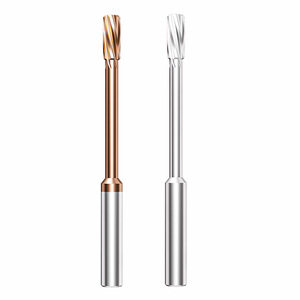
Bronze PVD coated micro-grain solid carbide reamer and centering tool set. Engineered for machine finishing with strict H7 tolerance.
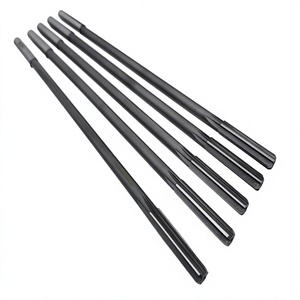
High-speed steel construction with H8 precision rating, optimized for dry cooling operation and 15–20 degree spiral flute angle.
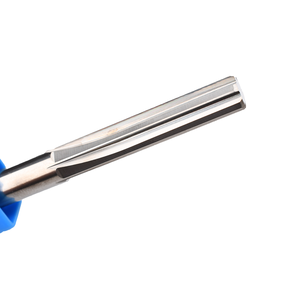
Full diameter spectrum precision ground carbide tools with multi-layer TiAlN coating for high wear resistance in alloy steels.
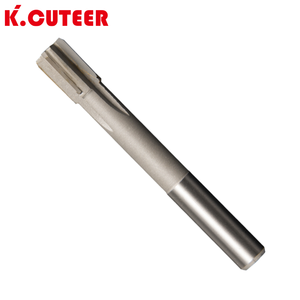
Tailored OEM manufacturing for extended reach requirement, non-standard pilot diameters, and custom countersink angles.
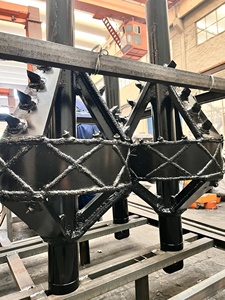
Designed for severe torque and impact resistance in infrastructure and heavy machinery hole location setup.
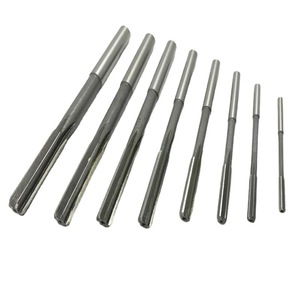
Cost-effective, mass-produced HSS straight shank tools delivering high precision manual and lathe centering capability.
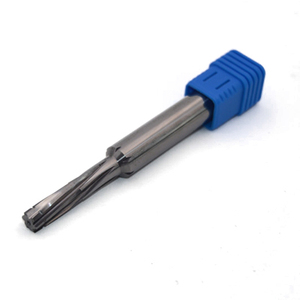
Integrated multi-flute milling and centering sets designed for automated tool changers and high-RPM spindles.
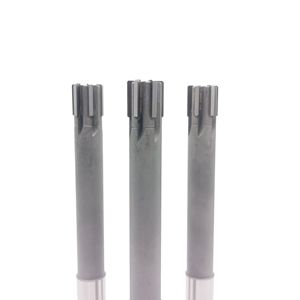
Premium tungsten alloy reamer and center drill stock. Designed for extreme thermal hardness and extended tool life.
In modern high-speed CNC turning and milling operations, the creation of an accurate center hole is the fundamental anchor point for concentricity, rotational balance, and downstream machining repeatability. As a premier China Wholesale Center Drill Manufacturer & Exporter, our engineering team integrates decades of cutting tool metallurgy with state-of-the-art 5-axis CNC grinding technology to deliver center drills, machine reamers, and specialized countersinks that satisfy the rigorous demands of global manufacturing OEMs.
Information Gain Insight: A center drill (frequently referred to as a combination drill and countersink) serves two crucial mechanical purposes: creating a precise localized starting pilot hole that prevents drill walking, and forming a 60° (or 120° chamfered) countersink conical surface to support lathe tailstock live centers. Choosing between DIN 333 Type A, Type B (with protective chamfer), and Type R (radius form) directly impacts structural rigidness and tool deflection during heavy-duty turning cycles.
Understanding the micro-mechanical interactions between the tool tip, workpiece substrate, and cutting fluid delivery is vital for procurement directors aiming to optimize Total Cost of Ownership (TCO). When center drilling tough alloy steels (such as 4140, 4340, or 316L Stainless Steel), tool failure usually occurs not from flank wear, but from micro-chipping at the drill-countersink transition zone caused by thermal stress and axial runout.
Standard DIN 333 Type A center drills feature a straight 60° countersink angle without protective chamfer. Ideal for general-purpose machining, shaft centering, and standard lathe workpieces.
Type B geometry incorporates a secondary 120° protective chamfer at the outer diameter. This protects the crucial 60° bearing cone from accidental burrs and handling damage during transport.
Curved radius form center drills provide a point contact on the live center rather than a full surface line contact, allowing for minor angular misalignment between tailstock and spindle centerlines.
Our industrial production facilities based in China's prime precision tooling centers (Jiangsu and Zhejiang tool clusters) encompass complete end-to-end quality supervision. Referencing established manufacturing methodologies proven over 35 years in the international market, we combine raw material purity with automated grinding precision.
We source micro-grain (0.4μm to 0.6μm) tungsten carbide rod substrates featuring 10% to 12% Cobalt binder content. For our High-Speed Steel (HSS) line, we use premium M35 (5% Cobalt) and M42 (8% Cobalt) grades, offering elevated hot-hardness (up to 68 HRC) and superior resistance to edge thermal cracking.
Utilizing high-end ANCA and Walter 5-axis CNC grinding machines, all center drill flutes are ground with mirror-smooth web thinnings to minimize radial thrust forces. 100% of export batches undergo Zoller Genius 3 non-contact optoelectronic inspection to ensure runout is kept within ±0.0025mm.
To assist tool application engineers and B2B buyers in selecting the exact tool substrate and coating combination, the following matrix details operational speeds, feeds, and thermal limits for our center drills and machine reamers across workpiece material classes:
| Tool Substrate & Coating | Workpiece Material | Hardness Range | Cutting Speed (SFM) | Feed Rate (mm/rev) | Coolant Strategy |
|---|---|---|---|---|---|
| Solid Carbide (TiAlN Coated) | Alloy Steel (4140/4340) | 30 – 45 HRC | 180 – 280 SFM | 0.04 – 0.08 mm | Emulsion High Pressure |
| Solid Carbide (Bronze/AlTiN) | Stainless Steel (304/316) | Up to 35 HRC | 120 – 190 SFM | 0.03 – 0.06 mm | Neat Oil / MQL |
| HSS-Co M35 (Cobalt 5%) | Cast Iron (Grey/Ductile) | 180 – 250 HB | 90 – 140 SFM | 0.06 – 0.12 mm | Dry / Air Blast |
| HSS-Co M42 (Cobalt 8%) | Tool Steels (D2/P20) | 35 – 50 HRC | 70 – 110 SFM | 0.02 – 0.05 mm | Synthetic Coolant |
| Uncoated Micro-Carbide | Aluminum & Copper Alloys | 60 – 120 HB | 350 – 600 SFM | 0.08 – 0.16 mm | Flood Coolant / Mist |
The global metal-cutting tooling landscape is undergoing a massive transformation driven by high-speed machining (HSM), automated robotic loading, and sustainability mandates. Below are the key technological trajectories defining the center drill and reaming industry over the coming decade:
Transitioning from basic TiN coatings to advanced multi-layer AlTiSiN and DLC (Diamond-Like Carbon) coatings. These nano-structure layers provide extreme surface hardness (up to 3600 HV) and reduced friction coefficients, enabling high-efficiency dry machining without thermal oxidation.
Modern CNC machine programming favors consolidated tooling setups. Combined pilot-chamfer-spotting tools eliminate tool change cycle times on automatic tool changers (ATC), cutting total hole preparation time by up to 35% in high-volume production lines.
With environmental regulations curbing traditional flood coolant usage, center drill flute geometries are being redesigned with specialized polished chip breakers and internal coolant-through channels to facilitate rapid chip evacuation under near-dry MQL air-mist pressure.
For industrial distributors, tool importers, and tier-1 machining facilities, sourcing center drills and precision hole-making cutters directly from established Chinese manufacturers offers clear competitive advantages when structured correctly:
Essential technical and commercial answers compiled by our chief application engineers for global procurement teams.