Rock River Tool, Inc.Precision Cutting Tools
Technical Support(800) 345-8924
Talk to an Engineer Engineered to strict ISO tolerances for heavy-duty roughing, high-speed micro boring, and deep-hole anti-vibration lathe operations.
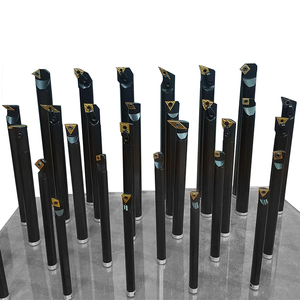
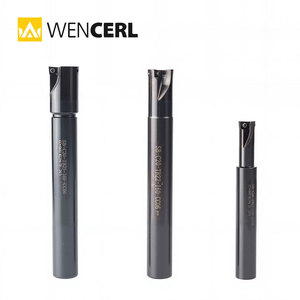
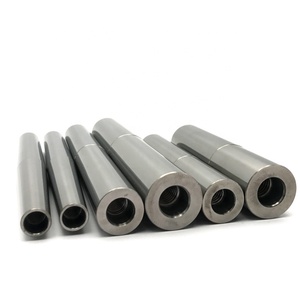
Internal boring represents one of the most mechanically challenging operations in modern subtractive metal cutting. Unlike external turning where the tool holder overhang can be minimized and supported rigidly by the lathe turret, internal boring forces the tool bar into a confined, unsupported cavity. The fundamental challenge stems from cantilever beam deflection theory, governed by Euler-Bernoulli beam equations:
Deflection (δ) = (F × L³) / (3 × E × I)
Where: F = Cutting Force, L = Overhang Length, E = Elastic Modulus, I = Area Moment of Inertia
Because static deflection scales exponentially with the third power of overhang length ($L^3$), doubling the length of a standard steel boring bar increases its physical deflection by an astounding factor of eight. This instability induces high-frequency self-excited micro-vibrations—commonly known as machining chatter. Chatter severely degrades surface roughness ($Ra$), causes rapid chipping of hard carbide insert edges, accelerates tool flank wear, and destabilizes dimensional tolerance across long production runs.
To solve these critical failure modes, our engineering team manufactures advanced structural boring bars utilizing material science advancements including solid tungsten carbide shanks, heavy metal tungsten-copper alloy substrates, and internal tuned mass damper (TMD) mechanisms. By increasing the Young’s Modulus ($E$) from approximately 210 GPa (standard alloy steel) up to 600 GPa (micro-grain solid tungsten carbide), we achieve an immediate threefold reduction in elastic deflection, allowing precision internal machining up to 14 times the bar diameter ($14 \times D$).
Choosing the correct structural material for internal boring bars is directly linked to workpiece geometry, depth-to-diameter ratio ($L/D$), and operational cost constraints. As a primary China OEM manufacturer and global exporter, we deliver three distinct classes of tool holders designed to fulfill diverse machining requirements:
| Substrate Class | Young's Modulus (E) | Recommended L/D Ratio | Vibration Damping Index | Primary Application Spectrum |
|---|---|---|---|---|
| High-Speed Steel / Alloy Steel (42CrMo) | ~210 GPa | Up to 4x - 5xD | Baseline Damping | Short depth internal turning, cost-sensitive job shops, interrupted rough cuts. |
| Heavy Metal Tungsten Alloy (Denal) | ~340 - 380 GPa | Up to 6x - 8xD | High Inertial Mass | Medium-reach internal profiling, stainless steel machining, high shock load environments. |
| Solid Tungsten Carbide (K20-K40 / C2 Grade) | ~550 - 620 GPa | Up to 10x - 12xD | Maximum Rigidity | Deep hole micro boring, high-speed ISO turning, tight tolerance finishing ($Ra < 0.4 \mu m$). |
| Smart Tuned Mass Damper (TMD) Internal Mechanics | Composite System | Up to 12x - 14xD | Active Counter-Harmonic Damping | Extreme overhang deep cylinder boring, aerospace engine casings, oil & gas valve bodies. |
While solid carbide bars provide exceptional static stiffness, their high hardness makes them susceptible to brittle failure under extreme torsional shock loads or deep interrupted cuts. To overcome this limitation, our plant utilizes proprietary vacuum brazing and shrink-fit coupling technologies to bond tough alloy steel cutter heads onto solid tungsten carbide shanks. This hybrid architecture pairs the energy-absorbing toughness of alloy steel at the insert pocket with the ultra-high rigidity of carbide along the main body.
Our export catalog covers the full spectrum of metal-cutting applications, tailored for modern CNC turning centers, Swiss-type automatic lathes, floor-type boring machines, and vertical machining centers (VMC). Below is a deep technical breakdown of our core tool lines:
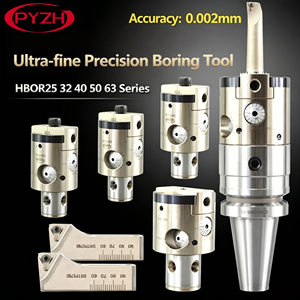
Designed for micron-level precision bore sizing. Features a micrometer dial mechanism offering adjustments down to 0.002mm on diameter. Internal coolant channels direct fluid directly onto the cutting lip, purging chips efficiently out of blind cavities.
Engineered with a internal cavity housing a heavy tungsten mass suspended in dynamic viscous damping fluid. The system is factory-tuned to generate anti-phase dynamic counter-forces that instantaneously dissipate mechanical resonance during long overhang machining.
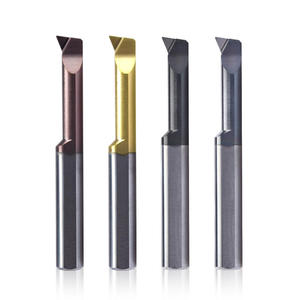
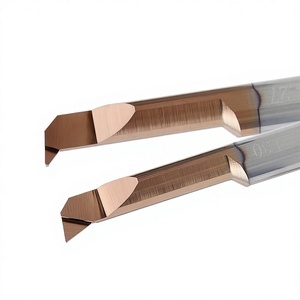
Sub-micron grain carbide bars designed specifically for small-diameter internal turning down to bore diameters of 1.0mm. Available with PVD AlTiN, TiAlN, or DLC coatings for extreme heat resistance when profiling hardened steels ($>60 \text{ HRC}$) and exotic alloys.
Heavy-duty twin-cutter rough boring heads built to maximize material removal rates (MRR). Balanced cutting forces eliminate radial bar deflection during aggressive hogging operations in cast iron housings and forged steel cylinders.
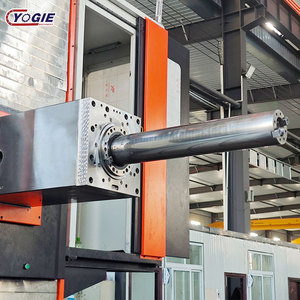
Large-scale custom-manufactured boring bars up to 200mm shank diameter. Built for floor-type horizontal boring mills machining massive turbine housings, marine engine blocks, and industrial gearboxes.
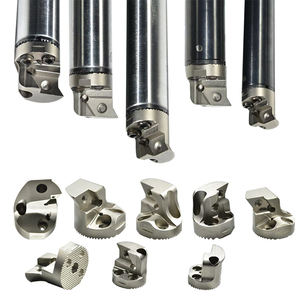
Precision-ground ISO standard internal turning tool holders featuring negative screw-clamping mechanisms for stable indexable insert seating (DCGT, CCMT, DCMT inserts).
The global CNC metal cutting tool market is undergoing a rapid evolution driven by automation, tighter component tolerances, and aggressive cost optimization. Procurement teams, tooling distributors, and tier-1 machining partners must adapt to several macro trends shaping internal turning technologies:
Conventional flood cooling fails to penetrate deep internal cavities during long overhang boring operations. Modern CNC lathes utilize high-pressure coolant lines (70 bar to 150 bar). Our entire boring bar lineup is factory-engineered with micro-honed internal fluid channels that deliver targeted coolant jets right behind the cutting edge, breaking continuous stringy chips into manageable segments and extending tool life by up to 300% in nickel-based superalloys like Inconel 718 and Titanium 6Al-4V.
Industry 4.0 integration requires seamless tool tracking and condition monitoring. Advanced manufacturing facilities are adopting RFID-embedded boring shanks and laser-etched matrix codes to track tool wear cycles, preset parameters, and dynamic balance values. Our custom OEM capabilities include laser engraving and pocket machining for standardized tool data chips.
With additive manufacturing and precision investment casting producing components closer to final dimensions, the focus has shifted from heavy roughing to high-speed, light-depth finishing. Micro boring tools must maintain crisp cutting radii ($R = 0.05 \text{ mm}$) and high dynamic stability under spindle speeds exceeding 15,000 RPM.
As an established wholesale manufacturer and exporter based in China, we bridge the gap between world-class metallurgical quality and competitive factory-direct pricing. Our facility operates under rigorous ISO 9001:2015 quality management systems, enforcing comprehensive inspection protocols across every stage of production:
Every batch of imported tungsten carbide powder and alloy steel bars undergoes chemical spectrometry testing to verify grain purity, cobalt binder percentage, and structural density prior to sintering and machining.
Tool geometries, insert pockets, and chip flutes are ground on state-of-the-art ANCA and Walter 5-axis CNC grinding machines, ensuring repeatability within ±0.002mm across high-volume production orders.
High-speed fine boring heads and modular shanks are dynamic-balanced on HAIMER balancing equipment to G2.5 at 20,000 RPM, preventing spindle vibration and protecting CNC machine tool bearings.
We partner with international tool brands, industrial distributors, and specialized machining shops to supply customized tooling solutions. Our OEM engineering services encompass:
Partner with China's leading OEM boring bar manufacturer. Contact our technical application engineers to request a comprehensive CAD quotation, evaluate sample tools, or discuss custom anti-vibration tooling designs.
Get a Quote