MADE IN USA  Carbide Tipped & Solid Carbide Cutting Tools — manufacturing since 1986
Mon–Fri 7:00am–5:30pm CDT · (800) 345-8924

China Top Counterbore Tool Suppliers & Exporters

Industrial Benchmark Technical Report & High-Precision Tool Procurement Guide for Global Machining Operations

Precision Portfolio

Engineered Counterbore & Hole-Finishing Tooling

Direct factory supply featuring solid carbide, carbide-tipped, and HSS-Co high-precision reaming & counterboring solutions compliant with ISO H7/H8 tolerance standards.
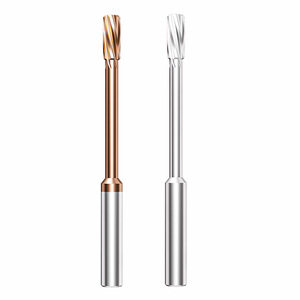
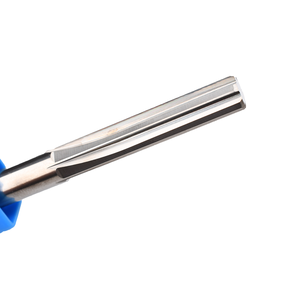
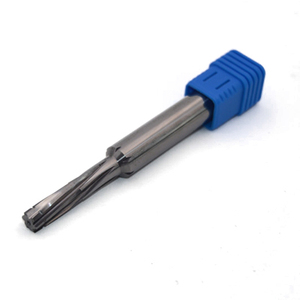
Solid Carbide Machine Reamers 0.5-12.0 H7 Precision Bronze Coating
Solid Carbide Machine Reamers, Straight Shank & Spiral Flute Reamer 0.5~12.0 H7 Precision, Bronze Coating
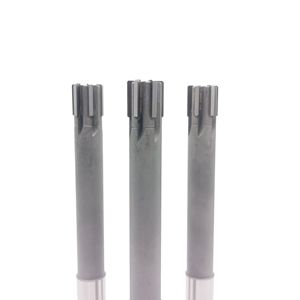
H7 HSS Machine Reamer Deep Hole Tool H8 55HRC
H7 HSS Machine Reamer Straight Shank Flute Deep Hole Hand Reaming Tool H8 Precision 55HRC Dry Cooling
1mm to 20mm Carbide Machine Reamer Coated Straight Flute
1mm to 20mm Carbide Machine Reamer Coated Straight Flute H7 Precision Metal Finishing Tool
Custom-Made HSS Straight Shank Machine Reamer
Custom-Made High-Speed Steel Straight Shank Machine Reamer High Precision H7/H8 Non-Standard Tooling
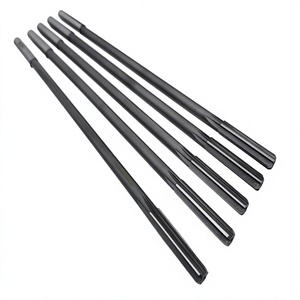
Horizontal Directional Drilling Machine Fluted Reamer
Horizontal Directional Drilling Machine Fluted Reamer for Chinese Brand HDD Heavy Duty Rig Machines
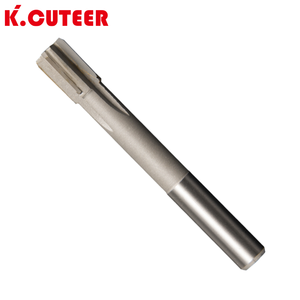
Straight Shank High-speed Steel Machine Reamer
Straight Shank High-Speed Steel High-Precision Machine Reamer & Metal Manual Counterboring Tool
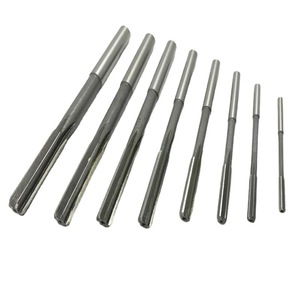
CNC Machine Milling Reamer Carbide Spiral Flute Sets
CNC-Machine Milling Reamer & Carbide Spiral Flute Counterbore Tool Sets for Hardened Alloy Steels
Wholesale 20mm Carbide Reamer Tool Supplier
China Manufacturer Direct Wholesale 20mm Carbide Reamer High Precision Alloy Counterbores
±0.0025 mm
Micro-Grinding Concentricity Tolerance
C2 / C5 / C6
Sub-Micron Grade Substrates
100% In-House
5-Axis CNC Grinding & Vacuum Brazing
ISO 9001:2015
Global OEM Traceability Benchmark
Technical Whitepaper

Evaluating China’s Top Counterbore Tool Manufacturers & Exporters

An engineering analysis of material selection, shank geometry, pilot integration, and total tool-life cycle cost in modern CNC metalworking.

In modern high-precision manufacturing—spanning aerospace structural framing, automotive powertrain housings, hydraulic valve manifolds (SAE J1926 / MS16142), and heavy machinery—the counterboring operation is critical. Counterbores create flat-bottomed recesses for socket head cap screws, hex bolts, or specialized sealing rings while maintaining strict concentricity relative to a pre-drilled or reamed pilot hole. Selecting an qualified supplier from China requires looking beyond initial purchase cost to evaluate total holemaking productivity, tool rigidness, chip evacuation fluting, and micro-grain carbide tip integrity.

Leading Chinese tool manufacturers have transitioned from high-volume standard commodity manufacturing to state-of-the-art precision engineering. Utilizing 5-axis CNC grinding centers (such as ANCA, Walter, and Rollomatic), advanced PVD/CVD coating technology (AlTiN, nACo, Bronze TiAlN), and strict quality assurance protocols, tier-1 Chinese exporters provide high-performance counterbores, solid carbide reamers, and carbide-tipped cutters that meet or exceed traditional Western industrial standards at significant cost efficiency.

Carbide Tipped vs. Solid Carbide

Solid carbide provides superior radial stiffness for small diameters (<12mm). However, for larger counterbore diameters (>14mm) or interrupted cuts, brazed carbide tips on hardened alloy steel bodies absorb vibration and shock far better, avoiding catastrophic edge chipping.

  • High shock absorption under interrupted cut
  • Significantly lower replacement cost for large diameters
  • Re-sharpenable tips extend capital utility

Micro-Grade Substrate Selection

Matching carbide grade to the workpiece material prevents premature flank wear or thermal cracking. C-2 class (883) excels in cast iron and abrasive aluminum, while C-5/C-6 (370) handles tough carbon and stainless steels.

  • C-2 Class: Non-ferrous, cast iron, bronze
  • C-5/C-6 Class: Alloy steels, tool steels
  • Cobalt (HSS-E/M42): High-flexibility hand & deep hole tooling

Precision Geometry & Fluting

Counterbores feature integral or replaceable pilots. Spiral flutes push chips backward out of blind holes, whereas straight flutes offer maximum structural cross-section for rigid through-hole countersinking.

  • Straight Flute: Superior body rigidity
  • Spiral Flute (15°-30°): Clean blind-hole chip liftoff
  • Step Pilot Options: Simultaneous drilling & counterboring
Engineering Reference

Counterbore & Reaming Tool Engineering Matrix

Compare tool types, tolerance limits, substrate recommendations, and cutting speed (SFM) guidelines for optimal machining performance.

Tool Geometry & Classification Target Workpiece Material Tolerance Range Recommended Speed (SFM) Coolant & Lubrication Strategy
Carbide Tipped Straight Shank Counterbore Cast Iron, Medium Alloy Steels, Ductile Iron ±0.005 mm 120 - 250 SFM Flood Coolant / High Pressure Emulsion
Solid Carbide Spiral Flute Machine Reamer Stainless Steel (304/316), Titanium, Inconel ISO H7 (0.00-0.012mm) 80 - 160 SFM Synthetic Water-Soluble Coolant / Neat Oil
HSS-Co M42 Extended Capscrew Counterbore Structural Carbon Steel, Aluminum Alloys ISO H8 60 - 120 SFM MQL (Minimum Quantity Lubrication) / Dry Air Blow
SAE O-Ring Port Contour Cutter (Brazed) Hydraulic Valve Bodies, Manifolds (Steel/Aluminum) SAE J1926 / MS16142 Spec 150 - 320 SFM High Pressure Through-Spindle Coolant
Horizontal Directional Drilling (HDD) Fluted Reamer Heavy Civil Trenchless Rock/Soil Formations Heavy Industrial API Standard 30 - 80 RPM Bentonite Mud / Drilling Fluid Injection
Manufacturer Direct

China Supplier Manufacturing Excellence & QA Protocols

Why top global distributors and Tier-1 machining plants partner with specialized Chinese cutting tool manufacturers for standard and custom tooling.

1. Fully Integrated In-House Production Line

Leading Chinese exporters maintain end-to-end control over the fabrication process. From raw tungsten carbide powder compounding to precision CNC rod cutoff, vacuum induction brazing, 5-axis CNC flute profile grinding, and PVD surface coating—every step takes place under one roof.

  • Elimination of third-party markup and transit delays
  • 100% optical and laser micrometer inspection of critical margins
  • Batch-to-batch repeatability on cutter diameter and concentricity
  • Full raw material heat-treatment and carbide batch traceability

2. Custom Engineering & Modified Standard Tooling

Standard catalogues cannot solve every machining challenge. When prints call for non-standard pilot step lengths, custom shank flatting (Weldon flats), Morse taper shanks, or complex port contour profiles, Chinese engineering teams turn custom drawings into physical tools rapidly.

  • Fast blueprint review and DFM (Design for Manufacturability) analysis
  • Custom step counterbores combining drilling, chamfering & counterboring
  • Specialized PVD coatings for titanium and high-temp superalloys
  • Flexible minimum order quantities (MOQ) for custom tooling prototypes
Industry Trends

Future Procurement Trends in Counterbores & Cutting Tools

Key technology transformations shaping global purchasing strategies for machining facilities and tooling distributors over the next decade.

Multi-Step Combination Tooling

Procurement teams are shifting away from single-operation tools. Multi-step counterbores that drill, pilot, counterbore, and chamfer in a single pass dramatically reduce tool-change time, tool magazine footprint, and cycle time per part.

Nanocomposite PVD Coatings

Standard TiN and TiAlN coatings are giving way to nanocomposite nACo and high-entropy AlTiSiN coatings. These coatings offer thermal oxidation stability up to 1100°C, enabling dry machining, reduced coolant dependency, and 3x tool life in hardened steels.

Digitized Supply Chain & Live ERP

Global buyers now demand real-time visibility into supplier stock levels, grinding schedules, and direct CAD/CAM step file downloads. Modern Chinese exporters integrate live inventory catalog portals and instant online engineering RFQs.

Industry & Technology Development: Chatter Suppression & Differential Fluting

One of the most persistent challenges in counterboring and reaming operations is micro-vibration chatter, which leaves unsightly chatter marks on flat-bottom surfaces and compromises sealing faces. Advanced Chinese tooling engineers have overcome this by introducing unequal index fluting (variable helix and differential pitch design).

Differential Spacing Geometry

By breaking uniform harmonic frequencies during rotation, variable flute spacing eliminates resonant vibration, yielding surface finishes down to Ra 0.4 µm without secondary fine-grinding operations.

Sub-Micron Grain Hard Metal Body

Utilizing 0.4µm to 0.6µm ultrafine carbide grains provides an optimal balance between extreme edge hardness (up to 92 HRA) and transverse rupture strength (TRS > 4000 N/mm²).

Buyer Knowledge Base

Frequently Asked Technical Questions (FAQ)

Answers to common engineering, procurement, and tool specification questions for counterbores and reamers.

What is the structural difference between a counterbore and a countersink?
A counterbore cuts a flat-bottomed, cylindrical recess with a 90° shoulder to house socket head cap screws or hex bolts flush with or below the workpiece surface. A countersink creates a conical hole (typically 60°, 82°, 90°, or 120°) designed to seat flat-head or countersunk screws. Counterbores require strict pilot alignment to maintain perpendicularity between the recess floor and the pilot bore.
When should I specify a carbide-tipped counterbore instead of solid carbide or HSS?
Carbide-tipped counterbores are recommended for hole diameters over 14mm (1/2 inch), interrupted cuts, cast iron machining, or older CNC equipment with lower dynamic rigidity. The tough steel body flexes slightly under heavy load without snapping, while the brazed carbide tip provides wear resistance. Solid carbide is superior for small diameter high-precision holes (<12mm), while HSS-Co is preferred for portable manual operations and non-rigid setups.
How do I choose between C2 grade and C5/C6 grade carbide tips?
C2 grade carbide (such as 883) features superior resistance to abrasive wear and is engineered specifically for cast iron, non-ferrous metals (aluminum, brass, bronze), plastics, and abrasive non-metallic materials. C5/C6 grade carbide (such as 370) contains titanium and tantalum carbides designed to resist crater wear and thermal deformation when machining carbon steels, alloy steels, tool steels, and stainless steels.
What pre-drill stock allowance should be left for counterboring and reaming?
For precision reaming and counterboring operations, leaving the proper amount of stock allowance is crucial for edge engagement and hole finish. As a rule of thumb: for hole diameters up to 6mm, leave 0.15mm to 0.20mm (0.006–0.008 in) on diameter; for diameters between 6mm and 20mm, leave 0.25mm to 0.38mm (0.010–0.015 in). Leaving too little stock causes the cutter margins to burnish and rub rather than shear the metal, resulting in accelerated tool wear and oversized holes.
Can Chinese tool manufacturers produce custom port contour cutters to SAE standards?
Yes. Qualified manufacturers produce precision port contour cutters conforming to specifications such as SAE J1926/1, MS16142, MS33649, and ISO 6149. These complex tools perform the minor diameter reaming, form seat angle, spotface, and top chamfer in a single axial plunge pass, ensuring tight hydraulic fluid sealing tolerances.
What lead time and tooling documentation can international buyers expect for custom drawings?
Standard catalogue tools ship within 24 to 48 hours. For custom non-standard tools (to print), DFM review and quotation typically take 12 to 24 hours. Once drawing approval is complete, manufacturing lead time averages 10 to 15 business days. International shipments include full inspection certificates, material compliance documentation, and CAD/STEP models upon request.

Partner with China’s Leading Counterbore Tool Specialists

Whether you require standard stock chucking reamers, capscrew counterbores, or custom-engineered multi-step carbide tooling, our engineering team is ready to review your CAD prints and deliver competitive factory-direct pricing.

Get Catalog