
Rock River Tool, Inc.Precision Cutting Tools
Technical Support(800) 345-8924
Talk to an Engineer 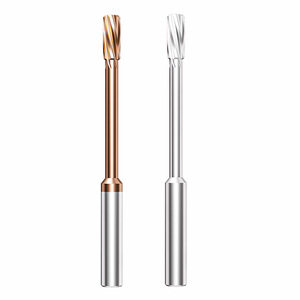
A deep dive into substrate physics, cutting edge dynamics, chatter suppression, and cost-per-hole optimization for B2B manufacturing engineers.
In modern high-speed CNC machining, chamfering, deburring, and countersinking are no longer viewed merely as secondary aesthetic touch-ups. They represent critical structural operations that directly influence localized stress concentrations, mechanical fatigue limits, and assembly tolerances. As global manufacturing transitions toward lightweight aerospace alloys (such as Titanium Ti-6Al-4V and Inconel 718) and high-silicon automotive aluminium castings, selecting the optimal carbide countersink manufacturer becomes a vital strategic decision for procurement directors and tooling engineers alike.
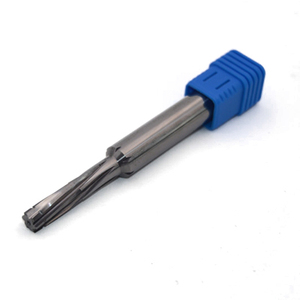
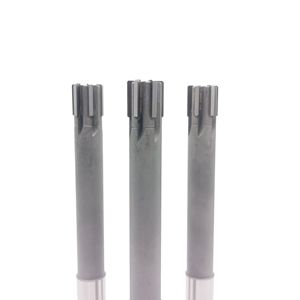
Historically, tool specifiers faced a tough dilemma: choose monolithic solid carbide for extreme hardness and rigidity, or select high-speed steel (HSS) for impact resistance on interrupted cuts. Today, leading Chinese tool manufacturers—incorporating decades of tungsten carbide sintering expertise alongside advanced European grinding techniques—have revolutionized this landscape. By leveraging sub-micrograin carbide substrates (grain size 0.4 µm to 0.6 µm) combined with specialized physical vapor deposition (PVD) coatings, modern carbide countersinks and chucking reamers deliver unparalleled edge toughness, high-thermal resistance, and exceptional wear life.
Tungsten Carbide (WC) grain distribution determines tool longevity. Premium Chinese manufacturers utilize micrograin WC with a 6% to 10% Cobalt (Co) binder matrix. Lower cobalt content (C-2 / K10-K20 class) maximizes abrasion resistance for abrasive cast irons and non-ferrous materials, while moderate cobalt formulations (C-5/C-6 / P20-P30 class) enhance impact toughness when countersinking alloy steels under interrupted feed conditions.
The primary mode of failure in countersinking is high-frequency chatter leading to micro-chipping along the cutting lip. Advanced 3-flute and 5-flute uneven spacing (variable index fluting) breaks harmonic resonance during conical engagement. By altering the peripheral angle between flutes (e.g., 118° / 121° / 121° instead of a symmetrical 120°), harmonic feedback is dampened, delivering a smooth, mirror-like chamfer finish (Ra < 0.4 µm).
Matching carbide grades and surface treatments to workpiece materials for maximum tool life and surface integrity.
| Workpiece Material | Recommended Substrate | Cobalt % | Optimal PVD Coating | Cutting Speed (SFM) | Primary Failure Mode Prevented |
|---|---|---|---|---|---|
| Carbon Steel (1045, 4140) | Sub-Micrograin (ISO P25) | 8.0% - 9.5% | AlTiN / TiAlN (Bronze) | 220 - 450 SFM | Thermal cratering & flank wear |
| Cast Iron (Grey & Ductile) | Micrograin C-2 (ISO K10-K20) | 6.0% - 6.5% | TiSiN or Uncoated | 180 - 320 SFM | Abrasive edge erosion |
| Stainless Steel (304, 316L) | Ultra-Fine Micrograin (ISO M20) | 10.0% | AlCrN (High Thermal Shield) | 120 - 250 SFM | Built-up edge (BUE) & work hardening |
| Aluminum & Copper Alloys | Sub-micrograin High Polish | 6.0% | DLC or Mirror-Polished Uncoated | 500 - 1200 SFM | Material galling & flute clogging |
| Titanium & Nickel Superalloys | Nano-grain Carbide (ISO S15) | 11.0% - 12.0% | TiAlSiN Nano-composite | 80 - 160 SFM | Notch wear & thermal cracking |
When specifying hole-making tools, mechanical designers must weigh structural rigidity against total tool cost. A solid carbide countersink or reamer provides maximum radial stiffness, minimizing deflection during high-feed CNC cycles. However, as tool diameter exceeds 12mm (0.5 inches), monolithic solid carbide becomes disproportionately expensive and vulnerable to catastrophic shank breakage under non-rigid setups.
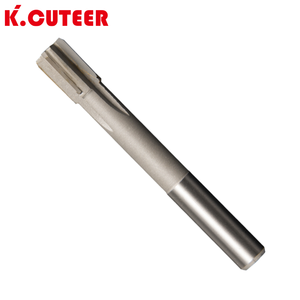
Conversely, carbide-tipped countersinks and reamers braze high-grade carbide cutting tips onto a heat-treated alloy steel body (such as 4340 or 8620 steel). This hybrid construction delivers two major technical advantages:
Strategic supply chain dynamics shaping how global OEMs evaluate and source cutting tools from China.
Global environmental regulations are driving machine shops away from flood coolants toward Minimum Quantity Lubrication (MQL) and dry cutting. Future carbide countersinks must feature advanced heat-shielding PVD coatings (such as AlCrN and Bronze PVD) with thermal stability up to 1100°C to withstand extreme friction without coolant breakdown.
Single-purpose tools are being rapidly replaced by multi-step combined tools (e.g., Drill-Countersink or Reamer-Countersink combinations). China's top carbide manufacturers utilize 5-axis CNC grinding systems (ANCA, Rollomatic, Walter) coupled with automated 3D optical inspection to turn around custom step tools within 7 to 10 days.
China holds over 80% of global raw tungsten reserves. Sourcing directly from top-tier Chinese manufacturers ensures raw material security, transparent batch traceability from APT (Ammonium Paratungstate) powder to finished tool, and immunity from global supply disruptions experienced by intermediate re-packagers.
Innovations in edge preparation, micro-geometries, and surface topography.
The performance gap between standard off-the-shelf countersinks and high-performance custom tooling often comes down to micro-edge conditioning. Raw ground carbide edges exhibit microscopic serrations left by diamond grinding wheels. Under heavy cutting loads, these stress risers initiate micro-chipping, leading to rapid tool degradation.
Leading Chinese manufacturers now incorporate automated drag-finishing and robotic brush-honing to create precisely controlled edge radii (typically 5 µm to 15 µm). Honed edges distribute cutting forces more evenly across the wedge angle, eliminating premature flaking of PVD coatings and extending tool life by 200% to 400% in tough alloy steels.
Furthermore, internal coolant-through channels—once limited to high-end drilling lines—are now increasingly applied to multi-flute countersinks and reamers. Delivering coolant directly to the chamfer interface flushes chips out of deep holes, prevents re-cutting of debris, and maintains temperature stability during automated high-volume production cycles.
Why leading global distributors and tier-1 machining facilities partner with our manufacturing network.
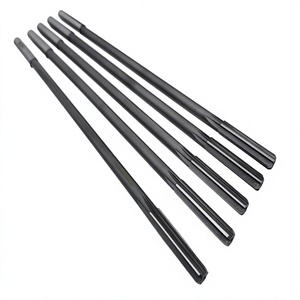
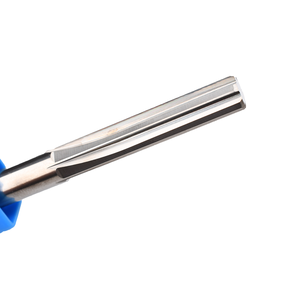
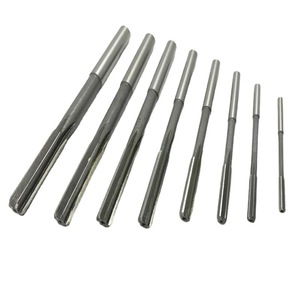
From micro-size solid carbide machine reamers (0.5mm) to heavy-duty horizontal directional drilling (HDD) fluted reamers and SAE port contour cutters (MS16142, MS33649), our production facilities cover the entire spectrum of precision rotary cutting tools.
Every batch of countersinks and reamers undergoes 100% optical profile verification using Zoller and Keyence inspection equipment. Dynamic runout is strictly held within 0.003mm (3 microns), ensuring accurate bore sizing and perfect hole concentricity.
Our application engineering team provides complete manufacturability reviews for special tool prints. Whether you require non-standard included angles (e.g., 60°, 82°, 90°, 100°, 120°), specialized shank flats (Weldon), Morse tapers, or custom step diameters, tools are built exactly to your drawing.
Eliminating multi-tiered distributor markups allows global buyers to access top-tier carbide tooling at direct factory prices. We support private labeling, laser-marking tool numbers, custom packaging, and flexible minimum order quantities (MOQs) for global partners.
Technical clarity on tolerances, speeds & feeds, carbide grade selection, and international ordering.
Contact our application engineering team to discuss your workpiece specifications, request technical drawings, or get direct wholesale factory pricing on custom and standard carbide tooling.