
Rock River Tool, Inc.Precision Cutting Tools
Technical Support(800) 345-8924
Talk to an Engineer Engineered for extreme wear resistance, micro-finish edge deburring, and high-speed CNC milling across alloy steel, stainless steel, cast iron, and non-ferrous substrates.
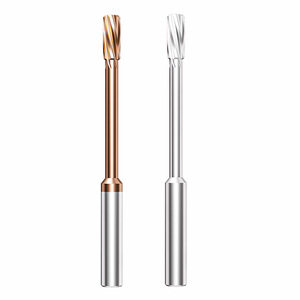
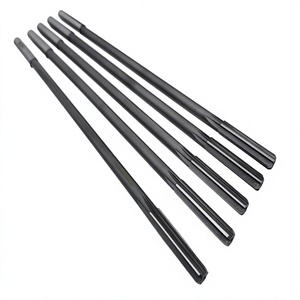
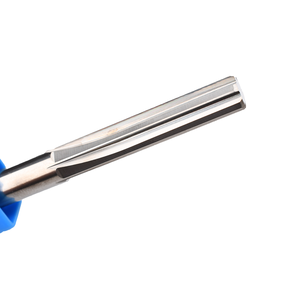
Combining advanced CNC grinding technology, domestic raw material supply chain control, and rigorous engineering protocols rooted in nearly four decades of cutting tool innovation.
In modern CNC manufacturing, deburring and chamfering are no longer secondary operations. Poorly executed edge breaks create stress risers, part rejection, and costly manual benchwork. As China's premier chamfer mill supplier, our manufacturing ecosystem bridges American tool-grinding engineering heritage (built on principles established since 1986) with high-capacity 5-axis CNC Swiss and German grinding centers (ANCA, Walter, and Rollomatic).
Our solid carbide chamfer mills utilize ultra-fine 0.4μm to 0.6μm tungsten carbide substrates bonded with 10% to 12% Cobalt matrices. This specific chemical layout delivers an exceptional balance of transverse rupture strength (TRS > 4,000 MPa) and hardness (HRA 92.5–94.0), ensuring that tiny tool tips withstand severe radial deflection forces without micro-chipping.
Unlike standard generic suppliers who apply a single carbide grade across all tools, our engineering setup matches carbide classes to specific workpiece materials: C-2 class (e.g., Grade 883) for abrasive cast iron and non-ferrous alloys, and C-5/C-6 class (e.g., Grade 370) for high-tensile steels and stainless steel alloys.
How advancements in multi-flute geometry, non-equal flute spacing, and nano-composite coatings are doubling tool life while eliminating chatter in automated CNC setups.
Traditional 2-flute or 4-flute chamfer cutters suffer from harmonic resonance during long-reach beveling or light radial cut depths, causing undesirable "chatter marks" on finished chamfers. Next-generation chamfer mills utilize differential flute spacing and variable helix angles.
By breaking up the cutting frequency, harmonic vibration is dissipated. This allows machinists to increase feed rates by up to 40% while maintaining mirror-like surface finishes (Ra < 0.2μm) along bevel edges.
Single-layer TiN and TiCN coatings are rapidly being replaced by multi-layer physical vapor deposition (PVD) nano-coatings like Titanium Aluminum Silicon Nitride (TiSiN) and Nanocomposite Aluminum Titanium Nitride (nACo).
These coatings feature oxidation resistance thresholds exceeding 1,100°C and nano-hardness levels up to 3,800 HV. They allow dry high-speed chamfering in hardened tool steels (up to 65 HRC) without thermal cracking or edge oxidation.
With the proliferation of 5-axis CNC machining centers and advanced CAM software (e.g., Mastercam, Esprit), chamfer tooling is moving from simple 2D edge breaks to complex 3D contour deburring and hole micro-chamfering.
Double-ended pointed chamfer mills and spherical chamfer cutters now enable undercut beveling, back-chamfering of internal cross-holes, and precision micro-beveling down to 0.05mm chamfer widths in medical devices and aerospace manifolds.
Empirical machining data compiled by application engineers to maximize tool longevity, eliminate burrs, and optimize cycle times across diverse metal groups.
| Workpiece Material Group | Hardness (HB/HRC) | Carbide Grade Class | Recommended Coating | Cutting Speed (SFM) | Feed per Tooth (IPT) |
|---|---|---|---|---|---|
| Low Carbon / Free Machining Steel (1018, 1215) | 120 - 180 HB | C-5 (Grade 370) | AlTiN / TiN | 350 - 550 SFM | 0.0015" - 0.0040" |
| Alloy Steel & Tool Steel (4140, D2, H13) | 28 - 45 HRC | C-6 (Submicron) | TiSiN / nACo | 220 - 380 SFM | 0.0010" - 0.0025" |
| Stainless Steel (304, 316L, 17-4PH) | 160 - 320 HB | Micrograin Carbide | AlTiN Nano | 180 - 300 SFM | 0.0008" - 0.0020" |
| Grey & Ductile Cast Iron (G25, Ductile 80) | 180 - 260 HB | C-2 (Grade 883) | TiAlN / Uncoated | 250 - 420 SFM | 0.0015" - 0.0035" |
| Aircraft Aluminum (6061-T6, 7075) | 60 - 150 HB | Ultra-Fine C-2 | Bright Uncoated / DLC | 800 - 1800+ SFM | 0.0020" - 0.0060" |
| Titanium & Superalloys (Ti-6Al-4V, Inconel 718) | 30 - 42 HRC | Nano-Grain C-6 | nACo / AlTiN | 90 - 160 SFM | 0.0005" - 0.0012" |
For chamfering operations, climb milling (down milling) is strongly recommended. Climb milling enters the material at maximum chip thickness and exits at zero thickness, reducing friction, heat build-up, and the formation of secondary burrs ("pushed metal").
When beveling thin-walled parts or sheet metal, maintain a radial engagement of less than 30% of the cutter diameter to prevent chatter and workpiece deflection.
Because a pointed chamfer mill operates across a varying diameter along its angle, calculating spindle RPM using the tool's major shank diameter will result in under-speeding at the tip, leading to tip shearing.
Always calculate RPM based on the Effective Diameter (D_eff) at the midpoint of the actual chamfer cut profile:
D_eff = D_tip + 2 * (Axial Cut Depth * tan(Half Angle)).
Navigating supply chain optimization, automated vendor-managed inventory, total cost of ownership (TCO) evaluation, and vendor consolidation for global industrial buyers.
Procurement officers in aerospace, automotive, and medical industries are abandoning low-bid purchasing in favor of Total Cost of Ownership (TCO) metrics. TCO accounts for cutter life, machine downtime during tool changes, and scrap rates caused by burr formation.
High-performance solid carbide chamfer mills manufactured with precision geometry deliver up to 300% longer edge retention, reducing cost per feature by up to 45% despite a higher initial unit price.
As part designs become more compact and intricate, off-the-shelf standard catalog tools frequently fail to meet specialized clearance requirements or step-chamfer profile demands.
China's leading tooling suppliers have integrated digital workflow pipelines—accepting CAD files (STEP/IGES), completing 3D simulation analysis within 24 hours, and delivering finished custom-ground carbide chamfer mills in 7 to 10 working days.
Global enterprise buyers require complete material traceability, ISO certification compliance, and stable tungsten supply security to insulate against international supply chain disruptions.
By partnering with direct Chinese manufacturers holding integrated tungsten powder refinement, pressing, sintering, and grinding facilities, purchasing teams secure uninterrupted production continuity and reliable lead times.
Clear, technical answers to common questions regarding chamfer tool selection, manufacturing tolerances, ordering options, and performance optimization.
Partner with China's top-tier solid carbide chamfer mill manufacturer. Contact our application engineering team today to receive detailed technical drawings, speed & feed charts, customized quotation packages, or sample tooling for trial testing.
Get Catalog