Rock River Tool, Inc.Precision Cutting Tools
Technical Support(800) 345-8924
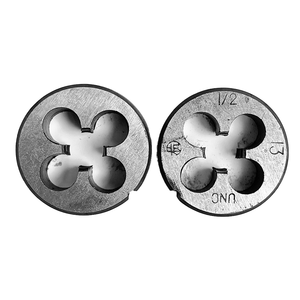
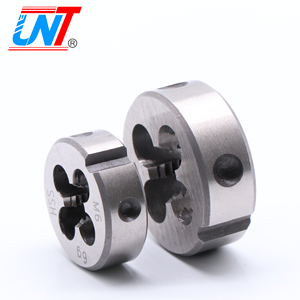
Talk to an Engineer High-speed steel (HSS-E), tungsten carbide, and alloy steel round, pipe, and manual threading dies designed for high-repeatability industrial thread generation.
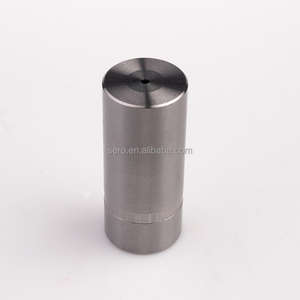
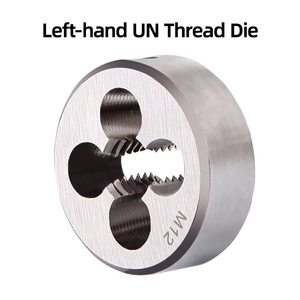
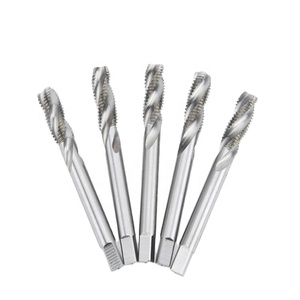
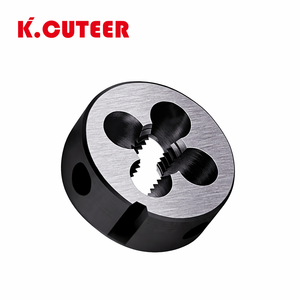
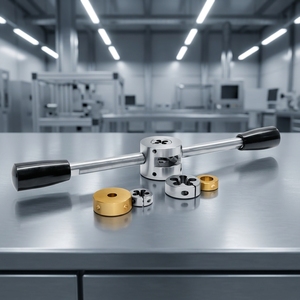
Founded on rigorous American manufacturing principles and expanding to supply tier-one automotive, aerospace, and energy sectors globally, our facility combines heritage toolmaking expertise with strict CE Certification and ISO 9001 quality management frameworks.
Unlike standard stockist exporters, we maintain end-to-end control over metallurgical selection, vacuum heat treatment, and precision CNC relief grinding. Our tools feature optimized rakes, polished chip flutes, and grade-matched cutting edges built specifically to withstand aggressive production cycles.
Solid carbide dies can be vulnerable to catastrophic micro-chipping under interrupted cuts or flexible machine setups. Our hybrid carbide-tipped and premium HSS-E (Cobalt-enhanced) round dies resolve this dilemma: the tough alloy steel matrix cushions dynamic vibration, while the micro-grain cutting teeth maintain edge sharpness up to 10x longer than carbon steel tools.
An authoritative analysis of thread cutting mechanics, die micro-geometry, surface coatings, and thermal stress management in modern high-speed threading.
Precision external thread cutting requires controlled relief angles on chamfer teeth to distribute the chip load evenly across entry lands. Our DIN 223 round dies incorporate gun-nosed or spiral entry flutes that push swarf ahead of the cutting zone, reducing thread galling and preventing tool breakage during high-speed lathe or manual tapping operations.
Standard bright-finished alloy dies suffer from Built-Up Edge (BUE) when machining ductile stainless steel or aluminum alloys. Applying Physical Vapor Deposition (PVD) Titanium Nitride (TiN) or Titanium Aluminum Nitride (TiAlN) creates a ceramic surface barrier with micro-hardness exceeding 3000 HV, dramatically reducing thermal transfer and friction coefficients.
Fastener manufacturing places extraordinary compressive strain on heading dies. Our tungsten carbide triangle main dies feature sub-micron carbide grain size (0.6 µm) combined with a high-cobalt binder phase (12-15% Co). This delivers high fracture toughness during intense impact loading while maintaining mirror-ground surface finishes (Ra < 0.1 µm).
Recommended surface speed (SFM) and lubrication guidelines for optimized thread tool life:
| Workpiece Material | Hardness Range | Recommended Die Steel / Grade | Optimal Cutting SFM | Recommended Coolant / Lubricant |
|---|---|---|---|---|
| Free-Machining Carbon Steels (12L14, 1018) | < 200 HB | HSS 6542 / Bright Alloy Steel | 25 - 40 SFM | Active Sulfur Cut Oil / Water Emulsion |
| Alloy & Tool Steels (4140, 4340, D2) | 200 - 320 HB | HSS-E Cobalt / C-5 Carbide Tipped | 15 - 25 SFM | Heavy Duty Synthetic Oil / EP Emulsion |
| Austenitic Stainless Steel (304, 316L) | < 250 HB | HSS-E TiAlN Coated / DIN 223 | 12 - 20 SFM | High-Chlorine / High-EP Neat Oil |
| Cast Iron (Class 30/40 Gray Iron) | 180 - 240 HB | C-2 (Grade 883) Carbide Tipped | 30 - 50 SFM | Dry Machining with Air Blast / Emulsion |
| PPR / Plastic Pipe Tubing | Shore D 70-80 | STC N40 HSS Round Roll Die | 40 - 70 SFM | Water Soluble Coolant / Dry Air |
| Exotic / High-Temp Superalloys (Inconel, Ti-6Al-4V) | > 340 HB | Micro-Grain Carbide Custom Die | 8 - 14 SFM | High-Pressure Neat Soluble Oil (MQL) |
Navigating supply chain evolution, smart tooling integration, and sustainability demands in global thread cutting technology.
Global original equipment manufacturers (OEMs) and contract machining shops are actively reducing machine setup times. Traditional solid circular dies requiring manual alignment screws are being rapidly replaced by modular, quick-change die holders with precision keyway indexing.
Future-ready factories prioritize die designs with integrated guide sleeves—such as our Multi-Size Manual Left-Hand Tube Threading Die Sets—which allow fast tool swapping without sacrificing concentricity or thread pitch accuracy.
Strict environmental regulations across Europe and North America are forcing machine shops to cut flood coolant consumption. Next-generation HSS-E and Carbide dies feature polished chip channels and tailored micro-topography designed specifically for dry or MQL near-dry machining environments, reducing hazardous fluid disposal costs by up to 60%.
Procurement teams in aerospace, automotive, and defense sectors are demanding complete batch traceability. Top-tier exporters now laser-etch QR codes and serial batch identifiers onto circular dies. This guarantees immediate access to material test reports (MTRs), hardness verification certifications, and European CE compliance documents.
With the expansion of hydrogen fuel infrastructure, ultra-high pressure (UHP) fluid systems, and specialized plumbing (PPR, STC pipe systems), thread profile specifications have become significantly tighter. Procurement strategies must align with suppliers capable of supplying custom pitch radii, tapered pipe dies, and reverse left-hand dies off-the-shelf.
Direct answers to common engineering, procurement, and tool selection inquiries from our application specialists.
CE Certification verifies that our threading tools comply with essential European health, safety, and environmental safety standards—specifically aligning with the Machinery Directive (2006/42/EC). For industrial buyers, this ensures dimensional consistency under operational load, low risk of brittle tool catastrophic failure, and full material safety compliance across global production lines.
Tungsten carbide tipped dies should be specified when threading highly abrasive materials (such as grey cast iron, high-silicon aluminum, or fiber composites) or for long production runs where tool longevity is critical. Standard High-Speed Steel (HSS 6542 or M2) dies offer greater fracture toughness under manual or variable spindle setups, whereas carbide tips deliver superior wear resistance and maintain tight pitch tolerances across thousands of continuous machine cycles.
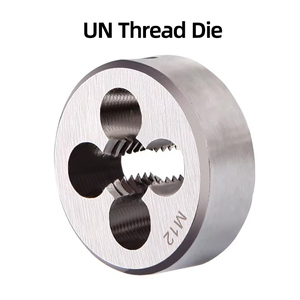
Our standard metric circular dies are ground to ISO 6g tolerance standards (with 6h and 4h available for precision aerospace applications). Metric fine and UN (UNC, UNF, UNEF) thread dies conform to ANSI/ASME B1.1 Class 2A external thread limits. Custom ground dies can be produced to satisfy tight Class 3A fit requirements.
Left-hand dies feature cutting teeth and chamfer angles ground in a counter-clockwise orientation. They are essential for applications where rotational torque would loosen standard right-hand threads—such as bicycle left pedals, rotating machinery shafts, gas cylinder valves, and specialized automotive wheel studs. They require machine spindles or manual stocks to be driven in reverse (counter-clockwise).
A common mistake in external thread cutting is turning the blank rod to the exact nominal major diameter. To prevent tooth binding and burring, the rod blank should be turned undersized by approximately 0.05mm to 0.15mm (depending on pitch). For example, when cutting an M10 x 1.5 thread, the blank rod diameter should be turned to approximately 9.85mm – 9.90mm prior to die engagement.
Yes. Our in-house engineering group routinely produces special tool geometry based on customer blueprints. Whether you require non-standard thread pitches, custom chamfer angles, specialized pipe dies (PPR, STC, NPT), or carbide cold-heading main dies, our technical team evaluates manufacturability, carbide grade selection, and heat-treat parameters before quoting.
Consult directly with our tooling application engineers to select the perfect CE-certified threading die, request bulk export pricing, or submit custom engineering prints.
Contact Us