
Rock River Tool, Inc.Precision Cutting Tools
Technical Support(800) 345-8924
Talk to an Engineer Explore our premium standard and custom-manufactured solid carbide and high-speed steel slitting saws and machine reamers, certified for European CE compliance and high-rigidity industrial CNC machining setups.
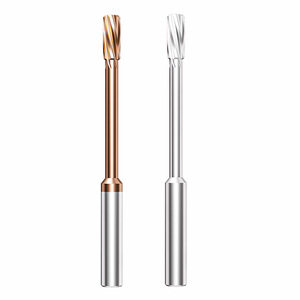
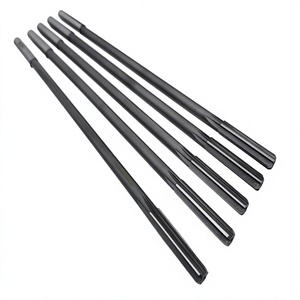
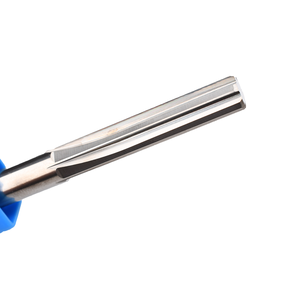
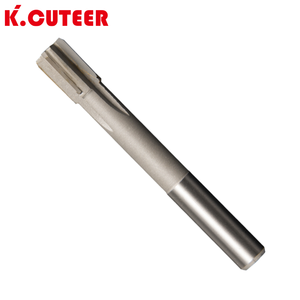
In modern high-speed metalworking and automated CNC manufacturing, an arbor-mounted slitting saw is far more than a simple grooving or parting blade. It is a highly optimized, dynamically balanced cutting device subject to massive centrifugal forces, intense thermal gradients, and complex chip-clearance mechanics. Securing CE Certification (Conformité Européenne) under the Machinery Directive 2006/42/EC and strict adhering to EN 847-1 safety standards for rotary cutting tools is a stringent validation of manufacturing integrity, rotational stability, and mechanical resilience.
As premier CE-certified slitting saw manufacturers and suppliers, our production processes combine raw material traceability with computer-controlled multi-axis CNC grinding (ANCA and Rollomatic platforms). By leveraging ultra-fine grain tungsten carbide substrates (grain size 0.4µm–0.6µm) and premium cobalt-alloyed High-Speed Steels (HSS-Co5 and M42), we manufacture slitting saw blades engineered for extraordinary dimensional stability and tool life.
Engineered with ground tooth forms including Type A (fine tooth), Type B (coarse tooth with chip breakers), and Type C (hz alternate chamfer tooth) to optimize chip ejection in deep slotting applications.
Strict total indicator reading (TIR) axial and radial runout controls held under 0.005mm (0.0002 in.), preventing side-friction scoring and micro-chipping on delicate workpieces.
Coated with multi-layer AlTiN, TiAlSiN, or DLC (Diamond-Like Carbon) coatings providing extreme surface hardness (up to 3600 HV) and reduced coefficient of friction (<0.25).
As global discrete manufacturing transitions toward high-speed machining (HSM), automated lights-out manufacturing, and near-net-shape alloy processing, the criteria for procurement officers and technical buyers are undergoing a fundamental transformation. Sourcing strategy has shifted from basic piece-price comparison to comprehensive Total Cost of Ownership (TCO) evaluation and continuous productivity gain tracking.
While HSS remains economical for low-batch manual slitting, high-volume production facilities are aggressively migrating toward solid carbide and brazed carbide-tipped slitting saws. Carbide allows 3x to 5x higher surface feet per minute (SFM) and up to 10x tool life extension in abrasive materials like grey cast iron, high-silicon aluminium, and heat-treated stainless steels.
Environmental regulations and sustainable manufacturing mandates across Europe and North America are driving the elimination of flooded flood coolants. Modern procurement specs prioritize slitting saws engineered with self-lubricating PVD coatings and polished chip clearance zones tailored for MQL and dry cutting environments.
Leading enterprise buyers now request tooling engraved with high-density DataMatrix 2D codes or equipped with RFID arbor collars. This enables automated CNC tool-setter scanning, precise wear tracking, and direct integration into Enterprise Resource Planning (ERP) inventory networks.
Global OEMs are shortening lead-times by partnering with direct manufacturers capable of providing complete ISO 9001:2015 quality documentation, raw material batch certifications, and fully customizable engineering modifications straight from internal grinding rooms.
| Substrate Category | Hardness / Toughness Ratio | Recommended SFM (Steel) | Best Workpiece Compatibility | Cost-Efficiency Benchmark |
|---|---|---|---|---|
| Solid Carbide (Sub-Micron) | Extreme Hardness (92-94 HRA) / Moderate Toughness | 250 – 650 SFM | Stainless Steel, Inconel, Titanium, Cast Iron | Lowest cost per cut in continuous high-volume CNC runs |
| Carbide-Tipped (Brazed) | High Edge Hardness / High Body Shock Absorption | 200 – 450 SFM | Interrupted cuts, heavy structural slotting, keyseats | Optimal for larger diameters (> 100mm) avoiding solid carbide fragility |
| HSS-Co5 (M35 Grade) | Balanced Hardness (65-67 HRC) / Superior Toughness | 80 – 180 SFM | Medium Carbon Steels, Brass, Soft Non-Ferrous Alloys | Maximum cost flexibility for short runs and manual milling machines |
| HSS-Co8 / PM-HSS | High Thermal Resistance (67-69 HRC) / High Toughness | 120 – 260 SFM | Tool Steels, Alloy Steels, Sticky Aluminium Alloys | Excellent compromise between brittleness and high wear resistance |
The manufacturing technology behind industrial slitting saws has evolved rapidly from basic stamping and conventional gear-hobbing methods to ultra-precise 5-axis CNC grinding and laser-assisted chip breaker engraving. As machine tool manufacturers introduce higher spindle RPMs and more rigid machine beds, cutting tool engineering must continuously advance.
By engineering non-equal or variable tooth spacing across the circumference of the blade, harmonic resonance and chatter vibrations are drastically suppressed. This enables deeper depth of cut (DOC) without compromising side-wall surface finish.
Advanced slitting saw geometries feature side-cutting teeth ground with radial relief and alternating bevel angles. This design eliminates material pinch, prevents blade binding in deep narrow slots, and efficiently ejects long continuous chips.
Incorporating laser-cut expansion slots filled with vibration-damping copper rivets or viscous damping polymers ensures thermal expansion during heavy cutting does not distort the flat plane of the blade core.
Subjecting raw steel bodies and carbide tips to deep cryogenic treatment (-196°C) eliminates residual retained austenite, transforms microstructures to stable martensite, and boosts wear life by up to 35%.
Built upon a strong legacy of precision cutting tool engineering dating back to 1986 (Rock River Tool heritage), our manufacturing facilities represent the pinnacle of high-accuracy grinding, induction brazing, and quality control. Unlike high-volume catalog distributors, we maintain direct engineering ownership over every stage of production.
Whether you require standard CE-certified slitting saws off the shelf or custom-engineered step-slitting tools, our technical capabilities include:
Our tools power mission-critical operations across diverse industrial sectors including Hydraulics & Fluid Power (manifold slotting), Aerospace Structural Machining, Automotive Powertrain Production, Swiss Medical Device Turning, and Tool & Die Manufacturing.
Comprehensive engineering insights curated by our senior application specialists to address critical procurement and operational questions.
Connect directly with our application tooling engineers today to review your workpiece drawings, optimize cutting parameters, or receive a fast direct quote on high-precision standard and special slitting tooling.