MADE IN USA  Carbide Tipped & Solid Carbide Cutting Tools — manufacturing since 1986
Mon–Fri 7:00am–5:30pm CDT · (800) 345-8924
CE Certified Compliance ISO 9001:2015 Precision Direct Factory Exporter

CE Certified PCD Insert Suppliers & Exporter

Industrial-grade Polycrystalline Diamond (PCD) cutting inserts & high-precision reaming solutions engineered for extreme wear resistance, non-ferrous alloy machining, composites, and high-silicon aluminum tooling.

CE Certified PCD & High-Precision Reaming Solutions

Explore our high-performance PCD-tipped inserts and solid carbide H7 precision reamers designed for CNC automated machining, automotive aluminum finishing, and aerospace structural component manufacturing.
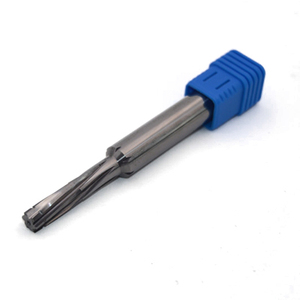
Solid Carbide Machine Reamers

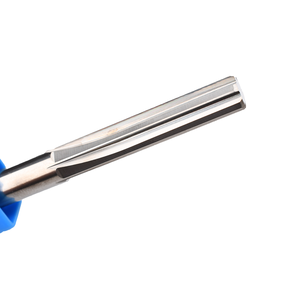
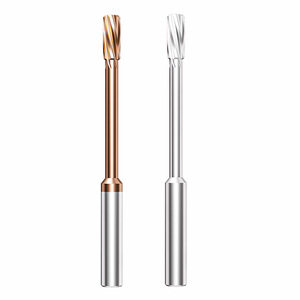
Solid Carbide Machine Reamers, Straight Shank & Spiral Flute Reamer 0.5~12.0 H7 Precision

  • Bronze Coating for machine finishing
  • Range: 0.5mm to 12.0mm OD
  • Tolerance: H7 Ultra-Precision
  • Substrate: Micro-grain Carbide
Contact Us
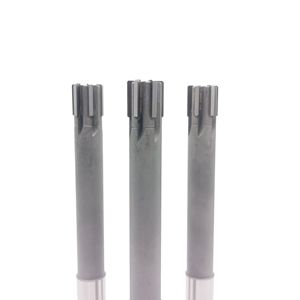
H7 HSS Machine Reamer

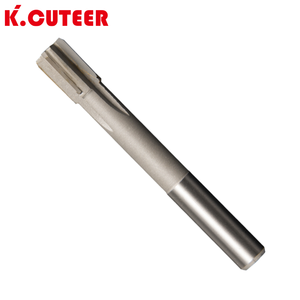
H7 HSS Machine Reamer Straight Shank Flute Deep Hole Hand Reaming Tool 55HRC

  • Hardness: Up to 55 HRC Workpieces
  • Tolerance Standard: H8 Precision
  • Cooling: Dry / Wet Compatible
  • Flute Geometry: 15-20 Angle Helix
Contact Us
Carbide Machine Reamer Coated

1mm to 20mm Carbide Machine Reamer Coated Straight Flute H7 Precision

  • Diameter: 1.0mm - 20.0mm
  • Coating: Multi-layer TiAlN / PVD
  • Flute Type: Heavy-duty Straight
  • Application: Cast Iron & Alloys
Contact Us
Custom High Speed Steel Reamer

Custom High-Speed Steel Straight Shank Machine Reamer H7/H8 Extended Length

  • Type: Non-Standard White Steel
  • Customization: Lengths to Print
  • Shank: Precision Cylindrical
  • Execution: High Repeatability
Contact Us
HDD Fluted Reamer

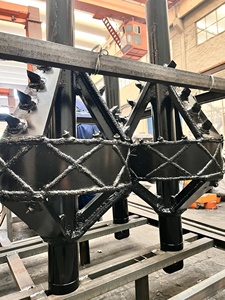
Horizontal Directional Drilling Machine Fluted Reamer for Heavy HDD Equipment

  • Application: Directional Drilling
  • Structure: Heavy-Duty Fluted
  • Wear Protection: Hardfaced Tipped
  • Compatibility: Major HDD Brands
Contact Us
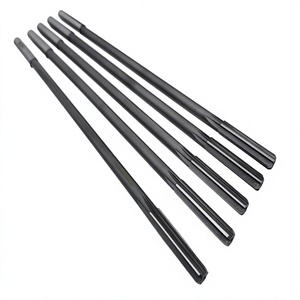
Straight Shank Manual Reamer

Straight Shank High-Speed Steel High-Precision Metal Machine & Manual Reamer

  • Cost-Effective Stock Reamers
  • Material: Premium Grade HSS
  • Operation: Machine & Manual
  • Tolerance: H7 / H8 Class
Contact Us
CNC Milling Reamer Tool Sets

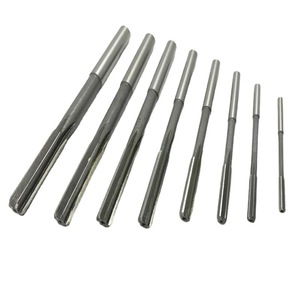
CNC Machine Milling Reamer / Carbide Spiral Flute Precision Reamer Tool Sets

  • Configuration: Complete Modular Sets
  • Helix Angle: Right Hand Spiral
  • Machine Interface: CNC Centers
  • Finish: Micro-Polished Flutes
Contact Us
20mm Carbide Reamer

Manufacturer Direct Wholesale 20mm Carbide Machine Reamer High Quality Alloy

  • Nominal Diameter: 20.0mm
  • Brazed Tip/Solid Substrate
  • Industrial Wholesale Supply
  • CE Certified Production
Contact Us
100% CE Compliant & Tested
0.5-30µm Diamond Grain Matrix
50+ Global Export Markets
< Ra 0.05 Achievable Surface Finish

Why Global Tier-1 Manufacturers Partner With Us

Combining high-pressure high-temperature (HPHT) synthesis with automated laser erosion to yield CE-certified diamond tooling with unprecedented edge sharpness and tool life longevity.

CE Certified Compliance

Our manufacturing protocols rigorously follow European Machinery Directive guidelines (EN ISO 12100). Every PCD insert batch undergoes dynamic stress validation, edge micro-fracture analysis, and certified dimensional verification.

Precision HPHT Diamond Sintering

Utilizing high-purity synthetic diamond crystals bonded to tungsten carbide substrates via cobalt-catalyzed HPHT processes. This creates an inter-crystalline diamond backbone that resists flank wear and thermal degradation.

3D Laser Ablation Edge Prep

Advanced 5-axis femtosecond laser processing enables chipbreakers, relief angles, and cutting edge radii (r_e) honed down to sub-micron accuracy without micro-cracking common in traditional diamond grinding wheels.

Industry Whitepaper: The Metallurgy & Physics of Polycrystalline Diamond (PCD) Tooling

Modern precision machining demands tooling capable of sustaining tight geometrical tolerances over tens of thousands of cycles under extreme thermal and mechanical loading. As non-ferrous materials—such as high-silicon aluminum alloys (A380, A390, ADC12), carbon-fiber-reinforced polymers (CFRP), metal-matrix composites (MMC), and engineering ceramics—dominate automotive lightweighting and aerospace structures, conventional carbide tooling fails due to rapid abrasive wear.

Polycrystalline Diamond (PCD) represents the apex of superabrasive cutting technology. Synthesized at pressures exceeding 6 GPa and temperatures above 1400°C, PCD inserts unite the extreme hardness of diamond (approx. 8000 HV) with the structural toughness of a cobalt-cemented tungsten carbide support base.

PCD Microstructural Grain Size Selection Matrix

Selecting the optimal PCD grain formulation is critical to balancing edge sharpness against impact resistance:

  • Coarse Grain (25µm - 30µm): Engineered for extreme abrasive wear environments, such as high-silicon aluminum (>14% Si) engine blocks and abrasive MMCs. Offers maximum wear life at high SFM (Surface Feet per Minute).
  • Medium Grain (10µm - 15µm): The universal industry standard balance. Provides high wear resistance combined with excellent edge integrity for general automotive powertrain finishing.
  • Fine / Sub-Micron Grain (0.5µm - 2µm): Designed for mirror-finish surface requirements (Ra < 0.05µm) in copper, acrylic, plastic optics, and low-silicon non-ferrous alloys where micro-chipping must be eliminated.
  • Bimodal Microstructure: Blends coarse and fine grains to optimize packing density, delivering high toughness without sacrificing surface quality.

Comparative Performance Matrix: PCD Inserts vs. Alternative Cutting Substrates

Substrate Material Hardness (HV) Thermal Conductivity (W/m·K) Max Cutting Speed (SFM - Al) Primary Wear Mechanism Relative Tool Life
PCD (Polycrystalline Diamond) 7,500 - 9,000 540 - 560 3,000 - 12,000+ Thermal Graphitization (>750°C) 20x - 50x Base
Uncoated Micro-grain Carbide 1,600 - 1,800 80 - 100 800 - 1,800 Abrasive Flank Wear / BUE 1x (Baseline)
CVD Diamond Coated Carbide 8,000 300 - 400 2,000 - 4,500 Film Delamination & Spalling 5x - 12x Base
CBN (Cubic Boron Nitride) 3,500 - 4,500 100 - 250 1,500 - 3,500 (Steels) Chemical Diffusion (in Ferrous) N/A (Ferrous Specific)

Thermal Kinematics & Graphitization Avoidance

A critical consideration when operating PCD tooling is thermal boundary management. Diamond undergoes allotropic transformation into graphite when exposed to oxygen at temperatures exceeding 700°C to 750°C. However, because PCD possesses extraordinarily high thermal conductivity (540 W/m·K—nearly five times that of carbide), heat is rapidly conducted away from the cutting zone into the chip stream and tool holder.

To maximize tool life, robust coolant strategies such as High-Pressure Coolant (HPC at >70 bar) or Minimum Quantity Lubrication (MQL) directed precisely at the tool-chip interface are highly recommended. This suppresses localized thermal spikes and prevents catalytic graphitization accelerated by iron or nickel contamination.

Strategic Procurement Trends & Technological Evolution in PCD Tooling (2025–2030)

As global manufacturing shifts toward electrification, sustainable supply chains, and digital automation, procurement executives must adapt their tooling sourcing strategies. Key trends shaping the next decade include:

1. The EV Powertrain Revolution & E-Mobility Alloy Demands

The transition from internal combustion engines (ICE) to electric vehicles (EV) has fundamentally transformed part geometry requirements. EV battery enclosures, motor housings, and inverter casings rely heavily on large-thin-walled aluminum die castings (e.g., AlSi9Cu3). Machining these components requires PCD inserts with complex 3D laser-ablated chipbreakers designed to break long-stringy chips at high feed rates without distorting thin wall structures.

2. Sustainable Tooling & Circular Re-Tipping Services

Global procurement teams are prioritizing Scope 3 carbon reduction goals. PCD tools offer a major sustainability advantage: the underlying tungsten carbide shank/body can be re-tipped and re-ground up to 3–5 times. OEM suppliers with accredited CE and ISO recycling frameworks allow companies to achieve a 60% reduction in total cost of ownership (TCO) while circularizing raw diamond and carbide materials.

3. Integration of Smart Tool Tracking & Industry 4.0 Traceability

Future-proof suppliers are embedding laser-etched DataMatrix codes and RFID micro-chips directly onto PCD insert shanks. This allows automated CNC tool setters to track real-time edge degradation, remaining tool life, re-grind history, and batch CE compliance certificates across smart factory ecosystems.

Frequently Asked Questions

Answers to common technical, compliance, and international ordering inquiries regarding our PCD inserts and custom reaming tooling.

What does CE certification mean for PCD insert cutting tools?

CE certification verifies that our cutting insert manufacturing processes, material integrity, and structural dynamic stability meet the strict safety, health, and environmental protection standards established under European Machinery Directives (EN ISO 12100). This guarantees structural reliability during ultra-high-speed spindle operations (>20,000 RPM) without risk of braze joint failure or shank delamination.

Why choose PCD inserts over Solid Carbide or CVD Coated tools for non-ferrous materials?

While solid carbide tools are adequate for short production runs, PCD tools provide 20 to 50 times longer wear life when machining abrasive materials like high-silicon aluminum, copper, brass, and composite materials. PCD maintains razor-sharp cutting edges without built-up edge (BUE) formation, yielding tighter dimensional tolerances (H7/H6) and superior surface finishes (Ra < 0.1µm) over mass production cycles.

Can PCD inserts be used for machining steel or cast iron?

No. PCD is not recommended for ferrous metal machining (steel, stainless steel, ductile iron). At temperatures above 700°C, the iron atoms act as a catalyst that rapidly converts the diamond structure back into carbon/graphite, causing instant tool failure. For hard ferrous machining, Cubic Boron Nitride (CBN) inserts or coated solid carbide reamers must be utilized instead.

What custom options and tolerances can be requested for non-standard tooling?

We offer complete custom engineering to customer prints. This includes non-standard ISO insert geometries (CCMT, DCMT, VCGT, TNMG, etc.), custom nose radii, specialized 3D chipbreaker geometries, step reamer configurations, coolant-through channels, and modified shank designs (Morse taper, straight shank with flats, or cylindrical). Tolerances down to ±0.002mm can be consistently held.

What is your typical lead time and minimum order quantity (MOQ) for international orders?

Standard catalog PCD inserts and reamers are stocked for immediate export dispatch (3–5 business days). Custom engineered or non-standard tools generally require 2 to 3 weeks for CAD design, laser erosion, braze assembly, and inspection. We accommodate sample evaluation orders with MOQs as low as 5 to 10 pieces for standard insert geometries.

Optimize Your Production Efficiency With CE Certified PCD Tooling

Partner directly with an established exporter and engineering team. Send us your CAD drawings, target workpiece specifications, or current tooling wear challenges for an expert technical review and quotation within 24 hours.