Rock River Tool, Inc.Precision Cutting Tools
Technical Support(800) 345-8924
Talk to an Engineer 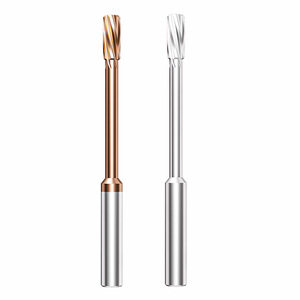
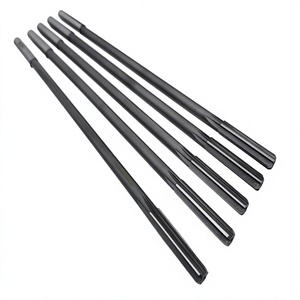
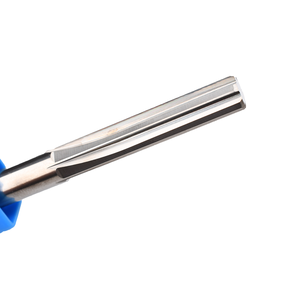
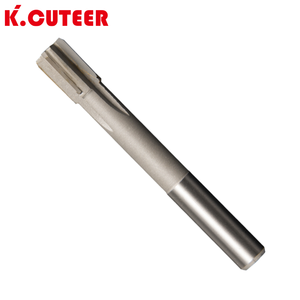
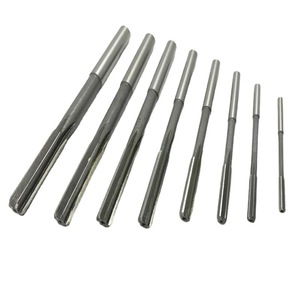
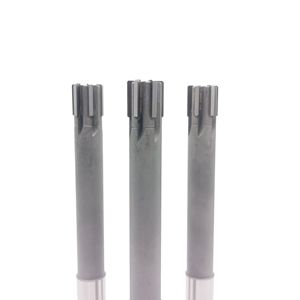
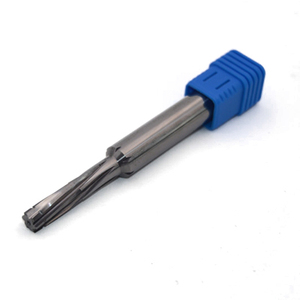
Modern advanced manufacturing requires sub-millimeter precision across challenging substrates including titanium alloys, high-temp nickel superalloys, hardened tool steels (up to 65 HRC), and composite matrices. As a leading CE Certified Micro Mill Manufacturer & Supplier, our engineering group combines rigorous metallurgical research with state-of-the-art multi-axis CNC grinding to manufacture cutting tools that redefine tool life, dimensional accuracy, and surface topography.
Micro-milling and micro-reaming (spanning diameters from 0.1mm to 12.0mm) present unique mechanical dynamics compared to macro-scale machining. When edge radii approach the feed per tooth dimension, cutting physics shifts from traditional chip shearing to material plowing and severe friction. Without precise micro-geometry, tool deflection, premature flank wear, and catastrophic thermal breakdown occur rapidly. Our CE-compliant micro-milling cutters and solid carbide machine reamers are specifically designed to counteract these high-stress micro-machining phenomena.
Utilizing sub-micron tungsten carbide grains (0.4µm – 0.6µm) with optimized cobalt dispersion (6%–12%), our tools achieve high transverse rupture strength combined with extreme hardness (up to 93.5 HRA).
Every tool undergoes stringent quality verification using optical laser measurement systems to guarantee compliance with European Norms (EN) and international mechanical manufacturing standards.
Controlled edge micro-honing eliminates microscopic grinding burrs, lowering cutting forces by up to 25% and preventing chip welding during high-speed micro milling.
Selecting the optimal substrate, geometry, and surface coating is critical for maximizing tool longevity and maintaining strict runout tolerances (<0.002mm). The table below outlines key technical differences between micro end mills, solid carbide reamers, carbide-tipped tools, and high-speed steel (HSS) reaming tools across industrial applications.
| Tool Category | Substrate Material | Hardness (HRC / HRA) | Optimal Cutting Speed (SFM) | Tolerance Class | Primary Industrial Use-Case |
|---|---|---|---|---|---|
| Solid Carbide Micro Mill | Nano-Grain Carbide (0.4µm) | 65 - 68 HRC (92.5 HRA) | 350 - 800 SFM | h5 / h6 Diameter | 3D Micro-Molds, Aerospace Components, Medical Implants |
| Spiral Flute Carbide Reamer | Premium Micro-Grain C2 / C5 | 60 - 64 HRC (91 HRA) | 150 - 350 SFM | H7 Precision (0.5-12mm) | Blind Hole Finishing, Hydraulics, High-Accuracy Valves |
| Carbide Tipped Machine Reamer | Brazed Carbide / Alloy Body | Cutting Edge: 90 HRA | 100 - 250 SFM | H7 / H8 Precision | Interrupted Cuts, Cast Iron Bodies, Cored Castings |
| Coated HSS Deep-Hole Reamer | M2 / M35 High-Speed Steel | 55 - 62 HRC | 40 - 120 SFM | H8 Precision | Ductile Iron, Structural Steels, Dry Cooling Operations |
| HDD Fluted HDD Reamer | Forged Alloy + Hardfaced Carbide | 50 - 58 HRC Core | Low RPM High Torque | Custom Bore | Trenchless Underground Directional Drilling Machinery |
As global industries transition toward Industry 4.0 automation, high-speed micro-machining, and eco-friendly manufacturing practices, procurement managers and tooling buyers face evolving sourcing demands. Understanding these macro trends ensures long-term operational resilience and lower Total Cost of Ownership (TCO).
Standard off-the-shelf tools frequently fail to meet specialized micro-feature profiles. Modern buyers prioritize suppliers capable of delivering custom step micro-mills and modified reamers within accelerated lead times. Utilizing 3D optical simulation software and 5-axis CNC grinding centers, custom flute geometries, non-standard neck lengths, and tailored corner radii can be engineered from CAD prints in days rather than weeks.
Environmental regulations and coolant disposal costs are driving shops toward MQL and dry micro-machining. This shift requires micro tools with advanced physical vapor deposition (PVD) nano-coatings—such as Bronze PVD, TiAlN, and AlCrN—capable of enduring thermal spikes exceeding 900°C without sacrificing film adhesion or chemical stability.
European and North American OEMs increasingly require mandatory CE Certification and ISO 9001 compliance across all cutting tool consumables. Certified micro mill manufacturers provide full material batch heat-treat traceability, optical inspection certification, and standardized tolerance documentation for every production lot.
The micro-tooling industry is undergoing rapid technological advancements. Key technical breakthroughs currently shaping micro-mill design include:
With lineage extending back to 1986, our manufacturing enterprise has consistently delivered high-performance cutting tool solutions to global industry leaders. Our specialized grinding facilities integrate modern multi-axis CNC grinding machines (Rollomatic, ANCA) paired with high-magnification non-contact optical measuring stations (Walter Helicheck).
From custom step reamers to extended reach micro end mills, our engineering team evaluates part prints, workpiece hardness, and machine specs to design optimized tool geometries.
Every micro tool is inspected for diameter tolerance, concentricity, helix angle accuracy, and edge sharpness to ensure zero-defect delivery.
We partner with tier-1 distributors, contract machining facilities, and OEM assembly lines worldwide, providing reliable stock management and technical support.
Contact our application engineering team today to discuss high-precision micro mills, custom H7/H8 reamers, volume procurement pricing, or custom OEM designs tailored to your production parameters.
Send an Inquiry