
Rock River Tool, Inc.Precision Cutting Tools
Technical Support(800) 345-8924
Talk to an Engineer Engineered for H7/H8 tolerance precision, high thermal stability, and maximum material removal rates across CNC milling and automated drill press applications.
In modern high-speed CNC machining, automated transfer lines, and heavy-duty drilling operations, the interface between the machine spindle and the cutting tool represents a critical single point of performance. Drill chucks and toolholding systems compliant with European CE safety and quality standards (Machinery Directive 2006/42/EC and EN ISO 12100) are no longer optional—they are mandatory operational safeguards for global manufacturers.
This industry report explores the engineering intersection between CE-certified drill chuck manufacturing, runout tolerances (Total Indicated Runout - TIR), carbide-tipped vs. solid carbide shank interfaces, and optimized hole finishing reamer geometries (ISO H7/H8 tolerances).
Technical Insight: A concentric runout variation of just 0.010 mm in a drill chuck increases cutting force asymmetry by up to 30%, causing accelerated edge wear on carbide reamers and reducing tool life by over 45% under continuous high-feed machining.
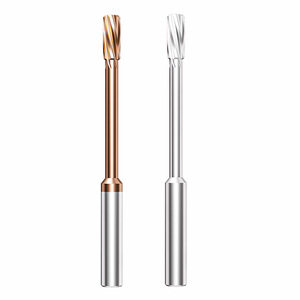
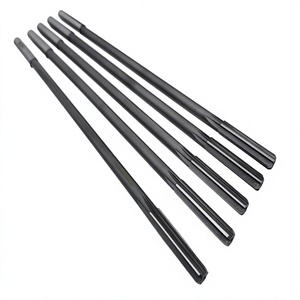
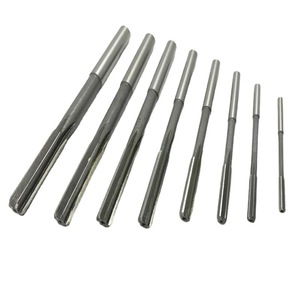
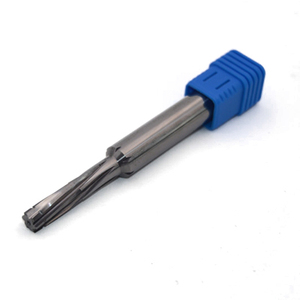
Drill chucks manufactured under accredited CE environments undergo rigorous structural stress analysis, dynamic balance verification (typically dynamically balanced to G2.5 at 20,000–25,000 RPM), and hardened jaw alloy testing. When paired with precision machine reamers—ranging from micro-bore 0.5mm solid carbide straight shank units to 20mm bronze-coated spiral flute reamers—chucking stability determines hole cylindricality, surface finish (Ra < 0.4 μm), and chatter suppression.
| Chucking / Tooling Interface Type | Clamping Mechanism | TIR Accuracy | Optimal Machining Application | CE Safety Compliance Metric |
|---|---|---|---|---|
| Keyless Precision Drill Chucks | Self-tightening ball bearing thread | ≤ 0.030 mm | General CNC drilling, jobber drills, light reaming | EN ISO 12100 Mechanical Safety |
| High-Torque Keyed Industrial Chucks | Bevel gear key engagement | ≤ 0.050 mm | Heavy-duty drill presses, rough boring, cast iron | Directive 2006/42/EC Structural Integrity |
| Hydraulic Expansion Chucks | Fluid pressure membrane compression | ≤ 0.003 mm | H7/H8 Carbide Reaming, high-speed finish milling | High-Pressure Fluid Safety & G2.5 Balance |
| Shrink-Fit Toolholding Systems | Thermal induction contraction | ≤ 0.003 mm | Deep-hole reaming, aerospace alloy finishing | Thermal Overload & Locking Security |
Rooted in nearly four decades of industrial cutting tool engineering since 1986, our toolmaking facility combines automated grinding cell precision with application-specific carbide grade synthesis. Standardizing workholding chucks and machine reamers requires total control over three foundational pillars: substrate choice, braze joint integrity (for carbide-tipped designs), and coating physics.
Utilizing C-2 class submicron carbide (such as 883 grade) for non-ferrous and cast iron applications, alongside C5/C6 class premium tungsten-cobalt matrices (370 grade) engineered specifically for high-tensile steels and exotic alloys.
Application of multi-layer Bronze PVD, TiAlN, and AlCrN physical vapor deposition coatings engineered to reduce friction coefficients below 0.35, preventing Built-Up Edge (BUE) on gummy materials and dry-cooling setups.
Every drill chuck, machine reamer, and custom extended tool undergoes 100% optical CMM inspection. Concentricity, pitch diameter, flute back-taper, and clamping torque tests are fully documented and traceable.
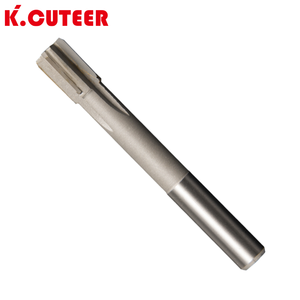
Purchasing managers and manufacturing engineers frequently evaluate whether to standardize on solid carbide machine reamers or alloy steel body carbide-tipped reamers. The strategic choice relies primarily on hole diameter, machine tool rigidity, and the nature of the cut:
As global manufacturing pivots toward Industry 4.0 automation, electric vehicle (EV) powertrain production, and stringent ESG compliance, procurement directors must align supply chains with next-generation tooling trends.
Future CE compliance standards are moving toward real-time telemetry within workholding equipment. Smart drill chucks equipped with piezoelectric sensors broadcast clamping force metrics, temperature rise, and vibration harmonics directly to the CNC controller, triggering predictive maintenance alerts before tool breakage occurs.
EV motor housings, hydraulic servo valves, and medical robotic actuators demand bore tolerances tighter than traditional H7 standards. Manufacturers are adopting specialized right-hand spiral, left-hand cut carbide reamers combined with high-precision hydraulic chucking to achieve H5 and H6 hole tolerances consistently across mass production runs.
Environmental regulations across the EU and North America are forcing shops to reduce flood coolant consumption. Modern machine reamers—such as our 55HRC HSS deep-hole reamers and bronze-coated solid carbide series—are specifically optimized with chip-breaker geometry for Minimum Quantity Lubrication (MQL) and dry compressed-air cooling.
B2B buyers are consolidating suppliers, preferring manufacturers capable of delivering both standard catalog items off-the-shelf and fast-turnaround custom non-standard tools (extended shanks, stepped diameters, special chamfer angles) under a single ISO/CE quality umbrella.
Direct answers from our senior application engineering team regarding CE compliance, tool reconditioning, chuck selection, and feed/speed optimization.
A CE-certified drill chuck complies with the European Union's Machinery Directive 2006/42/EC and relevant harmonized standards such as EN ISO 12100. Certification guarantees structural integrity under maximum rated clamping torque, burst-resistance during high-RPM rotation, safety mechanism against jaw ejection, and clear technical documentation regarding operating limits.
For optimal surface finish and dimensional accuracy, leave approximately 0.15mm to 0.25mm (0.006" to 0.010") of stock on diameter for reamer sizes under 6mm, and 0.25mm to 0.38mm (0.010" to 0.015") for reamer sizes between 6mm and 20mm. Leaving too little stock causes the reamer to burnish or rub rather than cut, leading to rapid edge wear.
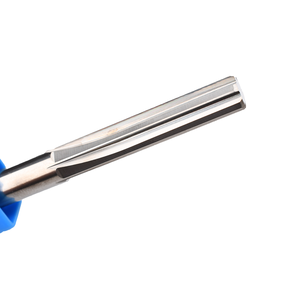
Straight flute reamers are ideal for general-purpose blind hole or continuous thru-hole reaming in non-chip-packing materials. Spiral flute reamers (typically right-hand spiral, right-hand cut or left-hand spiral for thru-holes) are mandatory for holes with keyways, splines, cross-bores, or when reaming ductile materials where aggressive chip evacuation is required to prevent hole scratching.
Yes. We regularly produce modified and fully custom machine reamers—including non-standard pilot diameters, extended reach shanks, custom step chamfers, special Morse tapers, and tailored carbide grade tips. Our engineering team reviews your part print for manufacturability before quoting.
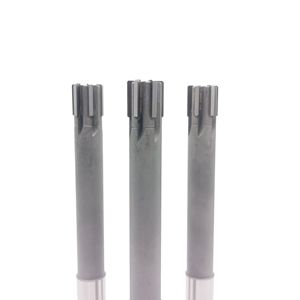
Runout causes unequal chip load distribution among the reamer's cutting teeth. For instance, if a 6-flute reamer has 0.02mm of runout in the drill chuck, only 2 or 3 teeth perform the majority of cutting. This causes premature tooth chipping, bell-mouthed hole geometry, and chatter marks on the workpiece bore surface.
Generally, carbide reamers run at 1.5x to 2x the Surface Feet per Minute (SFM) of high-speed steel reamers, but at double the feed per revolution (FPR). Typical starting points: Free-machining steel: 120-180 SFM; Cast Iron: 100-150 SFM; Aluminium alloys: 200-400 SFM. Always maintain a steady, positive feed rate to prevent work hardening.
Partner with an established cutting tool manufacturer. Contact our technical application team for custom tool engineering, bulk OEM chuck sourcing, or immediate delivery on standard H7/H8 carbide reamers.