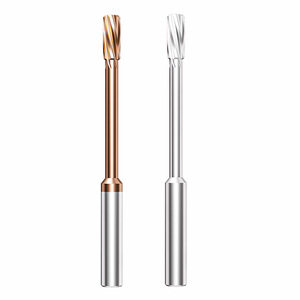
Solid Carbide Machine Reamers, Straight Shank & Spiral Flute Reamer 0.5~12.0 H7 Precision, Bronze Coating for Machine Finishing
- Grade: Micrograin Solid Carbide
- Tolerance: DIN 1420 H7 Precision
- Coating: Nano-Bronze PVD Coated

Engineered to ISO 286 H7/H8 tolerance standards. Compliant with EU CE Safety Directives for high-speed CNC finish boring across hardened steel, cast iron, and non-ferrous alloys.
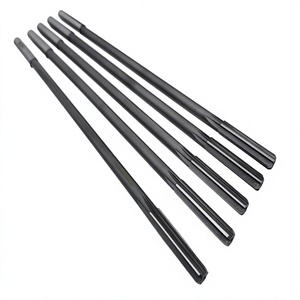
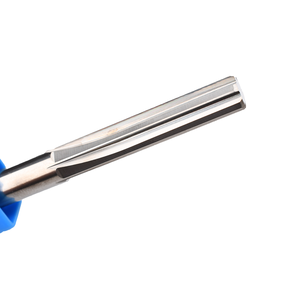
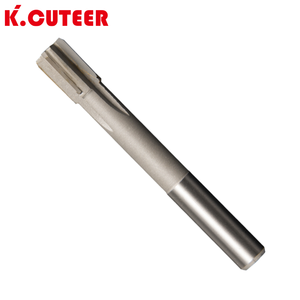
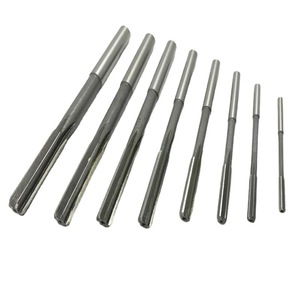
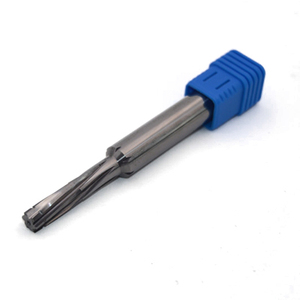
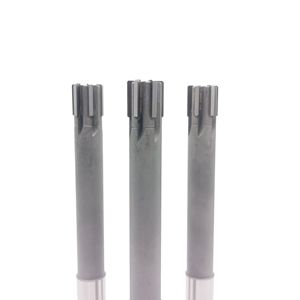
In modern high-speed CNC machining, achieving exact hole geometry—encompassing roundness, straightness, cylindrical accuracy, and micro-inch surface finish—is a crucial bottleneck in aerospace, automotive, hydraulic valve block, and medical device manufacturing. Reaming serves as the definitive finishing step post-drilling. As a global CE Certified Carbide Reamer Supplier & Exporter, our manufacturing paradigm unites tungsten carbide grain refinement technology with precision CNC grinding to satisfy rigorous DIN, ISO, and ANSI tolerance callouts.
Selecting the optimal reamer requires evaluating the mechanical trade-offs between solid carbide, carbide-tipped, and high-speed steel (HSS) constructions. While solid micrograin tungsten carbide (grain size 0.4µm - 0.8µm) provides superior elastic modulus (~600 GPa) and extreme hot-hardness up to 1200°C, carbide-tipped tool configurations leverage an alloy steel shank to isolate thermal expansion while insulating against catastrophic shock loading during interrupted cuts.
Below is a comprehensive engineering matrix comparing standard tooling choices under real-world machine shop production parameters:
| Performance Indicator | Solid Carbide Reamer | Carbide-Tipped Reamer | HSS / HSS-Co Reamer |
|---|---|---|---|
| Cutting Speed Range ($V_c$) | High (60 – 180 m/min) | Medium-High (40 – 120 m/min) | Low-Medium (12 – 35 m/min) |
| Rigidity & Young's Modulus | Highest (~580-650 GPa) | Balanced (Steel Core + Carbide Edge) | Moderate (~210 GPa) |
| Interrupted Cut Tolerance | Requires High Rigidity Setup | Excellent (Steel Absorbs Shock) | Maximum Impact Resistance |
| Achievable Hole Accuracy | IT6 – IT7 (Micron Precision) | IT7 – IT8 Standard | IT8 – IT9 Standard |
| Thermal Wear Resistance | Superior (Up to 1100°C) | High at Cutting Edge | Degrades above 550°C |
| Cost-per-Bore Ratio (Large Dia.) | Higher Initial Investment | Highly Economical (>12mm) | Lowest Initial Cost |
Variable flute spacing interrupts harmonic frequency accumulation, eliminating reamer chatter marks and maintaining pristine hole roundness under aggressive feeds.
Precision ground 45° entry chamfer combined with a 1° to 2° secondary taper ensures progressive chip thickness reduction, protecting cutting edges against premature micro-chipping.
Full compliance with European Directive 2006/42/EC regarding metal-cutting tool material integrity, dynamic balance certification, and operational safety metrics.
As smart manufacturing, automation, and green transition initiatives reshape global production lines, procurement teams are updating their tooling criteria.
Modern CNC reaming relies on through-coolant channels directed at each cutting edge. Pressurized coolant flushing (30 to 70 bar) rapidly evacuates micro-chips, prevents re-cutting, lowers cutting zone temperatures, and dramatically improves tool longevity during deep-hole reaming.
Transitioning from basic TiN coatings to nano-structured AlTiN, TiSiN, and Bronze PVD matrices allows carbide reamers to process hardened die steel (up to 65 HRC) and dry-machine sticky materials like titanium alloys and stainless steel without built-up edge (BUE).
Supply chain security concerns and corporate ESG mandates make closed-loop carbide scrap recovery standard practice. Buyers prefer suppliers who provide circular recycling pathways for worn tungsten carbide tools, reducing raw virgin metal dependence.
Over the next decade, precision reamer engineering will focus on intelligent, sensor-monitored cutting ecosystems and specialized edge geometries:
Utilizing finite element analysis (FEA) to sculpt variable helix pitch, optimized rake angles, and sub-micron edge hones tailored for exotic superalloys (Inconel, Hastelloy).
Engineering specialized chip pockets and polished oil grooves designed for near-dry machining environments, reducing lubricant consumption by over 95% in automotive plant environments.
Replacing mechanical diamond grinding wheels with 5-axis picosecond laser ablation to cut pristine PCD and ultra-fine carbide edges with zero micro-fracturing.
Embedding high-temperature RFID chips into reamer shanks to track real-time tool wear data, regrind history, runout profiles, and total bore count inside automated Industry 4.0 cells.
Combining 38+ years of precision tool manufacturing heritage with international trade compliance, technical support, and strict quality assurance protocols.
Equipped with Swiss and German ANCA and Rollomatic 5-axis CNC grinding machines, delivering sub-micron repeatability, symmetric flute indexation, and flawless radial margin relief.
Every reamer undergoes automated Zoller and Walter laser measurement scans for outer diameter, cylindrical runout (<0.002mm), rake angle, and surface roughness before shipment.
Providing custom non-standard reamer engineering to drawing prints within 7-10 business days. Exporting to over 45 countries with complete CE and ISO 9001 compliance documentation.
Technical guidance for manufacturing engineers, machinist supervisors, and procurement officers.
Get factory-direct pricing, detailed technical specifications, CE compliance certificates, and CAD engineering support from our master grinding team.