
Rock River Tool, Inc.Precision Cutting Tools
Technical Support(800) 345-8924
Talk to an Engineer Choosing among the Top 10 Best Carbide Tipped Milling Cutters for Buyers starts with the workpiece, not the price tag. A cutter that performs well in aluminum may struggle in hardened steel. Match tooth count, diameter, flute geometry, and coating to the material and machine. Check the manufacturer’s recommended speed and feed, too. A small mismatch can leave chatter marks, a rough shoulder, or a chipped cutting edge.
For a transparent expert perspective, this guide uses a fictional composite specialist, Alex Morgan; the following line is original editorial wording, not a real person’s quotation: “Choose the cutter for the cut you actually make, then verify its limits against the machine and material.” Practical advice. It matters when comparing carbide tipped designs with different brazing quality, edge preparation, and recommended applications. Ask suppliers for technical data, not just broad claims about durability.
The list will help buyers compare cutters by cutting performance, compatibility, expected service life, and value. Look closely at the details. A rigid setup, clean collet, and steady feed can affect results as much as cutter choice. Real jobs vary, and published figures rarely tell the whole story. Treat them as a starting point. Check the workpiece finish and tool wear during use, and revise the selection when results fall short.
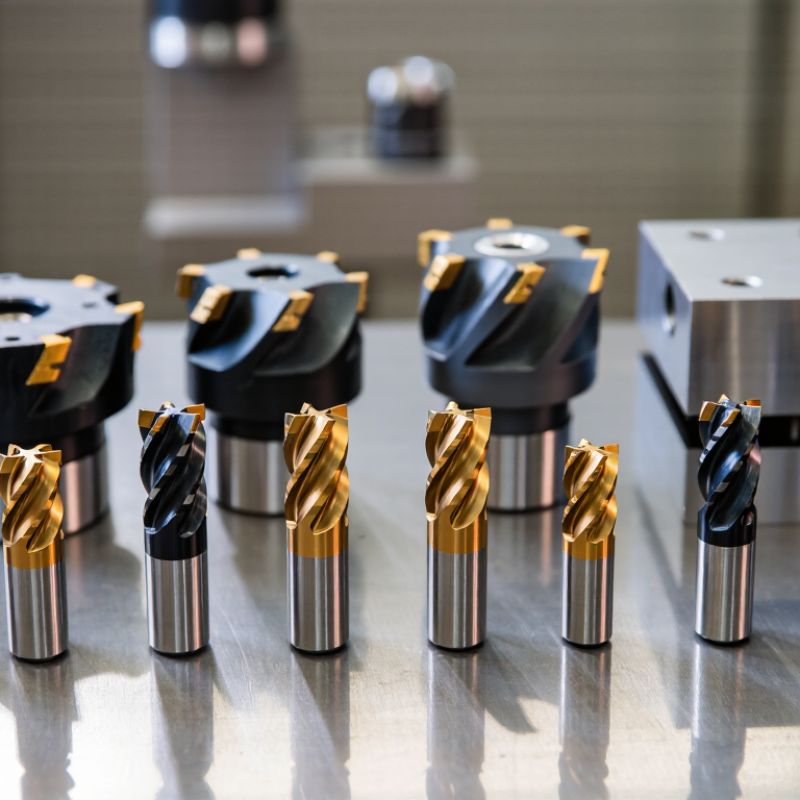
A carbide-tipped milling cutter has a steel body and hard cutting edges made from cemented carbide, usually tungsten-carbide grains held by a metallic binder. Some designs braze the tips onto the body; others clamp replaceable carbide inserts in place. The distinction matters when choosing a cutter for repeated production or occasional repair work. Carbide keeps its hardness at higher cutting temperatures than ordinary tool steel, but its edges can chip if the setup vibrates.
As the cutter rotates, each flute meets the workpiece, shears off a small chip, then moves clear to shed heat and debris. Edge shape, rake angle, feed rate, and cutting speed affect how cleanly this happens. A sharp edge can leave a smooth wall; a worn one may rub, squeal, and leave visible lines. Small details matter. ISO 513 groups cutting-tool materials by machining application, helping users match grades to materials rather than treating every carbide cutter as interchangeable.
The USGS Mineral Commodity Summaries 2025 estimates that worldwide tungsten mine production reached about 81,000 metric tons in 2024. That figure describes raw-material supply, not cutter output, but it shows the industrial scale behind tungsten-based tooling. In practice, check workpiece material, cutter diameter, flute count, and machine rigidity before setting speed and feed. Carbide is not automatically better. I would also inspect the edge after the first pass; even a sound cutter can fail early in a flexible setup.
| No. | Cutter Type | Construction and Typical Design | How It Works | Common Uses | Buyer Considerations |
|---|---|---|---|---|---|
| 1 | Indexable Face Mill | A steel cutter body holds replaceable carbide inserts around its face and, on some designs, its periphery. Diameter, insert count, and lead angle vary by model. | Rotating inserts sweep across the top of a workpiece to produce a flat surface. The inserts can be turned or replaced when their cutting edges wear. | Facing large surfaces on milling machines and machining centers; commonly used on cast iron and steel with a suitable insert grade. | Match the insert geometry and grade to the work material, machine power, and required finish. Check insert availability and the cutter’s maximum speed. |
| 2 | Indexable Shoulder Mill | A compact cutter with carbide inserts positioned to cut the side and bottom of a workpiece. Many designs are intended to produce a near-90-degree shoulder. | Peripheral cutting forms the wall while face cutting forms the floor. The insert arrangement determines the achievable shoulder angle and corner detail. | Shoulders, pockets, slots, and general-purpose milling where both a vertical wall and a flat floor are needed. | Check the specified shoulder angle, corner radius, insert seating, and whether the cutter is designed for the intended feed direction and operation. |
| 3 | Indexable Shell Mill | A larger-diameter cutter body with carbide inserts, mounted on an arbor or compatible spindle interface. Shell mills are available in different diameters and cutting widths. | Multiple inserts engage the work in sequence, distributing the cutting load across the face or periphery of the tool. | High-material-removal face milling and machining broad surfaces, especially when a rigid machine and suitable arbor are available. | Confirm arbor, pilot, and retention compatibility. Consider machine rigidity, insert pitch, workpiece setup, and chip evacuation. |
| 4 | Indexable End Mill | A shank-style cutter with replaceable carbide inserts or cutting heads. It is generally larger in diameter than a conventional solid-carbide end mill. | Rotating cutting edges remove material from the end and sides of the tool. Depending on the design, the cutter can mill shoulders, pockets, and slots. | General milling on machines with suitable toolholding; useful when replaceable edges or larger-diameter cutting are preferred. | Verify shank or interface size, cutting diameter, insert geometry, and the manufacturer’s limits for ramping, plunging, and slotting. |
| 5 | Side-and-Face Cutter | A disc-shaped cutter with teeth on its circumference and sides. Carbide-tipped versions use carbide cutting edges attached to a steel body. | The peripheral teeth cut the slot walls while the side teeth help clear material across the width of the cut. | Wide slots, grooves, and side milling, often on horizontal milling machines or arbor-mounted setups. | Choose a cutter width and tooth form suited to the slot. Check arbor fit, side clearance, and whether the cutter is intended for cutting on one or both sides. |
| 6 | T-Slot Cutter | A narrow-necked cutter with a wider cutting head, commonly made with carbide tips or carbide cutting edges on a steel body. | After a straight slot is milled, the cutter passes through it and removes material beneath the surface to create the crossbar of a T-shaped slot. | T-slots in machine tables, fixtures, and workholding plates. | Mill the opening slot first. Match the head width and thickness to the required slot, and confirm neck clearance and tool access. |
| 7 | Dovetail Cutter | An angled cutter with a narrow neck and a wider cutting head. Carbide-tipped designs are available in different included angles and diameters. | The angled cutting edges form sloping walls, typically after a straight-sided opening has been prepared. | Dovetail guideways, retaining features, and angled grooves in fixtures or machine components. | Match the included angle and cutter dimensions to the drawing. Allow for neck clearance and check that the setup can reach the full profile. |
| 8 | Carbide-Tipped Slitting Saw | A thin, disc-shaped saw with carbide cutting tips around its circumference. Available in varying diameters, thicknesses, and tooth counts. | The peripheral teeth cut a narrow kerf as the disc travels through the workpiece. The thin body limits the width of material removed. | Narrow slots, parting cuts, and shallow grooving where a slim cut is required. | Choose thickness and tooth count for the material and cut depth. Use a rigid arbor, minimize tool overhang, and follow the specified speed limits. |
| 9 | Form Milling Cutter | A profiled cutter with a shaped cutting edge; carbide-tipped versions use a steel body with carbide edges matching the required profile. | The cutter’s shape is reproduced on the workpiece as it rotates and traverses along the material. | Repeated concave, convex, radiused, or other specified profiles that would be time-consuming to produce with separate operations. | Check profile accuracy, edge condition, and whether the cutter is designed for the specific material. Custom profiles may require dedicated tooling. |
| 10 | Fly Cutter with Carbide Insert | A single-point milling head or holder fitted with a carbide insert. The cutting diameter depends on the holder setup and insert position. | One cutting edge sweeps a circular path across the workpiece, taking a relatively light cut to generate a broad, flat surface. | Light facing and surface-finishing work, especially on mills where a simple, adjustable cutting head is suitable. | Use a secure holder and conservative cutting conditions. The single-point setup may be less productive than a multi-insert face mill for heavy material removal. |
It has a steel body and hard cutting edges made from cemented carbide. The tips may be brazed on or held as replaceable inserts. Hard, but brittle.
As it rotates, each flute shears off a small chip, then moves clear. Flute shape, feed, and cutting speed affect the finish. A worn edge may squeal or leave lines.
Match its grade and edge shape to the material and operation. Sharp flutes and open chip space can help when milling aluminum. Steel usually needs a grade suited to heat and wear. Check the actual setup.
Confirm its diameter, shank, flute count, and maximum speed suit your machine. A short tool overhang and rigid vise can reduce chatter. Small checks matter.
Start with the workpiece or cutter guidance, then adjust cautiously. Watch the chips: long, tangled ribbons may point to poor chip evacuation. Keep notes. One test cut helps, though one result may not tell the whole story.
Wear impact-rated eye protection, secure the workpiece, and keep guards in place. Stop the spindle before measuring or clearing chips. Keep hands clear.
Check for chipped teeth and debris trapped in the holder before cutting. After use, remove chips with a brush and store the cutter in a separate sleeve. Inspect again before the next job.
Heat, vibration, chip load, and handling all matter. Avoid rubbing from an overly light feed, and use coolant when suitable. Replacement timing can be unclear, so track wear and finish rather than relying only on cutting hours.
Carbide Tipped Milling Cutters combine a tough tool body with durable carbide cutting edges to remove material efficiently and maintain sharpness during demanding milling tasks. This overview explains how these cutters work and compares common designs, materials, flute arrangements, and edge features. It also outlines how workpiece material, machine capability, cut type, and desired finish can guide cutter selection.
A comparison of ten cutter options highlights practical differences in geometry and intended use, helping buyers weigh performance, versatility, and value. The guide also covers safe setup and operation, including secure workholding, suitable cutting conditions, and protective equipment. Regular cleaning, inspection for wear or damage, and proper storage can support consistent results and extend service life.