
Rock River Tool, Inc.Precision Cutting Tools
Technical Support(800) 345-8924
Talk to an Engineer Choosing Arbor Hole Slitting Saws involves more than comparing diameter and price. In a narrow slot, a small mismatch in arbor fit or blade thickness can cause vibration, rough edges, or wasted stock. That matters in busy workshops, where repeatable cuts are essential. The International Federation of Robotics reported 541,302 industrial robot installations worldwide in 2023 in World Robotics 2024. This is not a measure of saw demand, but it reflects the scale of automated manufacturing where dependable cutting tools support production. OICA’s 2023 production statistics also recorded 93,546,599 motor vehicles made globally, underscoring the size of industries that rely on accurately machined components.
This guide compares seven options for global buyers, focusing on practical details: arbor-hole compatibility, saw diameter, thickness, tooth form, material, and the supplier’s stated tolerances. Check the actual machine arbor before ordering. A listed size is not a guarantee of a perfect fit. Also compare application guidance, stock availability, and technical support; shipping distance alone does not explain delivery risk. The reports above provide useful industrial context, not proof that one saw suits every shop. No catalog can replace a test cut in your own material. That is the inconvenient part. A ranking can simplify the search, but it may hide trade-offs between cut quality, tool life, and price. Use these picks as a shortlist, then confirm specifications with the manufacturer before purchasing.
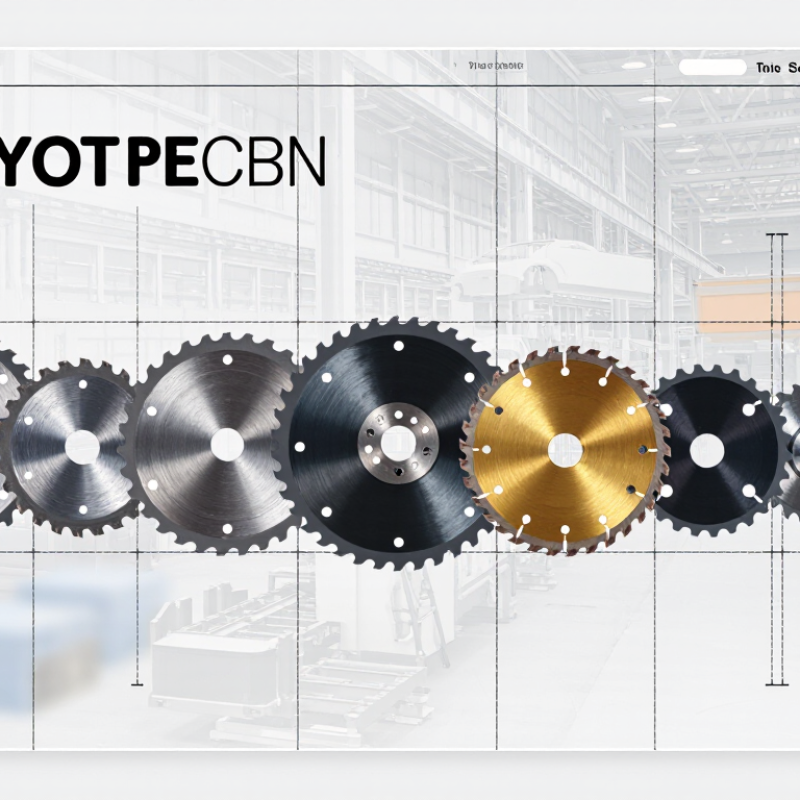
A slitting saw’s blade diameter and thickness determine its reach and cutting width. A thin blade removes less material, but it may deflect if the setup is not rigid. A thicker blade can feel steadier, though it creates a wider slot. Match the blade material to the workpiece and cutting conditions, rather than choosing by diameter alone. Fit matters. The arbor bore must match the machine arbor and mounting hardware; forcing a poor fit can cause runout, vibration, and an uneven cut. One detail is easy to miss: check the saw’s dimensions against the machine manual before ordering.
Tooth form and spacing affect chip removal and surface quality. Finer teeth can suit thin sections and smaller cuts, while coarser teeth leave more room for chips in deeper or tougher cuts. The right choice also depends on how many teeth engage the work at once. Too few can make cutting rough; too many may crowd chips. There is no universal tooth pattern, and material tests may still be needed.
Tips: Secure the workpiece, verify arbor fit, and check for runout before cutting. Start with the recommended speed and feed, then adjust cautiously if the saw chatters or chips poorly. A clean-looking cut is useful evidence, but it does not replace measuring the kerf and checking the finished slot.
HSS works well for mild steel and aluminum. It can tolerate impact and interrupted cuts better than harder, more brittle edges.
Cobalt improves hot hardness. HSS-Co can suit stainless steel or repeated cuts that heat the edge. For short runs, it may be a practical compromise.
Carbide retains hardness at higher temperatures and may support faster production. It needs a rigid setup, though. Runout and vibration can damage its teeth quickly.
Use Vc = πDn/1,000, with D in millimeters and n in rpm. A 100 mm saw at 600 rpm runs at about 188.5 m/min. The arithmetic is easy.
Rearrange the formula to n = 1,000Vc/(πD). For a 100 mm saw targeting 120 m/min, the result is about 382 rpm. Treat it as a starting point, not a guarantee.
Confirm the bore, keyway, and arbor dimensions against the specifications. Clean the arbor and flange, then ensure the mounting faces sit flat. A tiny chip can tilt the blade.
Mount the saw and place a dial indicator near its rim. Rotate the spindle by hand and record the variation. If runout exceeds the maker’s limit, correct the setup before cutting.
Use fz = vf/(n × z), where vf is feed rate, n is rpm, and z is tooth count. At 240 mm/min, 1,200 rpm, and 40 teeth, feed is 0.005 mm/tooth. Check the arithmetic.
Record the material, saw diameter, rpm, finish, parts per edge, and changeover time. Test the actual workpiece and coolant conditions; catalogue figures cannot settle every setup. Real machines vary.
They can affect lead times and replacement availability. A 2025 mineral summary estimated 2024 tungsten mine output at 81,000 metric tons worldwide, with about 67,000 from China. That figure alone cannot predict a saw’s performance.
Arbor Hole Slitting Saws are designed for precise slotting and parting operations, but choosing the right one involves more than matching its outside diameter. Buyers should compare bore size, blade thickness, material, tooth form, and kerf with the machine setup and workpiece. These factors influence fit, cutting accuracy, material removal, and the type of cut the saw can produce. A practical comparison of seven options can help narrow the choice by diameter, thickness, material, and intended application.
For workpiece compatibility and production demands, consider HSS, HSS-Co, or carbide, then set cutting conditions accordingly. Cutting speed can be estimated with Vc = πDn/1,000, where D is diameter in millimeters and n is spindle speed in revolutions per minute. Before cutting, verify arbor fit and runout, and calculate feed per tooth using fz = vf/(n × z). Careful selection and setup can support consistent cuts and help extend tool life.